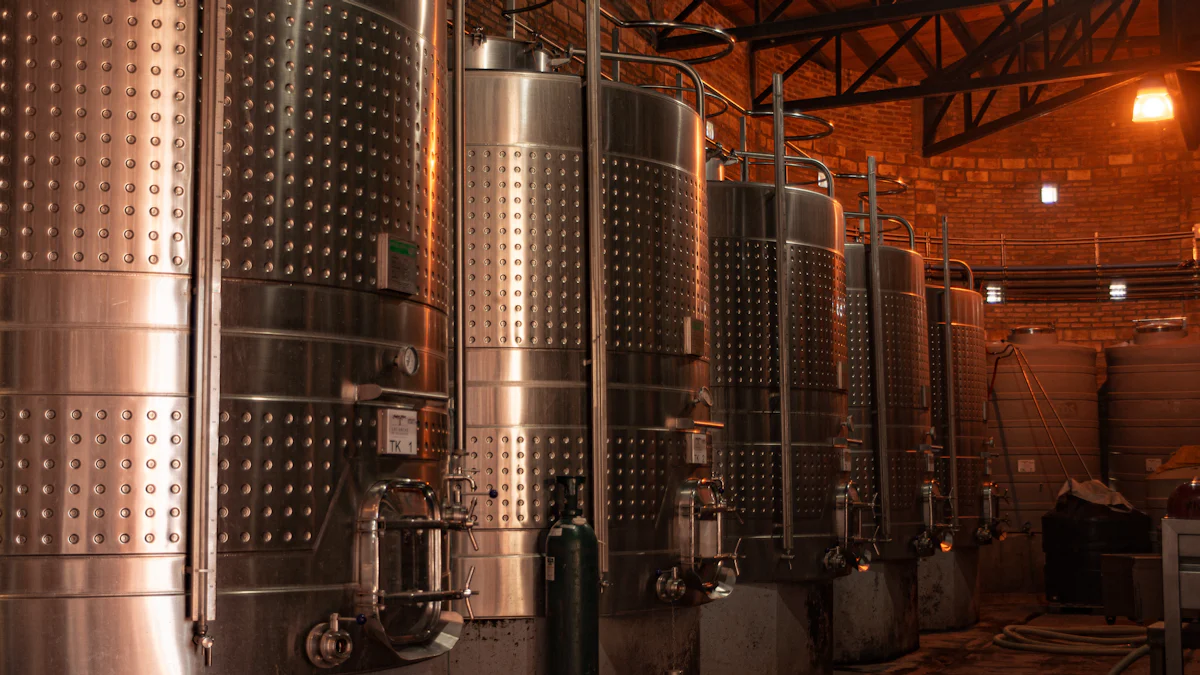

As a standard rule of thumb, wine fermentation tanks should be filled to 70–80% of total capacity, leaving 20–30% headspace above the liquid. This reserved volume accommodates foam formation from active yeast, carbon dioxide release, and temperature-driven liquid expansion during fermentation.
The exact ideal fill level varies by wine style, tank design, and fermentation stage. Red grape must, white juice and rosé each require different headspace margins, and open-top vs. closed tanks have different working volume limits. Overfilling causes overflow and waste; underfilling exposes wine to excess oxygen. Matching fill volume to the batch and tank keeps every batch clean and protected.
Key Takeaways
- Fill fermentation tanks to 70–80% of total capacity to leave room for foam, CO₂ release and thermal expansion.
- White and rosé wines need extra headspace; keep carboys and small closed vessels no more than 3/4 full during active fermentation.
- Match tank size to batch volume to avoid overflow risk or excessive oxygen exposure.
- Mark the 70–80% fill line on every tank for fast, consistent checks during busy harvest season.
- Top up vessels after primary fermentation slows to reduce surface oxygen contact and protect wine during aging.
Why Fermentation Tanks Need Headspace

Headspace is working volume, not wasted capacity. It serves three critical functions during active fermentation:
1. Foam Absorption
As yeast consumes sugar, it produces alcohol and carbon dioxide. Trapped gas creates a thick, rising foam cap — especially vigorous during the peak of primary fermentation. The 20–30% headspace buffer contains this foam, preventing it from pushing into the airlock or spilling over the tank edge. Losing foam and grape solids changes the final wine character, and overflow creates sanitation risks.
2. CO₂ Venting
Fermentation releases large volumes of carbon dioxide that must escape through the airlock or open top. A completely full tank restricts gas flow, which can build pressure and force must out through weak points in the seal.
3. Thermal Expansion
Yeast activity generates heat, which causes the must to expand in volume. A tank filled to the brim has no margin for this volume increase, leading to overflow.
Too little headspace causes overflow and spoilage risk; too much headspace exposes wine to excess oxygen later in the process. The ideal fill level balances both risks, shifting as fermentation moves from active primary to calmer secondary phases.
Ideal Fill Levels by Wine Type & Fermentation Stage
By Wine Style
- Red wine (skin-contact, open-top fermenters): Red must with skins and whole clusters takes up more physical volume, and the rising cap adds to height. Fill open-top red fermenters to ~70% of total capacity to leave room for cap management and punch-downs.
- White & rosé wine (juice-only, closed tanks): White and rosé juices produce heavy foam during active fermentation. Fill carboys and small closed tanks to no more than 75% capacity. For very vigorous small-batch ferments, some winemakers fill as low as 50% to prevent overflow.
Primary vs. Secondary Fermentation
- Primary fermentation (vigorous active phase): This is the highest-foam, highest-gas stage. Stick to the 70–80% fill rule (75% max for white/rosé in small vessels).
- Secondary fermentation / aging: Once most sugar has converted and yeast activity slows, foam and gas release drop dramatically. At this stage, winemakers typically top up the vessel or rack wine into a smaller container to reduce headspace and minimize oxygen exposure.
The rule is simple: more headspace early in fermentation, less headspace later.
How Tank Design Affects Fill Levels

Open-Top vs. Closed-Top Tanks
- Open-top tanks: Most commonly used for red wine with whole-cluster fermentation and manual punch-downs. Fill to ~70% capacity to allow cap management work and reduce overflow risk.
- Closed / conical tanks: Sealed vessels for controlled fermentation and yeast harvesting. They can be filled slightly higher than open tanks, but still require headspace for foam and gas. Conical bottoms simplify yeast removal and clean-in-place cycles.
- Jacketed tanks: Temperature-controlled jacketed tanks reduce thermal expansion risk but still need standard headspace for foam and CO₂.
- Square / rectangular tanks: Optimized for tight cellar floor plans, with the same fill level rules as cylindrical designs.
Winemakers can choose from all of these styles from manufacturers such as CHENMA, which builds open, closed, conical, jacketed and square stainless steel fermentation tanks for commercial cellar operations.
Variable Capacity Tanks
Variable capacity tanks solve headspace management with a floating lid that sits directly on the wine surface, rising and falling with volume changes. This design:
- Maintains a small, consistent headspace at every fermentation stage
- Reduces oxygen exposure during aging without racking to smaller vessels
- Eliminates the need to top up wine as volume decreases
They are ideal for long aging and batches of varying size.
How to Monitor and Manage Fermentation Tank Fill Levels
- Measure must volume first: Use a graduated dipstick or flow meter to accurately gauge must volume before filling, and select the right size tank for the batch.
- Mark fill lines permanently: Mark the 70% and 80% levels on every tank with a sight gauge or permanent marker for at-a-glance checks during busy harvest shifts.
- Avoid overfilling: If a batch is too large for one tank, split the excess into a second vessel. Splitting a batch costs very little compared to losing wine to overflow or spoilage.
- Avoid excessive headspace: For under-sized batches, rack into a smaller tank or top up with a matching wine to reduce oxygen exposure, especially as fermentation slows.
- Reassess at the end of primary: Once active fermentation calms, adjust volume — either by topping up or racking to a smaller vessel — to minimize surface air contact during aging.
FAQ
Can you fill a fermentation tank all the way to the top?
No. A completely full tank leaves no room for foam, CO₂ release or thermal expansion, which guarantees overflow and spoilage risk. Always stop filling at 70–80% of total capacity for active primary fermentation.
Does the fill rule change for white and rosé wines?
Yes. White and rosé juices produce very heavy foam during active fermentation. Keep carboys and small closed vessels at 3/4 full or less during primary fermentation. For very vigorous small batches, some winemakers fill as low as 50% to prevent overflow.
When should you top up a fermentation vessel?
Top up or rack to a smaller vessel once primary fermentation slows and foam subsides. This reduces the wine’s surface exposure to oxygen, protecting flavor and freshness during aging.
Do variable capacity tanks follow the same fill rule?
They follow the same baseline but offer far more flexibility. The floating lid adjusts headspace automatically as volume changes, maintaining a small, consistent air gap at every stage of fermentation and aging.
What happens if a batch overflows during fermentation?
Overflow wastes wine, creates sanitation issues and can alter the final wine character by losing grape solids and yeast. If a batch is too large for one tank, split the must across a second vessel to protect the entire lot.