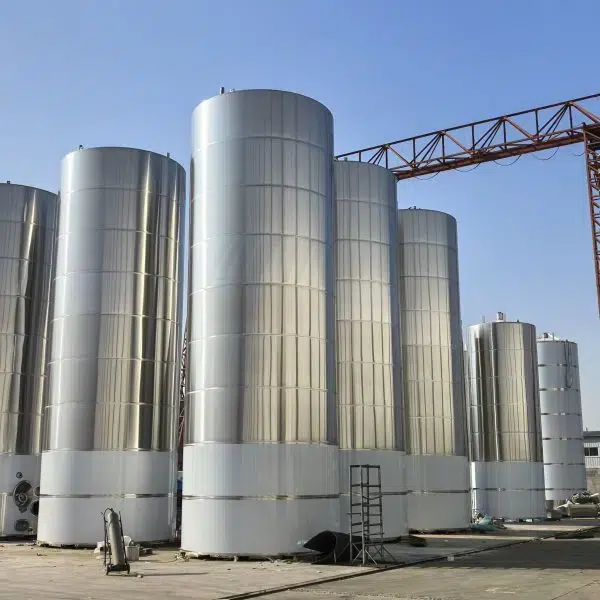
Yes, milk can be safely stored in a silo when using a food-grade stainless steel milk silo designed for dairy applications. These silos are typically equipped with cooling systems, insulation, and automated cleaning features to maintain milk freshness and prevent bacterial growth during storage.
Stainless steel milk silos are widely used in dairy farms and processing facilities as a standard solution for bulk milk storage. This article explains how milk silos work, what makes them safe, and the key practices used in modern dairy storage systems.
Key Takeaways
- Only food-grade stainless steel silos are suitable for milk storage
- Milk must be cooled to below 40°F (4°C) within 2 hours of milking and maintained at this temperature
- Automatic CIP (Clean-In-Place) systems are required for proper hygiene
- Regular inspections and maintenance are essential to prevent contamination
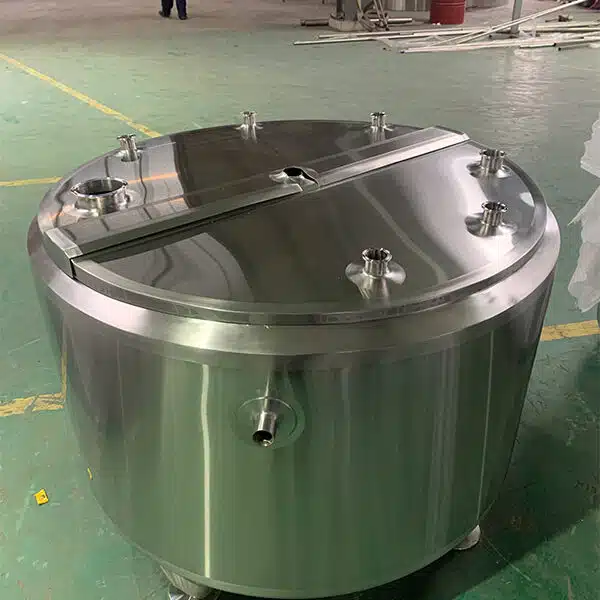
- Small farms can use smaller horizontal milk tanks as an alternative to large vertical silos
Is It Safe to Store Milk in a Silo?

Milk can be safely stored in a properly designed and maintained milk silo. Generic silos used for grain or dry goods are not suitable for milk, as they lack the necessary food-grade materials, cooling systems and hygiene features.
Critical Safety Requirements for Milk Silos
All milk silos must meet these minimum requirements to ensure food safety:
- Food-grade stainless steel construction: 304 or 316 stainless steel is required to prevent rust and contamination
- Effective cooling system: Must cool milk to <40°F within 2 hours of milking
- Insulated walls: Prevents temperature fluctuations and reduces energy costs
- Automatic cleaning system: CIP system for daily cleaning and sanitization
- Temperature monitoring: Continuous temperature tracking with alarm notifications
Risks of Improper Milk Storage
Improper storage of milk in silos can compromise safety and quality. The main risks include:
- Bacterial growth: Milk kept above 40°F (4°C) allows bacteria to multiply rapidly, potentially doubling every 20 minutes.
- Cross-contamination: Dirty equipment or poor hygiene practices can introduce harmful pathogens.
- Spoilage: Warm temperatures can cause milk to sour and develop off-flavors.
- Pest infestation: Silos that are poorly sealed may allow rodents or insects to contaminate the milk.
| Risk Factor | Impact on Milk Quality |
|---|---|
| Temperature >40°F | Bacteria multiply rapidly, increasing spoilage risk |
| Dirty equipment | Higher bacterial counts and faster milk deterioration |
| Inadequate cleaning | Biofilm formation, persistent contamination |
| Poor sealing | Pest intrusion and foreign material contamination |
Tip: Maintaining proper cooling, routine cleaning, and airtight seals is essential to ensure milk remains fresh and safe in storage silos.
How Milk Storage Silos Work
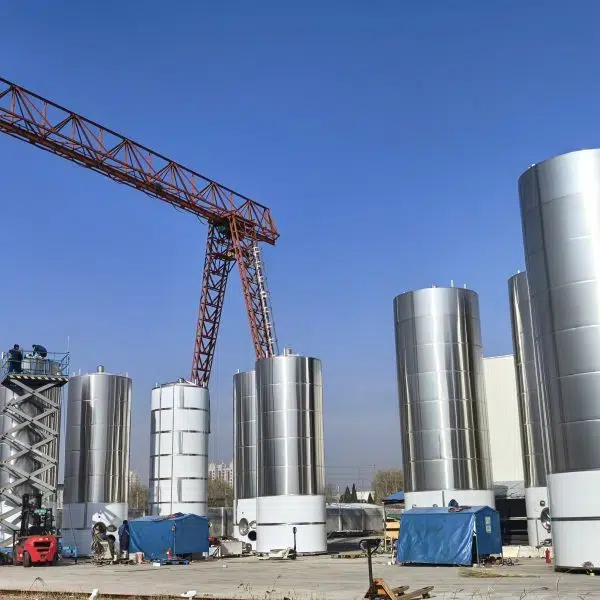
Cooling and Insulation System
The cooling system is the most important component of a milk silo. It works by:
- Rapid cooling: Milk enters the silo at approximately 98°F (37°C) and is cooled to 33-38°F (0.5-3°C) within 2 hours
- Temperature maintenance: Heat exchangers continuously circulate cold fluid around the silo walls to maintain a constant temperature
- Agitation: Slow-speed mixers keep milk uniform and prevent cream separation
- Insulation: 80-100mm thick polyurethane foam insulation prevents heat transfer and maintains temperature stability
Modern milk silos use digital temperature sensors that continuously monitor milk temperature and send alerts if it rises above safe levels.
Stainless Steel Construction
All milk contact surfaces are made from food-grade 304 or 316 stainless steel. This material offers several key advantages:
- Corrosion resistance: Chromium in stainless steel forms a protective oxide layer that prevents rust
- Smooth surface: Non-porous surface prevents residue buildup and makes cleaning easy
- Durability: Stainless steel silos can last 20-30 years with proper maintenance
- Hygienic design: No cracks or crevices where bacteria can hide
Automatic CIP Cleaning System
CIP (Clean-In-Place) systems automatically clean and sanitize the silo without disassembly. The standard 6-step CIP process is:
- Pre-rinse with warm water to remove residual milk
- Alkaline detergent wash to remove fats and proteins
- Intermediate water rinse
- Acid rinse to remove mineral deposits and milkstone
- Final water rinse
- Sanitization with food-grade disinfectant
This entire process takes approximately 90 minutes and is typically performed after each milk collection.
Best Practices for Milk Storage in Silos
Temperature Control
- Cool milk to <40°F within 2 hours of milking
- Maintain milk temperature between 33-38°F at all times
- Monitor temperature continuously and keep records for regulatory compliance
- Calibrate temperature sensors monthly to ensure accuracy
Cleaning and Maintenance
- Run a full CIP cycle after each milk collection
- Perform a manual deep clean every 1-3 months to remove any remaining residue
- Inspect gaskets and seals monthly and replace as needed
- Conduct a full system inspection and pressure test annually
Storage Duration
- Store milk for no more than 72 hours before processing
- Rotate milk using a first-in, first-out (FIFO) system
- Do not mix fresh milk with milk that has been stored for more than 24 hours
Milk Silos vs Alternative Storage Methods
| Storage Method | Best For | Advantages | Disadvantages |
|---|---|---|---|
| Vertical Milk Silo | Large dairy farms (>100 cows) | High capacity, automated, space-efficient | High initial cost |
| Horizontal Milk Tank | Small to medium farms | Lower cost, easier to install | Lower capacity |
| Plastic Containers | Very small farms (<10 cows) | Low cost, portable | High labor, high contamination risk |
Conclusion
Milk can be safely stored in a properly designed food-grade stainless steel silo when temperature control, hygiene, and maintenance practices are properly managed. These silos are widely used in the dairy industry to preserve milk quality, prevent contamination, and ensure stable storage before processing.
CHENMA provides stainless steel milk silos and dairy storage solutions designed for modern farms and processing facilities. Our systems feature efficient cooling performance, integrated CIP cleaning systems, and compliance with international dairy safety standards, supporting safe and hygienic milk storage operations.
FAQ
What is a milk silo?
A milk silo is a large, vertical storage tank made from food-grade stainless steel. It is specifically designed to cool and store raw milk safely before processing or transport.
How cold should milk be kept in a silo?
Milk must be kept at a temperature below 40°F (4°C) at all times. The optimal storage temperature is 33-38°F (0.5-3°C) to maximize freshness and prevent bacterial growth.
How often should a milk silo be cleaned?
A full CIP cleaning cycle should be performed after each milk collection (typically daily). A manual deep clean should be done every 1-3 months, and a full system inspection should be conducted annually.
Can small farms use milk silos?
Yes, small farms can use smaller capacity milk silos or horizontal milk tanks. Sizes range from 1,000 liters to over 150,000 liters to fit farms of all sizes.
How long can milk be stored in a silo?
Under proper temperature conditions, raw milk can be safely stored in a silo for up to 72 hours. For best quality, milk should be processed within 48 hours of milking.