
Yes, winemakers can safely use the same fermentation tank for both red and white wines, provided strict cleaning, sanitation, and batch scheduling protocols are followed. Success depends on thorough cleaning between batches, tank material and design, and disciplined production planning — not the tank itself. A careful, process-driven winery can share tanks reliably, while poor sanitation creates quality risks even with dedicated equipment.
Key Takeaways
- Thorough cleaning and inspection after every red wine batch prevents color and sediment carryover to white wine.
- Stainless steel tanks are ideal for shared use: they are non-porous, easy to clean, and prevent flavor cross-contamination.
- Schedule red wine batches before white batches to minimize heavy cleaning cycles and reduce downtime.
- Sharing tanks cuts equipment and floor space costs, but requires strict process discipline to avoid cross-contamination risk.
- Use dedicated tanks for high-volume production or premium-tier wines to guarantee quality and avoid bottlenecks.
Key Factors for Successful Shared Tank Use

Cleaning & Sanitation Protocols
Red wine fermentation leaves behind pigment, sediment, skins, and seeds that can tint or contaminate subsequent white wine batches. A quick rinse is never sufficient — a structured, verified cleaning routine is required.
The standard changeover sequence:
- Cold water rinse to lift loose sediment and leftover skins immediately after the tank is emptied.
- Warm detergent wash with targeted scrubbing of seams, valves, cone bottoms, and racking arm mounts — areas where residue commonly accumulates.
- Final fresh water rinse to remove all chemical residue.
- Flashlight inspection of every internal surface, gaskets, and seal seats. Any pink or purple tint indicates an incomplete clean.
All cleaning steps should be documented with a signed checklist, including date, cleaner used, and verification method. This creates an audit trail for quality and regulatory compliance.
Tank Material & Design
Tank material directly impacts how easy it is to eliminate cross-contamination risk:
- Concrete/wood: Porous surfaces trap pigment and flavor compounds, making them poorly suited for shared red/white production. Concrete also risks cracking from temperature swings.
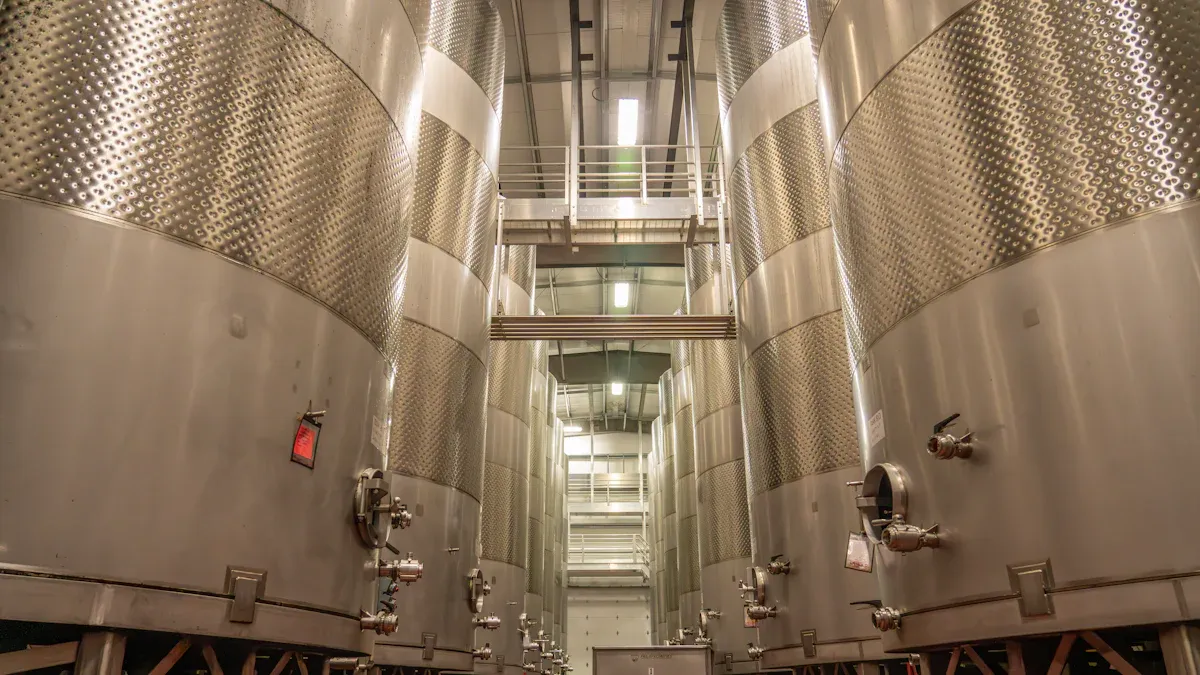
- Stainless steel: Non-porous, smooth surfaces do not harbor bacteria or pigment, and clean thoroughly with minimal effort. Gas-tight seals create an inert, oxygen-free environment to protect wine from oxidation. Conical bottoms simplify sediment and lees removal during cleaning. Clean-in-place (CIP) spray systems enable automated, consistent cleaning cycles.
Tank design also matches production style:
- Open-top tanks: Best for red wine production, where punch-down of skins is required during fermentation.
- Conical fermenters: Ideal for white wine production, as they simplify sediment removal.
- Variable-capacity floating lid tanks: Most flexible for shared use; the airtight lid can be removed to accommodate red wine maceration, or sealed for white juice fermentation.
Batch Scheduling & Workflow
Strategic batch sequencing minimizes cleaning time and reduces risk:
- Run red wine batches first, followed by white wine batches. This way the heaviest cleaning only happens once per campaign, rather than between every batch.
- Schedule long-maceration red batches earlier in the season, when residue buildup is highest.
- Stage cleaning supplies (hoses, brushes, detergent) near the tank before the batch ends, so cleaning can start immediately. Tanks cleaned immediately after emptying return to service faster and require less scrubbing.
For wineries with multiple tanks, dedicate one unit to red duty and one to white duty during peak production to eliminate changeover downtime entirely.
Quality & Regulatory Compliance
Food Safety Requirements
Regulators require written, verifiable cleaning protocols for shared production equipment. Records must document:
- Cleaning method, water volume, and nozzle specifications
- Date and operator identification for each cleaning cycle
- Annual tank integrity checks for valves, gaskets, and welds
Temperature logs, fermentation records, and batch tracking documentation further support proof of clean changeover.
Quality Control
Verified cleaning protects the sensory profile of each wine:
- White wine batches require a tank free of red pigment — flashlight inspection of all surfaces must confirm bare metal before filling.
- All skins and seeds must be completely removed, as trapped residue in valves or seams can spoil subsequent batches.
- Match fermentation process to wine style: red wines benefit from skin contact during maceration, while white wines require precise temperature control and oxygen exclusion. The same stainless steel tank can serve both roles when protocols are adjusted between batches.
Cost & Efficiency: Shared vs. Dedicated Tanks

Benefits of Sharing Tanks
Sharing fermentation tanks reduces upfront capital expenditure and floor space requirements. One tank can handle multiple batches instead of sitting idle between campaigns. Variable-capacity flex tanks are especially cost-effective for small wineries producing both wine types, as they eliminate the need to duplicate equipment for seasonal production.
When Dedicated Tanks Make Sense
Dedicated tanks are more effective for:
- High-volume operations: A shared tank becomes a production bottleneck during peak harvest weeks.
- Premium-tier wines: Top-tier white wines cannot risk even slight color tinting from red wine residue.
- Simultaneous production: Wineries running red and white campaigns at the same time require separate dedicated lines.
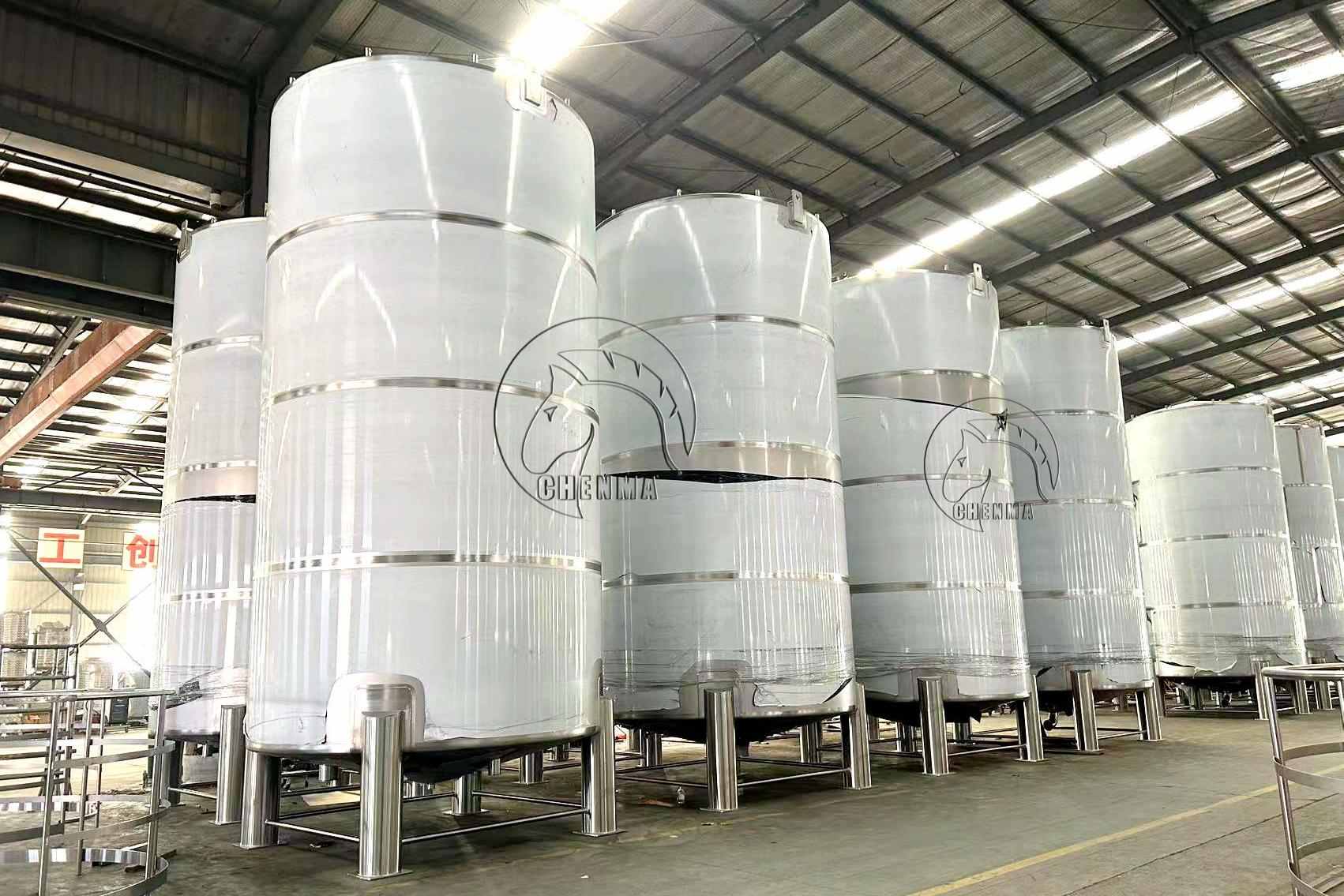
For mixed fleets, CHENMA stainless steel fermentation tanks support both red, white, and sparkling production: open-top units for red wine maceration, conical designs for white wine sediment removal, and jacketed tanks for precise temperature control during sparkling base production.
FAQ
Can a winery really share one tank between red and white batches?
Yes. Shared tanks work reliably when crews clean and fully inspect the interior after every batch. Flashlight verification of bare metal surfaces confirms no residual pigment or sediment remains. Success depends on process discipline, not the tank itself.
Which tank style works best for both wine types?
Variable-capacity floating lid tanks offer the most flexibility for shared use. Open-top units suit red wine production with punch-downs, while conical fermenters simplify sediment removal for white wines. Match the tank style to your most common production mode.
How should a winery schedule batches in a shared tank?
Run red wine batches first, then white wine batches, so heavy cleaning only happens once per campaign. Stage cleaning supplies before the batch ends to minimize downtime between changeovers.
When does a dedicated tank make more sense than sharing?
Dedicated tanks are better for high-volume operations and premium wine programs, where shared tanks would create production bottlenecks or quality risk. A mixed fleet of dedicated units lets delicate white juice ferment in clean tanks while red batches run in parallel.
Does sharing a tank save money?
Sharing reduces equipment and floor space costs, and flex tanks offer a budget-friendly option for small wineries producing both wine types. The savings are only preserved with disciplined cleaning; a sloppy changeover can turn a low-cost tank into an expensive batch loss.