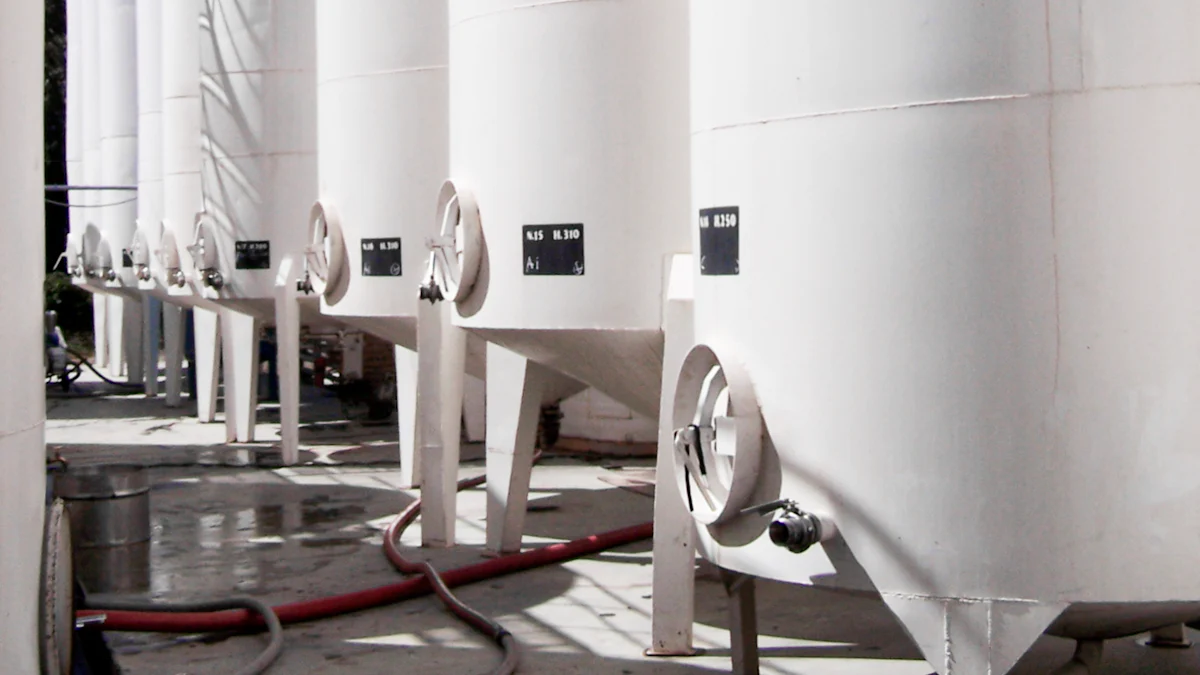

For oil storage tanks, the core difference between 304 and 316 stainless steel comes down to molybdenum: grade 316 contains 2%–3% of the element, while grade 304 only has trace amounts. Both are austenitic alloys that rely on a self-repairing passive oxide layer for corrosion protection, but their performance diverges sharply in chloride-rich and acidic environments.
The right grade prevents costly pitting, premature tank failure, and product contamination. The best choice depends on your storage environment, oil chemistry, and expected service life.
Key Takeaways
- 316 stainless steel includes molybdenum, which boosts corrosion resistance and handles chlorides and acids far better than 304.
- 304 stainless steel costs less and performs well in mild, inland environments with neutral oil products.
- Choose 316 for coastal or harsh operating conditions to prevent pitting, crevice corrosion, and early failure.
- 316 costs more upfront, but its longer service life and lower maintenance often deliver a lower total cost of ownership in harsh environments.
Core Chemical Composition Differences Between 304 and 316 Stainless Steel

Both 304 and 316 belong to the austenitic stainless steel family, with a face-centered cubic crystal structure that delivers excellent formability and weldability. Both form a thin, self-repairing chromium oxide passive layer that shields the underlying metal from corrosion.
Molybdenum is the defining difference between the two grades. This element strengthens the passive film, improves its stability under chemical attack, and enables better resistance to pitting and crevice corrosion. Grade 316 also carries higher nickel content, which stabilizes the austenitic structure and improves toughness.
The table below summarizes composition requirements per ASTM A240 standards:
| Element | 304 (S30400) | 316 (S31600) | 316L (S31603) |
|---|---|---|---|
| Carbon (max) | 0.08% | 0.08% | 0.03% |
| Chromium | 18.0–20.0% | 16.0–18.0% | 16.0–18.0% |
| Nickel | 8.0–10.5% | 10.0–14.0% | 10.0–14.0% |
| Molybdenum | — | 2.0–3.0% | 2.0–3.0% |
Corrosion Resistance of 304 and 316 Stainless Steel for Olive Oil Storage
Olive oil and most neutral edible oils are fairly non-corrosive to stainless steel on their own. The real threats come from the operating environment and trace contaminants: chloride salts from coastal air, chloride-based cleaning agents, or acidic impurities in the oil.
Performance in Chloride & Acidic Environments
The molybdenum in grade 316 forms a denser, more stable oxide film that resists breakdown far better than the chromium-only layer on 304. This makes 316 far more effective at preventing pitting and crevice corrosion in chloride-exposed settings.
For coastal facilities or sites with salt air exposure, 316 is the safer choice. Inland facilities with controlled humidity and non-chloride cleaning protocols will find 304 perfectly adequate for neutral edible oil storage.
Pitting Resistance Comparison
| Stainless Steel Grade | Critical Chloride Concentration for Pitting | Pitting Resistance Equivalent Number (PREN) |
|---|---|---|
| 304 / 304L | ~100 ppm | 19 |
| 316 / 316L | ~200 ppm | 27 |
Both grades meet food-grade hygiene requirements for edible oil storage when operated within their design limits. Neutral-pH olive oil does not attack either alloy under normal storage conditions.
Cost, Service Life, and Selection Guide for Stainless Steel Oil Tanks

Price Difference
Molybdenum and higher nickel content make 316 more expensive than 304. Raw material pricing typically shows a 20–30% premium for 316 over 304 by weight. For large storage tanks, this translates to a significant per-ton cost difference.
Service Life
- 316 / 316L tanks: Typical service life of 20–30 years in coastal/marine environments, with re-certification possible.
- 304 tanks: No specified design life for coastal use, as airborne chlorides progressively break down the passive layer and cause pitting.
When to Choose Each Grade
Choose 304 stainless steel if:
- Your facility is inland with controlled humidity
- You store neutral-pH edible oils
- Budget is a primary constraint
- Operating temperatures are moderate
Choose 316 / 316L stainless steel if:
- Your facility is located near the coast or exposed to salt-laden air.
- Your cleaning process involves chloride-containing chemicals.
- Your tank requires enhanced resistance to pitting and crevice corrosion.
- You prioritize long-term durability and reduced maintenance in demanding environments.
FAQ
Is 304 Stainless Steel Safe for Storing Olive Oil?
Yes. 304 stainless steel is generally suitable for olive oil storage because olive oil is not highly corrosive under normal storage conditions. Proper tank cleaning, surface finishing, and maintenance are also important for maintaining oil quality.
Does Stainless Steel Affect the Taste of Olive Oil?
Food-contact stainless steel is generally non-reactive under normal storage conditions and helps preserve olive oil’s natural flavor without imparting unwanted tastes or odors.
Is 316 Stainless Steel Necessary for Every Stainless Steel Oil Tank?
No. For indoor, inland facilities storing olive oil under controlled conditions, 304 stainless steel is often sufficient. Grade 316 may be worth considering when tanks are exposed to salt air or chloride-containing cleaning agents.
What Should You Check Before Buying a Stainless Steel Oil Tank?
Check the steel grade, internal surface finish, weld quality, cleaning requirements, and food-contact documentation. Also consider the tank’s location, capacity, and intended cleaning process before choosing a material.
Can 304 and 316 Stainless Steel Tanks Store Other Edible Oils?
Yes. Both grades are commonly used for edible oil storage. The appropriate choice depends on the oil’s properties, operating environment, cleaning procedures, and the tank’s design specifications.