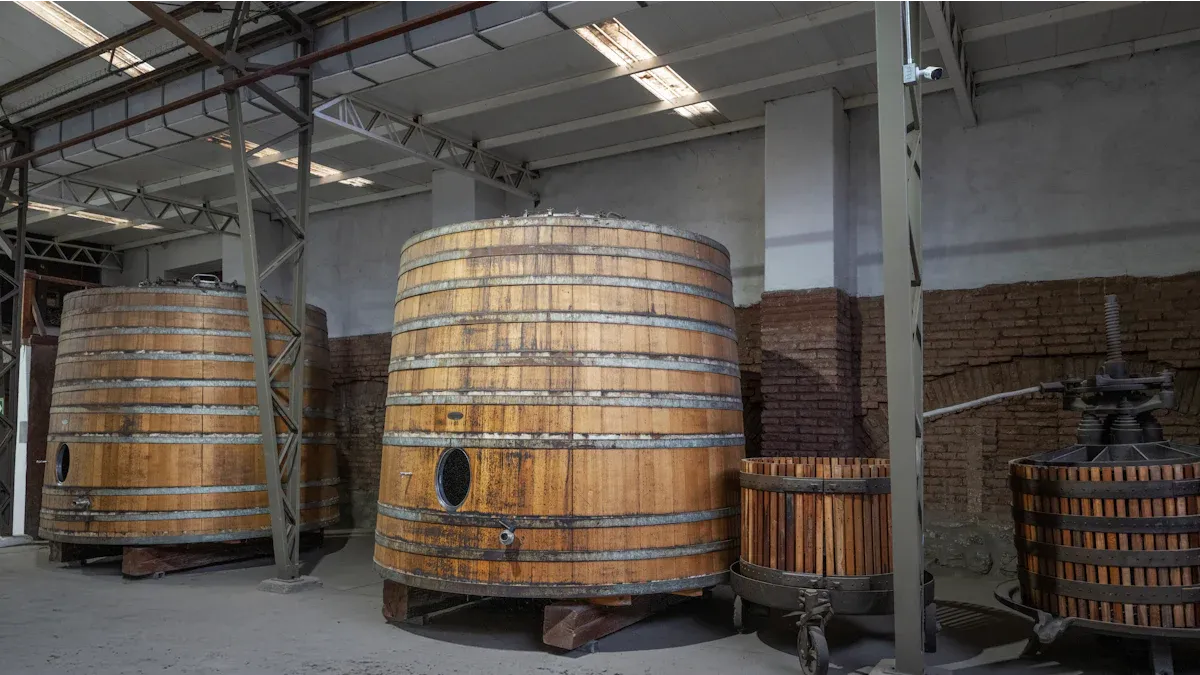

Tanks and silos are both widely used industrial storage equipment, but they are engineered for completely different material types and process requirements. Choosing the wrong storage solution can lead to material waste, equipment damage, safety hazards, and unnecessary operational costs. The easiest way to tell them apart is by their shape, the materials they hold, and their daily discharge methods.
This guide breaks down the core structural, functional, and application differences between tanks and silos, plus key factors to help you select the right option for your operation.
Key Takeaways
- Tanks are designed to store liquids, gases, and semi-solid slurries, while silos are built exclusively for dry bulk materials like grain, cement, and powder.
- Tanks have smooth, fully sealed walls and flat or dished bottoms to prevent leaks; silos are tall and narrow with a conical bottom to support gravity-driven discharge of dry materials.
- Choose tanks for liquid storage, mixing, and processing applications; choose silos for bulk dry material storage in agriculture, mining, and manufacturing.
- Regular inspection and maintenance extend the service life of both tanks and silos, and prevent costly safety failures or material contamination.
- Understanding the functional differences between tanks and silos helps businesses select the correct equipment, reduce long-term costs, and ensure material safety.
Core Differences Between Tanks and Silos
The most fundamental distinction comes down to the material being stored, which drives every design choice from shape to discharge method.
| Attribute | Tank | Silo |
|---|---|---|
| Primary Storage Material | Liquids, compressed gases, semi-solid slurries | Dry bulk solids: grains, powders, pellets, granules |
| Typical Shape | Cylindrical or rectangular, with flat/dished bottoms; wider relative to height | Tall, narrow cylinder with a conical hopper bottom; height is much greater than diameter |
| Wall Design | Smooth, fully sealed, pressure-capable walls to prevent leaks and evaporation | Stiffened walls with venting systems; designed to prevent material bridging and moisture ingress |
| Filling & Discharge | Filled via pipes/hoses from top or side; discharged through valves and pumps | Filled via conveyors or elevators from the top; discharged by gravity through the bottom cone |
| Common Materials | Stainless steel, carbon steel, plastic, concrete | Galvanized steel, stainless steel, reinforced concrete |
| Typical Applications | Food & beverage, chemical processing, water treatment, oil & gas | Agriculture, mining, construction, plastics manufacturing |
Structural Design Differences
Tanks are built to be fully leak-proof, often rated for specific pressure levels. Their smooth, seamless interior walls prevent liquid buildup and simplify cleaning. They can be installed vertically, horizontally, or underground, depending on the application.
Silos are optimized for bulk dry material flow. Their tall, narrow shape and sloped conical bottom allow gravity to move material downward evenly, preventing clumping and bridging (when dry material gets stuck and blocks discharge). Most silos include venting systems to regulate internal pressure and keep moisture out.
Filling & Discharge Methods
Tanks rely on pumps, valves, and piping to move liquids in and out. This allows for precise flow control and supports closed-loop processing, mixing, and temperature regulation.
Silos use gravity as their primary discharge mechanism. Dry material flows freely down the sloped hopper bottom to an outlet at the base, often paired with screw conveyors for controlled distribution. This design is simple, low-energy, and efficient for large volumes of dry goods.
Understanding Tanks: Use Cases & Key Features

Tanks are the standard solution for any storage or processing involving fluids. Their versatility makes them a staple across nearly every process industry.
Common Tank Applications
- Liquid storage: Potable water, wastewater, crude oil, chemicals, and food-grade liquids
- Processing & mixing: Fermentation, blending, cooking, cooling, and chemical reaction processes
- Pressure storage: Compressed gases, liquefied materials, and high-pressure process systems
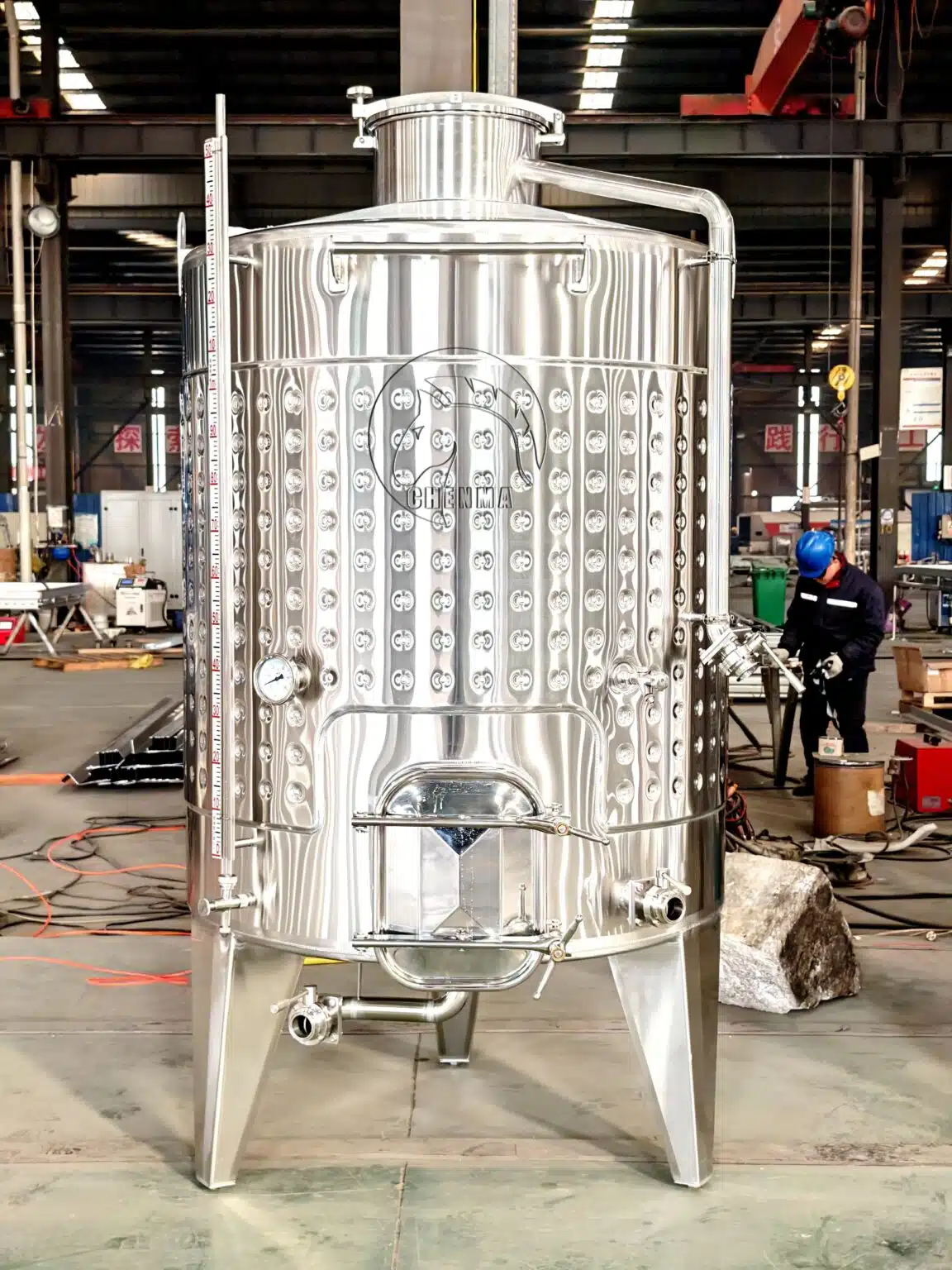
Beyond simple storage, many tanks are built for active processing. For example, food and beverage facilities use jacketed stainless steel tanks for precise temperature control during fermentation, mixing, and pasteurization. These tanks support consistent product quality and meet strict food safety standards.
Key Tank Advantages
- Fully sealed construction prevents contamination, evaporation, and leaks
- Compatible with temperature control, mixing, and pressure processing
- Available in a wide range of sizes, from small process tanks to million-gallon storage tanks
- Easy to clean and sanitize for food and pharmaceutical applications
Understanding Silos: Use Cases & Key Features
Silos are purpose-built for large-volume dry bulk storage. Their vertical design maximizes storage capacity while minimizing floor space, making them efficient for farms, factories, and mining operations.
Common Silo Applications
- Agriculture: Storing harvested grain, animal feed, and seed
- Construction & mining: Storing cement, coal, sand, and mineral powders
- Manufacturing: Storing plastic pellets, flour, sugar, and other dry raw materials
Many modern silos include built-in monitoring sensors to track material level, temperature, and humidity. This helps operators detect spoilage, clumping, or pest issues early, reducing product loss.
Key Silo Advantages
- High storage capacity with a small footprint
- Gravity-driven discharge requires minimal energy
- Protects dry materials from weather, pests, and moisture
- Scalable to very large volumes for industrial and agricultural use
How to Choose Between a Tank and a Silo

Selecting the right storage equipment depends on four core factors:
- Material state – This is the deciding factor. If you are storing liquids, gases, or slurries, you need a tank. If you are storing dry bulk solids, a silo is the correct choice.
- Process requirements – If you need to mix, heat, cool, or pressurize the material, a process tank is required. Silos are for static storage only.
- Regulatory compliance – Different industries have specific safety and hygiene standards for storage equipment. Food and pharmaceutical applications require food-grade stainless steel construction, while agricultural storage has different structural and pest control requirements.
- Environmental conditions – Extreme temperatures, high humidity, or coastal salt air may require special coatings or material upgrades for either option.
Conclusion
The difference between a tank and a silo ultimately comes down to one simple rule: tanks are for fluids, silos are for dry bulk. Their shape, construction, and discharge methods are all engineered to match the physical properties of the materials they hold.
By matching your storage equipment to your material type, process needs, and regulatory requirements, you can ensure safe operation, longer equipment life, and lower long-term operational costs. For custom applications, always consult a professional storage equipment manufacturer to confirm compatibility and compliance.
FAQ
What is the main difference between a tank and a silo?
The core difference is the material they are designed to store. Tanks hold liquids, gases, and semi-solid slurries, with sealed, leak-proof construction. Silos hold dry bulk materials like grain or cement, with a tall shape and conical bottom for gravity discharge.
Can a tank store solid materials?
Tanks can handle semi-solids and slurries (liquid-solid mixtures), but they are not suitable for dry bulk solids. Dry materials will not flow properly out of a flat-bottom tank, and they risk bridging and clogging. Silos are engineered specifically for dry material flow.
How can you tell a tank from a silo by sight?
Tanks are typically wider and shorter, with flat or rounded bottoms. Silos are tall and narrow, with a distinct cone-shaped base. Silos also often have external ladders, access platforms, and roof vents, while tanks have more piping and valve connections.
Which industries use tanks and silos the most?
Tanks are most common in the food and beverage, chemical, water treatment, and oil and gas industries. Silos are standard in agriculture, mining, construction, and bulk manufacturing. Many large industrial facilities use both tanks and silos for different material types.
Can a silo be used for liquid storage?
No. Silos are not sealed or designed to contain liquid. Their conical bottom and wall joints are not built to prevent leaks, and they cannot handle liquid pressure. Attempting to store liquid in a silo creates major safety and environmental risks.