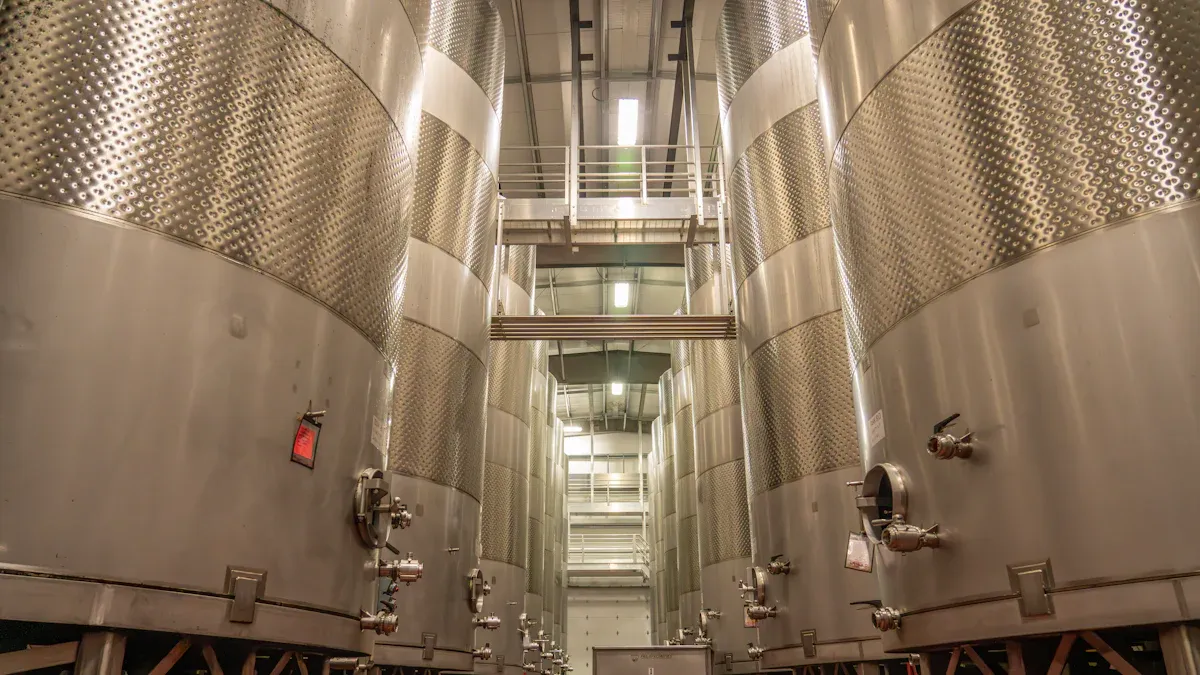
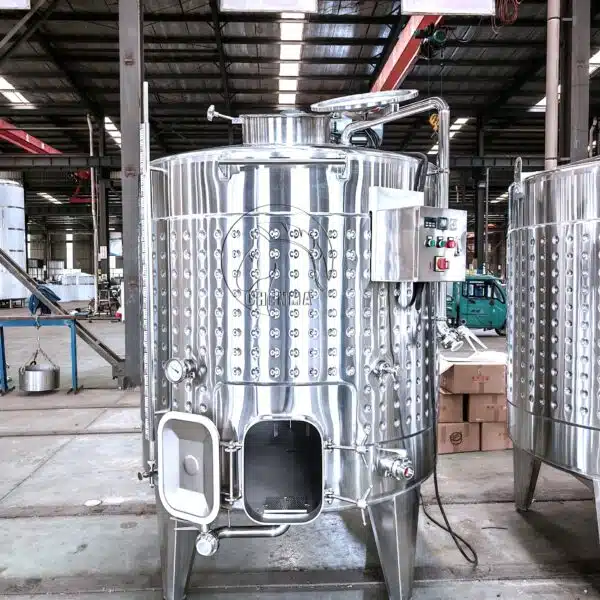
Yes, wine can be perfectly fermented inside stainless steel tanks, and this has become the mainstream choice for modern wineries across the globe. Food-grade stainless steel fermentation tanks feature easy sanitation, precise temperature control and stable performance, which can well retain original wine flavors and standardize the whole winemaking process.
In recent years, the market demand for stainless steel wine fermentation equipment has grown rapidly. As a professional stainless steel wine tank manufacturer, CHENMA supplies diversified standard and customized fermentation tanks to meet different winemaking production demands of small craft wineries and large commercial wine factories.
Key Takeaways
- Stainless steel tanks are ideal for wine fermentation, featuring easy cleaning and excellent temperature control to stabilize fermentation quality
- Neutral stainless steel material fully retains natural fruit flavor and aroma of grapes, presenting fresh and fruity wine styles
- Compared with oak barrels, stainless steel tanks have ultra-long service life over 30 years and lower daily maintenance costs
- Multiple tank styles are available to match red wine, white wine and sparkling wine production respectively
- While stainless steel cannot add extra aged flavor, it is the most cost-effective choice for standardized mass wine production
Stainless Steel Wine Fermentation Basics
How Fermentation Works in Stainless Steel Tanks
Stainless steel wine fermentation tanks are designed with airtight and non-reactive inner walls, which will not produce chemical reactions with wine liquid and change original wine taste and acidity.
The sealed structure effectively isolates external oxygen and avoids wine oxidation that leads to flavor loss and acidity decline. The tanks feature precise temperature control systems that help maintain stable yeast activity. This allows wineries to preserve delicate wine aromas throughout fermentation. The stable pH value is maintained between 3.1 and 3.5 all through the fermentation period to guarantee qualified wine quality.
With smooth inner surfaces, stainless steel tanks can effectively isolate bacteria and impurities, realizing high-standard sanitary production, which is widely trusted by professional winemakers.
Common Types of Stainless Steel Wine Fermentation Tanks
CHENMA manufactures a complete range of stainless steel fermentation tanks with different structures to adapt to various winemaking processes.
| Tank Type | Core Feature | Ideal Application |
|---|---|---|
| Open Top Fermenter | Convenient grape cap punching operation | Red wine fermentation |
| Variable Capacity Tank | Floating lid fits different liquid levels to isolate air | Universal for red & white wine |
| Jacketed Insulated Tank | Double-layer structure for constant temperature control | All types of wine production |
| Closed-Top Fermenter | Fully sealed to prevent external pollution | White wine fermentation |
| Conical Bottom Tank | Easy sediment discharge to clarify wine liquid | Efficient standardized winemaking |
Core Advantages of Stainless Steel Fermentation Tanks

Superior Sanitation & Easy Maintenance
The smooth inner wall of stainless steel does not absorb stains and residues, supporting efficient overall cleaning. It is compatible with CIP automatic cleaning system, which can quickly complete internal disinfection and sanitation work. The slope design matched with independent drain ports can thoroughly discharge waste wine and sediments, greatly reducing the risk of miscellaneous bacteria breeding and effectively avoiding peculiar smell mixed in wine.
Precise Temperature Control & Stable Batch Quality
Jacketed stainless steel tanks can circulate cold and hot medium inside the interlayer to provide precise temperature control. With additional heat preservation design, it can save energy consumption and keep the fermentation environment stable. Unified temperature regulation makes the fermentation state of each batch of wine consistent, greatly improving the uniformity of finished wine quality.
Pure Flavor Preservation Effect
Stainless steel belongs to flavor-neutral production material without any extra flavor infiltration. It can completely retain the original grape flavor, fruit aroma and natural taste, which is very suitable for producing fresh, bright and fruity-style wines.
Drawbacks & Practical Application Considerations
No Additional Aging Flavor
Different from oak barrels that can release vanilla, spice and caramel flavor substances, pure stainless steel tanks cannot endow wine with rich layered aging flavor. Wines fermented in stainless steel are mainly fresh and crisp in taste, which is less suitable for producing full-bodied aged red wines that need complex flavor.
High One-Time Procurement Cost
Food-grade stainless steel fermentation tanks require a relatively high initial investment. Entry-level models typically range from $1,500–$6,000, mid-range systems from $10,000–$30,000, and custom high-end tanks can exceed $45,000, which may be challenging for small start-up wineries.
However, these tanks offer a service life of over 30 years with very low maintenance requirements, making them far more cost-efficient in the long run. Compared with oak barrels that need replacement every 3–5 years, stainless steel provides significantly better lifecycle value. CHENMA also offers tailored designs in size, structure, and functionality to help wineries optimize both performance and overall investment cost.
Applicable Wine Styles for Stainless Steel Tanks

Stainless steel fermentation tanks are widely applicable to most mainstream wine types, and different tank structures can be matched according to product positioning.
| Wine Type | Recommended Tank Features | Production Advantages |
|---|---|---|
| Red Wine | Large-caliber open-top design | Convenient grape cap management, sufficient color and flavor extraction |
| White Wine | Fully sealed constant temperature tank | Lock fresh fruit aroma and maintain high acidity taste |
| Sparkling Wine | Pressure-resistant constant temperature tank | Stable carbonization effect and safe production process |
In terms of flavor presentation, wines brewed by stainless steel tanks are dominated by pure fruit flavors such as passion fruit, grapefruit and pineapple, with crisp taste and high activity, which are deeply loved by consumers who prefer fresh-style wines.
Fermentation Vessel Comparison
Stainless Steel Tanks VS Oak Barrels
| Comparison Item | Stainless Steel Tanks | Oak Barrels |
|---|---|---|
| Flavor Influence | Retain original fruit flavor, no extra taste | Add vanilla, toast and spice layered flavor |
| Oxygen Contact | Almost airtight with minimal oxidation | Natural slow oxygen penetration |
| Taste Style | Crisp, fresh and lively | Mellow, smooth and full-bodied |
| Service Life | Over 30 years | 3-5 years |
| Daily Maintenance | Simple and low-cost | Complicated with high consumption |
Stainless Steel Tanks VS Concrete Tanks
Concrete tanks can realize mild natural oxygen penetration and endow wine with delicate mineral texture, but the fermentation cycle is longer. Stainless steel tanks feature fast fermentation efficiency, cleaner production environment and brighter wine taste, which are more in line with modern efficient standardized production mode.
How to Select Qualified Stainless Steel Wine Fermentation Tanks
Winemakers need to confirm multiple core factors when purchasing fermentation equipment: production output matching tank volume, food-grade material standard, constant temperature control performance, cleaning convenience and overall procurement budget.
Meanwhile, priority can be given to products that meet industry authoritative certifications such as ASME, NSF, FDA and UL 142 to ensure production safety and food compliance.
As a professional winemaking equipment manufacturer, CHENMA provides one-stop selection guidance and overall production supporting solutions. Our products cover full specifications of fermentation tanks, and support deep customization of internal structure, external configuration and appearance size to adapt to diversified winemaking demands.
Conclusion
Stainless steel fermentation tanks have become the industry standard for modern winemaking thanks to their hygienic design, precise temperature control, long service life, and consistent fermentation performance. They are especially suitable for wineries focused on producing fresh, fruit-forward wines with stable batch quality and efficient production workflows.
As a professional stainless steel wine tank manufacturer, CHENMA provides both standard and custom fermentation solutions for wineries of all sizes. From small craft wine producers to large-scale commercial facilities, we support complete winery equipment projects with reliable manufacturing, customization, and long-term technical support.
FAQ
What wine types work best with stainless steel fermentation tanks?
Red wine, white wine, and sparkling wine all work well with stainless steel fermentation tanks, especially fresh, fruit-forward styles that require clean fermentation and preserved natural flavors.
How does stainless steel material affect wine taste?
Stainless steel is a flavor-neutral material without any flavor dissolution, which can 100% retain the original fruit flavor and fresh taste of grapes, and will not change the natural style of wine.
Are stainless steel fermentation tanks easy to clean?
Absolutely. The smooth seamless inner wall is not easy to hide dirt, matching CIP cleaning system can complete efficient disinfection and cleaning in a short time, meeting high-standard food production hygiene requirements.
Why do many wineries choose stainless steel instead of oak barrels?
It is mainly for standardized production, cost control and fresh flavor positioning. Stainless steel tanks have longer service life and lower maintenance cost, and are more suitable for mass production of fresh fruity wines.
What is the service life of stainless steel wine fermentation tanks?
With regular standard maintenance, qualified food-grade stainless steel fermentation tanks can be used stably for more than 30 years, with very low replacement frequency.