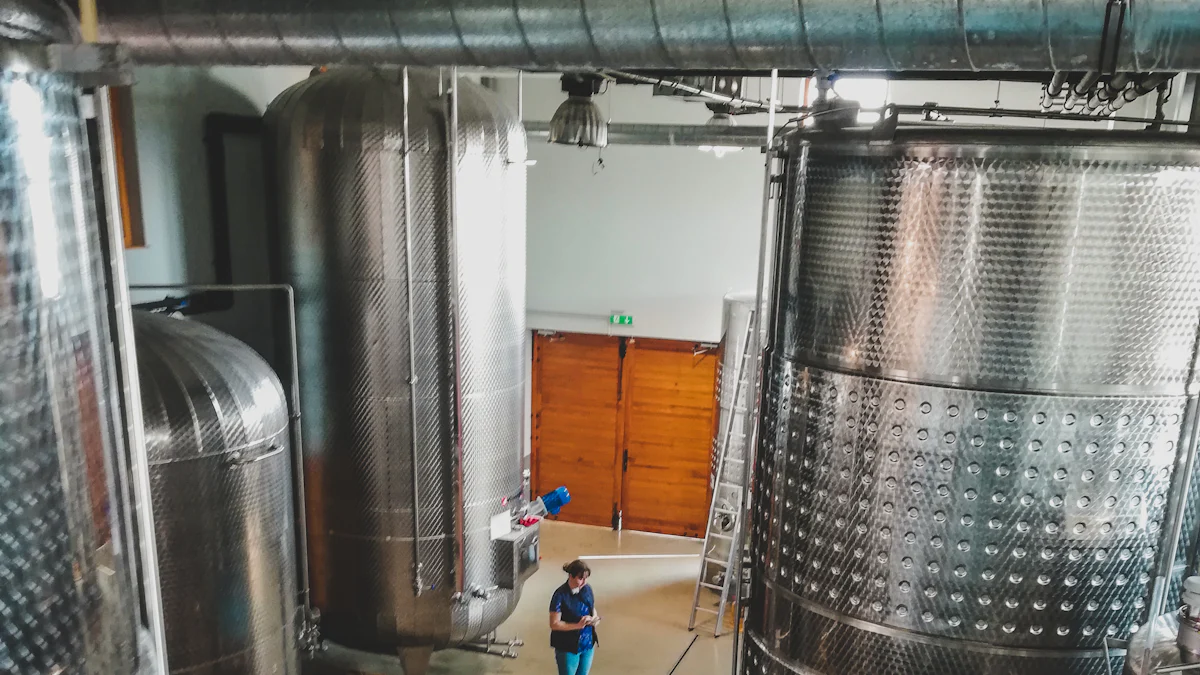
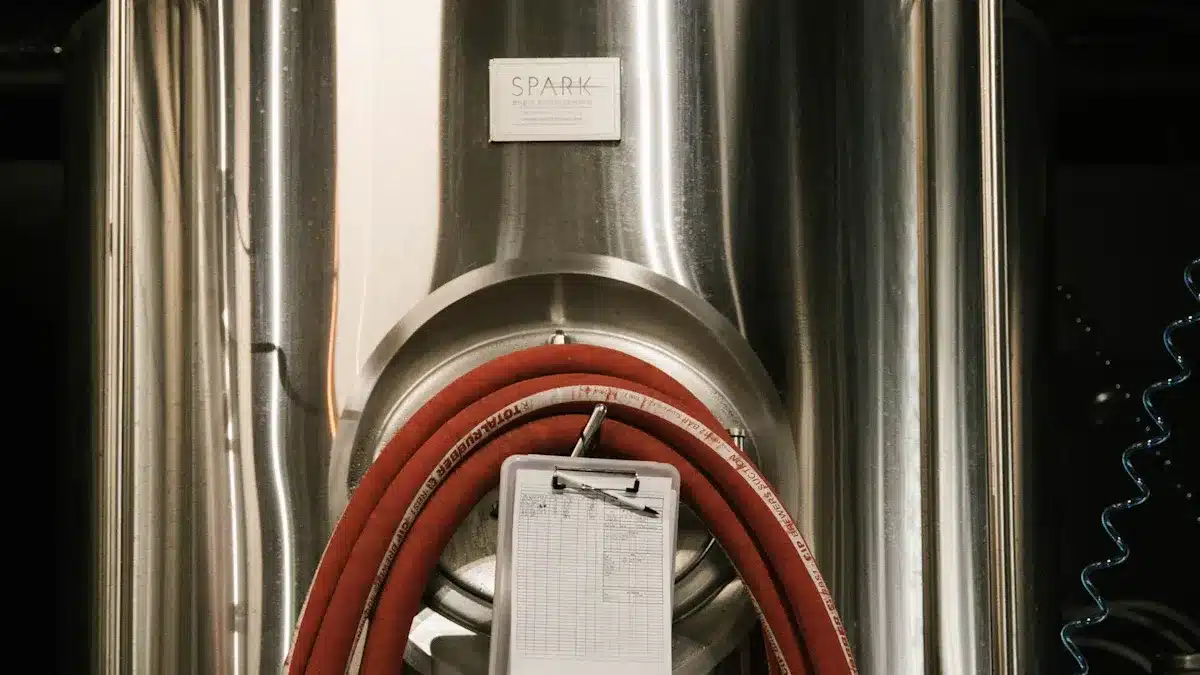
Modern vintners choose stainless steel to gain unmatched control over their final product. This choice gives you a powerful advantage in your craft. Success in both home winemaking and commercial wineries rests on three key pillars:
- Absolute Purity
- Precise Process Control
- Long-Term Operational Efficiency
Mastering the art of fermenting wine in stainless steel helps you translate these benefits into consistently higher-quality wine. This makes it a wise investment for any serious winemaker looking to elevate their results.
THE ADVANTAGES OF FERMENTING WINE IN STAINLESS STEEL
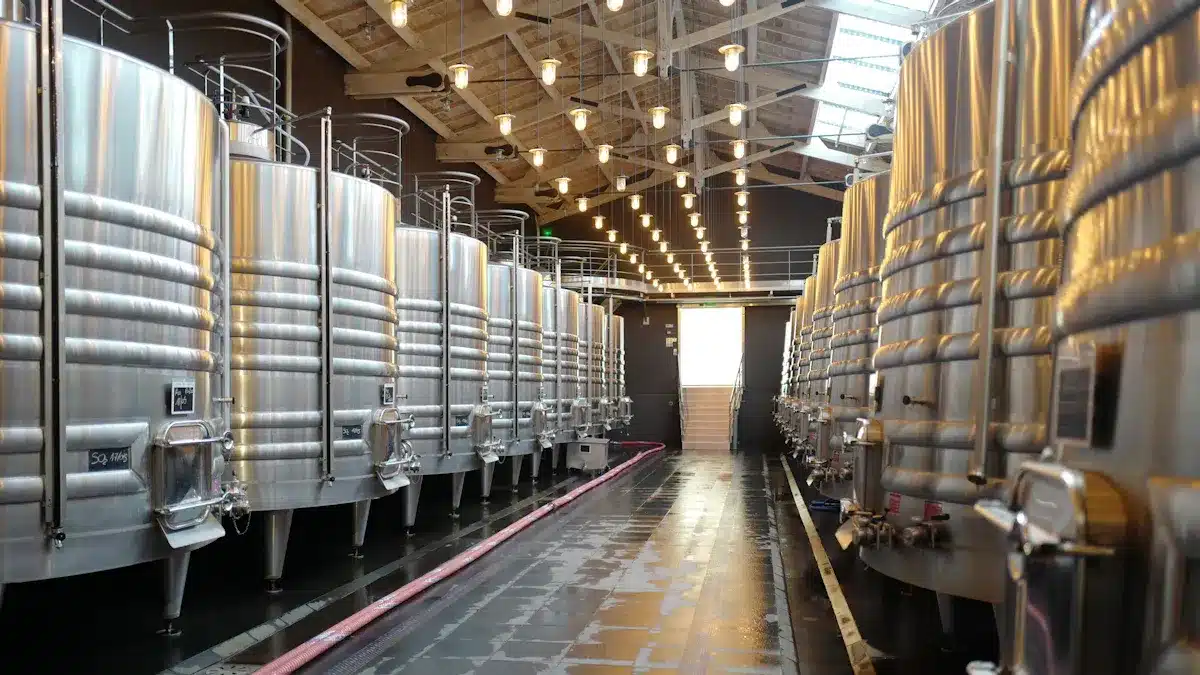
When you choose to work with stainless steel, you gain three powerful advantages that directly impact the quality of your wine. These benefits—purity, cleanliness, and control—are the reasons why professionals and enthusiasts alike are fermenting wine in stainless steel. Let’s explore how each stainless steel wine tank manufacturer helps you craft a superior product.
PRESERVING TRUE GRAPE CHARACTER
Your goal as a winemaker is to express the unique character of your grapes. A stainless steel tank is the perfect partner in this mission because it is completely neutral. Unlike other materials, it adds no flavor, color, or aroma to your wine.
Consider the alternative of an oak barrel. While wonderful for certain styles, oak imparts distinct flavors that can define a wine. These include:
- Vanilla and caramel
- Spice and clove
- Toasted notes
Stainless steel does the opposite. It acts as a blank canvas, allowing the grape’s natural profile to be the star. This is especially important for aromatic white wines where you want to protect the delicate primary notes.
Fermentation vessels, including those made of stainless steel, “must be sufficiently inert to guarantee that their components do not have a negative effect on consumers health and quality of wine.”
This neutrality is why steel is the top choice for crisp, vibrant varietals like:
- Sauvignon Blanc: Preserves its signature grassy and tropical fruit aromas.
- Riesling: Protects its delicate floral and citrus notes from being overshadowed.
Scientific studies show that wines aged in stainless steel have higher levels of acetates and ethyl esters. These are the compounds that give your wine those bright, fruity, and floral notes you work so hard to develop. A 2014 study comparing Sauvignon Blanc fermented in concrete versus steel found that the steel-fermented wine had a cleaner, though less complex, profile, demonstrating its ability to deliver a pure and direct expression of the grape.
PREVENTING CONTAMINATION
A clean fermentation is a successful fermentation. Stainless steel’s non-porous surface is your greatest ally in preventing unwanted microbial contamination. Porous materials like wood can harbor spoilage microbes deep within their grain. Spoilage yeasts like Brettanomyces, for example, can penetrate up to 8 mm into wood staves, making them nearly impossible to eliminate. These microbes can introduce undesirable “off” flavors and ruin an entire batch.
You completely avoid this risk with a stainless steel tank. Its smooth, seamless surface has no place for bacteria or wild yeasts to hide. This makes cleaning and sanitation incredibly effective and straightforward. A standard cleaning protocol ensures your tank is perfectly hygienic for the next batch:
- First, you rinse the tank with water to remove solids.
- Next, you circulate a caustic solution using a spray ball to remove tartrate crystals and color stains.
- Then, you neutralize the tank with a citric acid rinse.
- Finally, a last water rinse leaves the surface pristine and ready.
This simple but thorough process protects the integrity of your winemaking process. It gives you confidence that the only yeast working in your wine is the one you chose, which is a critical factor for both commercial operations and serious home winemaking.
MASTERING FERMENTATION TEMPERATURE
Temperature is a critical lever you can pull to shape your wine’s final flavor and aroma profile. Fermentation generates its own heat, and if left uncontrolled, temperatures can spike. These spikes can stress or even kill your yeast, leading to a stuck fermentation or the loss of delicate aromas. For white wines, temperatures rising above just 75°F (24°C) can cause volatile aroma compounds to evaporate.
This is where fermenting wine in stainless steel provides unmatched control. Many tanks are built with glycol-jacketing, which acts like a climate-control system for your wine.
- A cooling liquid (glycol) circulates through this outer jacket.
- You can set a precise temperature and the system will automatically maintain it.
This allows you to manage fermentation speed and steer flavor development with incredible accuracy. You can keep temperatures in the ideal range for your chosen style.
| Wine Type | Optimal Fermentation Temperature | Desired Outcome |
|---|---|---|
| White & Rosé Wines | 42–50°F (6–10°C) | Preserves delicate floral and fruit aromas. |
| Red Wines | 60–85°F (15–30°C) | Enhances color extraction and tannin structure. |
By using a jacketed stainless steel tank, you eliminate guesswork and protect your wine from dangerous temperature swings. You ensure the yeast remains healthy and active, allowing you to consistently produce clean, aromatic, and stable wines.
EFFICIENCY AND VERSATILITY IN WINEMAKING
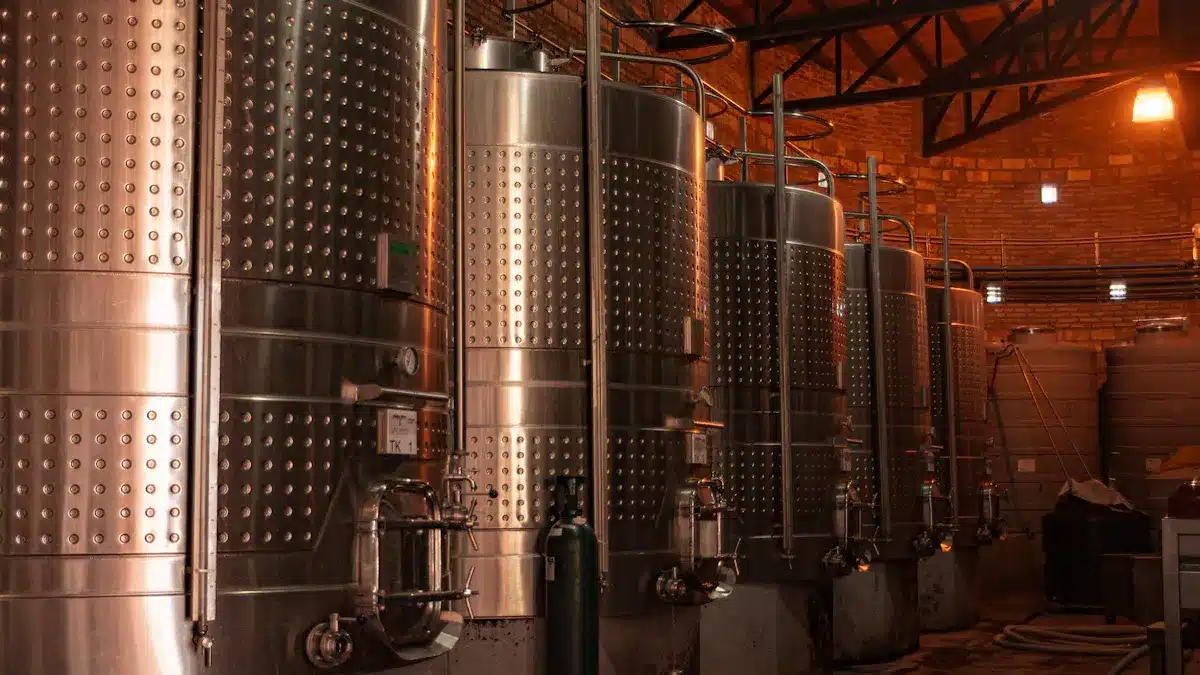
Beyond purity and control, stainless steel offers incredible efficiency that simplifies your workflow. You can save time, reduce labor, and protect your wine from start to finish. This versatility makes fermenting wine in stainless steel a smart choice for any operation, from large-scale production to dedicated home winemaking.
STREAMLINING THE WINEMAKING PROCESS
A single stainless steel tank can serve you through multiple stages of production. This versatility streamlines your entire winemaking process. You can use the same vessel for:
- Maceration: Soaking red grape skins to extract color and tannins.
- Fermentation: Managing the conversion of sugar to alcohol.
- Élevage (Aging): Maturing the wine while preserving its fresh fruit character.
- Bulk Storage: Holding the wine safely before bottling.
This multi-functionality means you move your wine less often, which reduces labor and minimizes the risk of loss during transfers. One California vineyard, for example, cut costs by 30% and reduced fermentation time after switching to versatile tanks.
SIMPLIFYING CLEANING AND LABOR
Cleaning is a constant and critical task in a winery. The smooth, non-porous surface of a stainless steel tank makes this job fast and effective. Unlike wood, steel has no cracks or pores where microbes can hide. This drastically cuts down on cleaning time and costs.
You can clean a stainless steel tank in about one-fifth of the time it takes to maintain an oak barrel. This efficiency adds up, saving you significant labor costs over a year.
The cleaning process is simple. You typically use an alkaline cleaner to remove organic residue, followed by an acid rinse to neutralize the surface. Wineries that upgrade their tanks often see a major reduction in water and chemical use, with some cutting cleaning cycles by up to 30%.
ELIMINATING OXIDATION WITH FLOATING LIDS
Oxygen is one of wine’s greatest enemies, causing it to lose fresh flavors and develop undesirable nutty or bruised-apple notes. A variable-capacity tank with a floating lid is your best defense against this threat. This design is perfect for handling different batch sizes and for long-term wine storage.
The floating lid sits directly on the wine’s surface. An inflatable gasket around its edge creates an airtight seal against the inner wall of the tank. This simple but brilliant feature eliminates headspace—the empty air pocket above the wine—and protects your product from harmful oxygen exposure. You can confidently store partial batches without worrying about spoilage, ensuring every drop maintains its intended quality.
A SMART LONG-TERM INVESTMENT
Choosing stainless steel is more than a purchase; it is a strategic investment in your winemaking future. You gain equipment that offers exceptional durability, enhances safety, and provides a strong return over many years. This makes it a smart financial decision for both home winemakers and commercial wineries.
UNMATCHED DURABILITY AND LONGEVITY
A high-quality stainless steel tank is built to last. You can expect it to serve your winery for 30 to 50 years or even longer. This impressive lifespan far exceeds other common materials. Oak barrels, for instance, typically need replacement every 3 to 5 years. This durability makes steel a highly cost-effective choice over the long term.
| Material | Typical Lifespan |
|---|---|
| Stainless Steel | 30–50+ years |
| Oak Barrels | 3–5 years |
This longevity means you spend less time and money on replacing equipment. You can focus your resources on crafting excellent wine.
ENSURING OPERATIONAL SAFETY
Modern stainless steel tanks come with features designed to protect you and your team. Key components like pressure gauges and safety valves help you monitor and control the fermentation process safely. This is especially important when making sparkling wines.
Winemaking involves serious hazards, particularly with confined spaces. Fermentation produces large amounts of carbon dioxide (CO2), which can displace oxygen inside a tank.
Safety Alert: Never enter a wine tank without proper training and safety equipment. High CO2 levels can cause unconsciousness and death in minutes. Always follow strict confined-space entry protocols.
The cleanable, sealed design of a stainless steel tank helps you manage these risks effectively, creating a safer work environment.
CHOOSING THE RIGHT STAINLESS STEEL TANK
Selecting the right tank ensures it meets your specific needs. You should consider several key features:
- Steel Grade: AISI 304 is perfect for most winemaking. You might choose AISI 316 for its superior corrosion resistance if your winery is near the ocean.
- Essential Fittings: Look for features like a racking arm to separate wine from sediment, a sample valve for testing, and a manway for easy access.
- Manufacturer Quality: Work with experienced manufacturers. They can offer custom designs and will adhere to high-quality certifications like ISO and CE. This guarantees your tank is built to the highest standards for safety and performance.
Choosing to start fermenting wine in stainless steel gives you a clear advantage. You gain purity from its clean, neutral surface. You achieve precise control with superior temperature management. You also get unmatched durability for an efficient workflow. This choice is more than just buying equipment.
It is an investment in the consistency, quality, and future of your craft, connecting you to ongoing innovations in winemaking technology.
Take the next step with confidence. You can elevate your winemaking by choosing stainless steel.
FAQ
Can you age wine in stainless steel?
Yes, you can age wine in stainless steel. This method preserves the wine’s fresh fruit character. It is ideal for crisp white wines or fruit-forward reds. You use steel when you want to avoid adding oak flavors and achieve a pure expression of the grape.
Is stainless steel only for white wines?
No, stainless steel is excellent for both red and white wines. Vintners use it for red wines to manage fermentation temperatures precisely. It also helps preserve the bright, primary fruit flavors in certain red varietals before any potential barrel aging.
What is the difference between 304 and 316 steel?
Grade 304 is the industry standard and works perfectly for most wineries. You should choose Grade 316 for its extra corrosion resistance. This is a smart choice if your winery is located near the ocean where salty air can be a factor.
How do floating lids work?
A floating lid sits directly on the wine’s surface inside the tank. An inflatable gasket around the edge creates an airtight seal. This removes the empty air space, called headspace. It protects your wine from oxygen, which can cause spoilage and off-flavors.