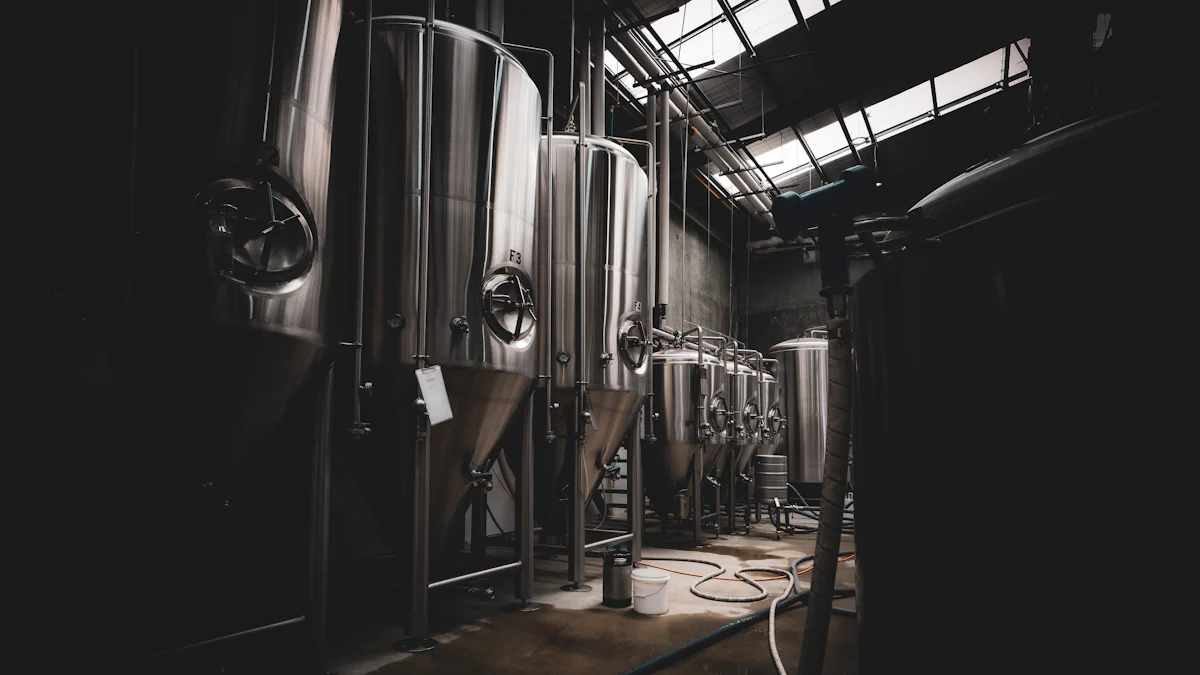

Yes, stainless steel is a great pick for water tanks. Experts choose this material because it is strong and clean. It also lasts a long time. Many reports say stainless steel does not rust. It keeps water safe and is simple to clean. CHENMA stainless steel water tanks use good materials. The tanks have smooth surfaces for better hygiene and safety.
| Reason for Choosing Stainless Steel Water Tanks | Description |
|---|---|
| Durability | Stainless steel tanks do not rust. They stay strong in bad weather. |
| Hygiene | They are the cleanest way to store water. They stop mold and sludge from growing. |
| Cost Efficiency | These tanks cost more at first. But they last longer and need less fixing. You save money over time. |
| Environmental Impact | They are made from 60-70% recycled materials. They use less energy and help the planet. |
| Ease of Maintenance | Stainless steel does not need special coatings. Cleaning and taking care of it is easy. |
Key Takeaways
- Stainless steel water tanks are robust and durable, with a lifespan of over 30 years, making them an ideal choice for the future. These tanks maintain clean and safe water quality and effectively inhibit the growth of bacteria and mold.
- The first price is higher than plastic or concrete tanks. But stainless steel tanks need less fixing and care later.
- Stainless steel tanks are good for the environment. They are made from recycled materials. They can also be recycled after use.
- You need to plan before installing them. Skilled workers are needed to install them. Getting help from experts makes it easier.
Advantages of Stainless Steel Water Tanks

Hygiene and Water Quality
Stainless steel water tanks maintain clean and safe water quality. Experts point out that these tanks effectively inhibit bacterial growth. The smooth, flat surface of the tanks makes them easy to clean and helps maintain water freshness for extended periods. CHENMA stainless steel water tanks are made of high-quality 304 and 316 stainless steel and strictly adhere to hygiene standards such as NSF/ANSI 61 and ISO 9001:2015. These tanks effectively prevent chemicals from seeping into the water, thus protecting human health and water purity.
| Material | Bacterial Growth Prevention | Additional Notes |
|---|---|---|
| Stainless Steel | High | Smooth, non-porous surface; easy to clean. |
| Plastic | Moderate | Can heat up, promoting growth; may leach chemicals. |
| Concrete | Low | Cracks and rough surfaces allow bacteria entry. |
Durability and Longevity
Stainless steel water tanks are extremely robust and durable with a long service life. These tanks are not easily damaged by weather or daily use. Most stainless steel water tanks have a lifespan of over 30 years. They are not prone to cracking or breaking. This means less leakage and less worry.
| Tank Material | Lifespan |
|---|---|
| Plastic tanks | 8–12 years |
| Concrete tanks | 15–20 years |
| Stainless steel tanks | 30–40+ years |
Corrosion and Chemical Resistance
Stainless steel tanks offer excellent rust resistance. 304 grade stainless steel is suitable for home and commercial settings, resisting rust and stains. 316 grade stainless steel is better suited for harsh environments, such as coastal areas or factories exposed to seawater or chemicals. Water tanks utilize both types of steel to meet different needs, ensuring the tanks are robust, durable, and rust-free for many years.
Low Maintenance
Stainless steel water tanks are easy to maintain. They require no special coatings or frequent repairs and are very easy to clean. They are virtually leak-proof. In the long run, the maintenance costs of stainless steel water tanks are lower than those of concrete water tanks. Concrete water tanks often crack, requiring expensive repairs. Stainless steel water tanks, on the other hand, are robust, durable, and operate reliably.
- Stainless steel tanks cost less to build and fix than concrete tanks.
- Concrete tanks can cost over $1 million to repair, but stainless steel tanks cost much less.
Stainless steel water tanks are clean, strong, resist rust, and are easy to care for. These things make them a smart choice for water tanks in homes, businesses, and factories.
Drawbacks of Stainless Steel Water Tanks
Cost Factors
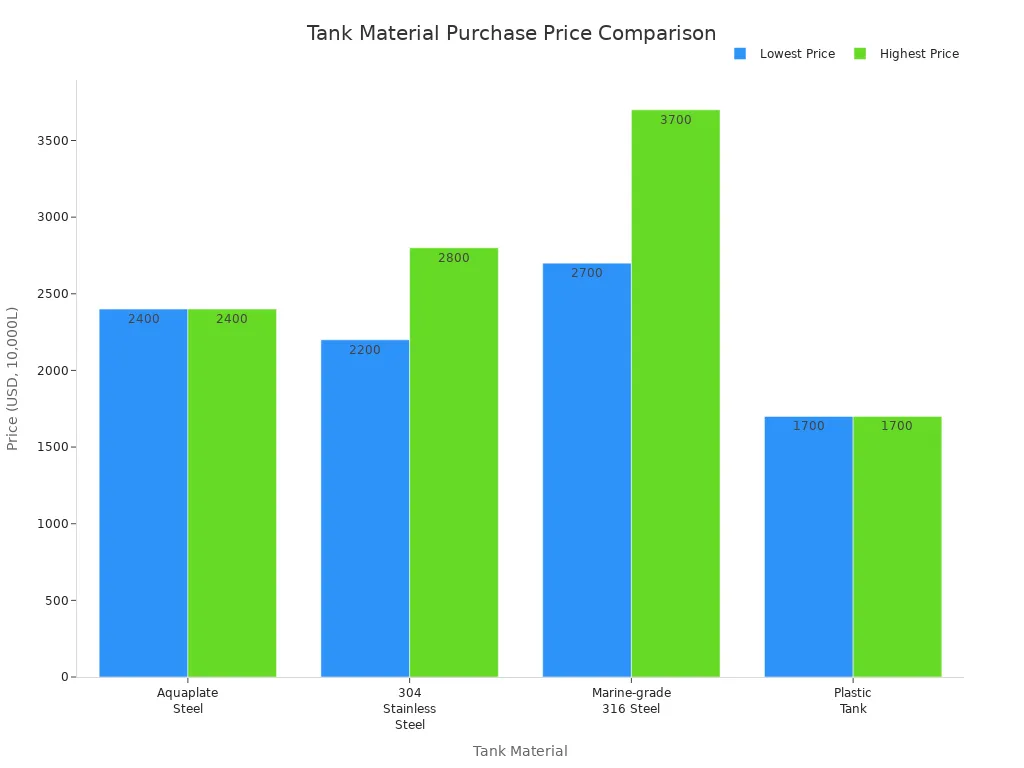
Stainless steel water tanks cost more at first than other tanks. A 10,000-liter tank can cost between $2,200 and $3,700. The price depends on the steel grade. Plastic tanks are cheaper. Concrete tanks also cost less for each cubic foot. The table below shows how much each tank costs:
Weight and Handling
Stainless steel tanks are big and heavy. Moving them is not easy. Experts say there are some problems:
- You need special tools to move and lift the tanks.
- The tanks must be handled carefully to stop dents or scratches.
- Good planning is needed to deliver the tanks safely.
The tanks are strong and do not rust easily. But their weight makes them harder to set up than plastic tanks.
Installation Considerations
Putting in a stainless steel tank needs skill. The job can be hard, especially for large tanks. CHENMA gives help with installation. Their team comes to the site and answers questions. Technicians help customers with any setup problems. This help makes things easier and stops mistakes.
Some people in places like Stamford, CT, have seen that chemicals in city water, like chlorides, can make tanks rust faster. An engineer said stainless steel tanks may not work well with lots of fluoride or chlorine. In these cases, lined tanks might be better.
Stainless steel water tanks cost more at first and are hard to move and install. With good help and planning, these problems are easier to handle.
Best Uses for Stainless Steel Water Tanks

Ideal Applications
Stainless steel water tanks are used in many places. They are strong and do not rust. These tanks are good where clean water is important. The table below shows how different groups use these tanks:
| Industry | Application |
|---|---|
| Households | Safe water storage helps stop sickness from dirty water. |
| Hospitals | Stores clean water for drinking and other uses. |
| Schools | Gives students clean water, helped by government plans. |
| Factories | Holds lots of water for work, keeps water safe. |
| Agriculture | Used for watering crops and animals, helps the environment. |
| Others | Used in hotels, restaurants, and public places for many needs. |
These water tanks are used in many buildings to store hot and cold water. They can be found in new buildings, city water supply systems, and even the military. Residential buildings, apartments, hotels, and restaurants use them to ensure safe drinking water. Factories use them to store water, chemicals, and other liquids. The food, medical, and electronics industries also use these tanks because they are clean and durable.
Who Should Choose Stainless Steel Tanks
Stainless steel water tanks are a great choice for many users. The following groups benefit the most from them:
- Homes and villas connected to city water systems
- Factories that need water for manufacturing or cooling
- Fire protection systems requiring reliable emergency water storage
- Farms that collect rainwater or treated water for irrigation
In short, stainless steel water tanks provide safe, durable, and easy-to-maintain water storage. They are ideal for anyone who values clean water, long-lasting tanks, and low maintenance.
conclusion
Stainless steel water tanks are a top choice for water storage due to their corrosion resistance, long service life, and easy cleaning. While initial costs are higher and installation requires professional expertise, long-term maintenance costs are low, and they are environmentally friendly and recyclable, making them suitable for various scenarios including residential, medical, industrial, and agricultural applications.
CHENMA selects high-quality 304/316 stainless steel, meeting international hygiene standards, and provides professional installation services to address specific installation challenges, offering safe and durable water storage solutions for various scenarios.
FAQ
Why are stainless steel water tanks more suitable for storing drinking water than plastic and concrete ones?
Stainless steel has a smooth and non-porous surface that inhibits the growth of bacteria and mold, and it does not release harmful substances, ensuring long-term clean and safe water quality.
What is the service life of stainless steel water tanks, and will they rust?
The service life is generally 30 to 40 years. High-quality 304 stainless steel is rust-resistant for daily use, while 316 stainless steel can adapt to coastal and highly corrosive environments.
Are stainless steel water tanks worth buying despite their high upfront cost?
Although the initial purchase cost is high, they require no frequent repairs or special protective coatings, leading to extremely low long-term maintenance costs and higher overall cost-effectiveness.
Is it difficult to maintain stainless steel water tanks?
Maintenance is simple with no special care needed. The smooth surface allows for easy cleaning, and the material is sturdy enough to resist cracking and leakage.
Are there any special requirements for installing stainless steel water tanks?
These tanks are heavy, so professional tools are required for transportation and hoisting, and installation must be carried out by skilled technicians to avoid potential problems.