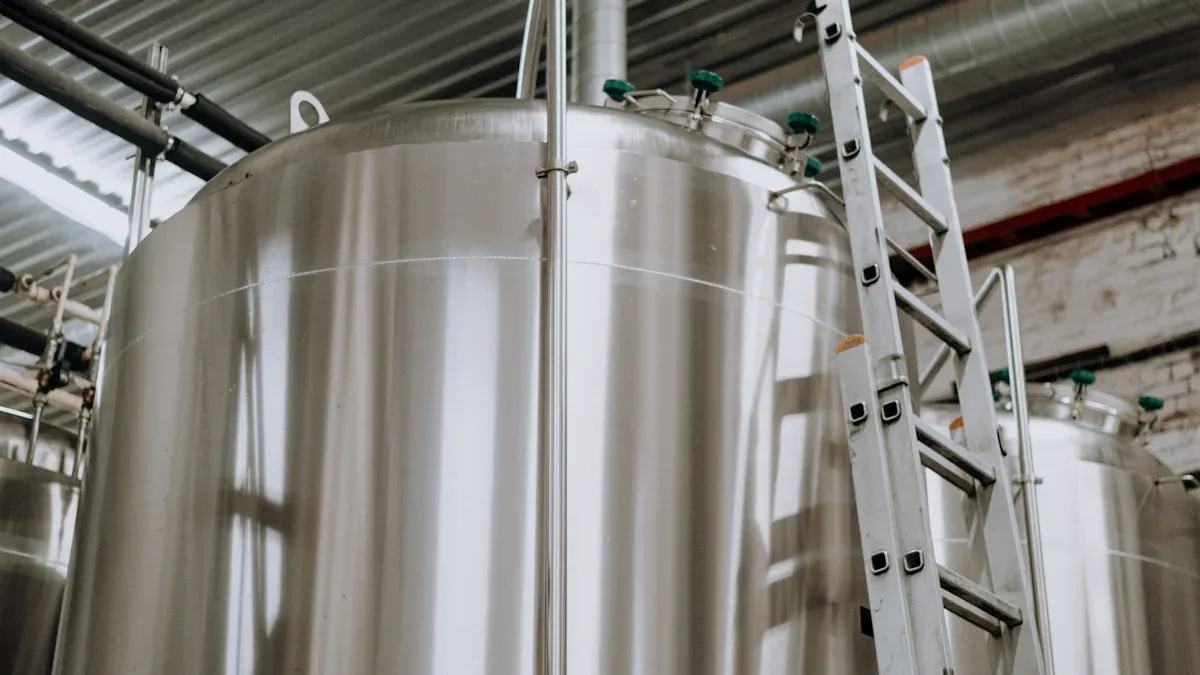

Winemakers consistently choose stainless steel tanks over oak barrels for wine aging, thanks to the unrivaled control, consistency, and cost efficiency they deliver. Unlike porous oak, stainless steel creates a fully controllable, inert environment that preserves a wine’s true varietal character, while offering decades of reliable performance with minimal maintenance. Modern custom solutions, such as those from Chenma, equip wineries with specialized features to ensure batch-to-batch consistency, locking in a wine’s natural aroma and flavor profile through every stage of the aging process.
Key Takeaways
- Stainless steel’s airtight, non-porous design limits unwanted oxygen exposure during aging, preserving a wine’s fresh fruit character and bright acidity far more reliably than oak barrels.
- The smooth, non-reactive surface of stainless steel simplifies sanitation, reduces contamination risk, and cuts long-term cleaning labor and costs for wineries.
- With a lifespan of 30+ years (compared to just 3–5 years for standard oak barrels), stainless steel tanks deliver dramatically superior long-term value and lower total cost of ownership.
- Fully customizable tank designs give winemakers complete flexibility to tailor the aging environment to specific wine styles, from crisp whites to sparkling wines.
- Stainless steel’s 100% flavor-neutral profile ensures a wine’s natural aromatic and flavor profile remains front and center, with no unintended wood-derived notes.
- Stainless steel tanks offer a more sustainable aging solution than oak barrels, with full recyclability, reduced waste, and lower resource consumption over their lifespan.
Practical Benefits of Stainless Steel Tanks for Wine Aging

Exceptional Durability & Low-Maintenance Design
Stainless steel aging tanks are engineered for long-term, heavy-duty use, with inherent corrosion resistance that delivers a service lifespan of 30+ years with minimal upkeep. This is a dramatic upgrade over oak barrels, which typically need to be replaced every 3–5 years as their porous wood structure degrades, retains residual flavors, and becomes prone to microbial contamination.
For wineries, this longevity pairs with unmatched ease of maintenance. Unlike oak barrels, which require labor-intensive hand cleaning and carry a constant risk of mold, bacteria, or off-flavor buildup in their wood grain, stainless steel’s smooth, non-porous surface prevents residue and microbial trapping. Compatible with automated clean-in-place (CIP) systems, these tanks cut down on manual labor, reduce cleaning time, and lower long-term operational costs, while ensuring a sterile, consistent environment for every batch of aging wine.
Cost Efficiency Compared to Oak Barrels
Stainless steel aging tanks deliver significant, ongoing cost savings for wineries, with a far lower total cost of ownership than oak barrels. While the upfront investment in stainless steel may be higher, the decades-long lifespan eliminates the recurring cost of barrel replacement, which is a major operational expense for most wineries.
The table below breaks down the core cost and practical differences between the two aging solutions:
| Feature | Stainless Steel Tanks | Oak Barrels |
|---|---|---|
| Ongoing Maintenance Cost | Low, with minimal labor and supply expenses | High, with regular cleaning, repair, and replacement costs |
| Long-Term Durability | Exceptional, with a 30+ year service life | Limited, requires replacement every 3–10 years |
| Cleaning Ease | Simple, automated compatible, non-porous surface | Labor-intensive, porous wood traps residue and requires specialized care |
| Contamination Risk | Near-zero, inert non-porous material | High, prone to mold, bacterial growth, and residual flavor transfer |
Flexible Customization Options for Winemaking
Stainless steel aging tanks offer unmatched flexibility, with fully customizable sizes, shapes, and features to fit a winery’s unique production needs and aging protocols. Unlike standard oak barrels, which come in limited fixed sizes and designs, stainless steel tanks can be tailored for small-batch craft production or large-scale commercial winemaking, with specialized features built to support precise aging.
Precision Control During Wine Aging in Stainless Steel tanks
Consistent Temperature Regulation
Temperature stability is a key factor in successful wine aging, and stainless steel tanks offer a level of temperature control that oak barrels cannot match. These tanks can be equipped with integrated, fully adjustable cooling jackets, allowing winemakers to set and maintain precise, stable aging temperatures, unaffected by fluctuations in the cellar’s external environment.
In contrast, oak barrels lack built-in temperature control, and their heavy wooden structure makes them slower to adapt to temperature changes. Even in temperature-controlled cellars, oak barrels cannot ensure the consistent temperature of every liter of wine as effectively as stainless steel tanks. This stable temperature control protects the wine’s delicate chemical balance, preserves its fresh flavors and acidity, and prevents spoilage or unexpected flavor shifts during aging.
Effective Oxygen Management
Oxygen exposure is the primary driver of flavor and color changes during wine aging, and stainless steel tanks allow winemakers complete and reliable control over oxygen levels. Unlike semi-porous oak barrels, which slowly and uncontrollably absorb oxygen over time, stainless steel tanks form a completely airtight layer, limiting oxygen exposure to the level the winemaker intends to introduce.
This precise control is crucial for maintaining the wine’s bright fruit aromas, crisp acidity, and vibrant color. Even in well-managed cellars, uncontrolled oxygen exposure in oak barrels can lead to browning, loss of fresh fruit flavors, and a bland, uninteresting taste. The airtight design of stainless steel tanks eliminates this risk, ensuring the wine ages as the winemaker intends, preventing accidental oxidation.
Guaranteed Batch-to-Batch Consistency
For wineries building a consistent brand identity, batch-to-batch uniformity is non-negotiable, and stainless steel aging tanks deliver unmatched reliability in this area. Every stainless steel tank provides the exact same inert, controllable environment for every batch, with no variation from barrel to barrel, which is a major limitation of oak aging.
Oak barrels vary widely in their porosity, oxygen transfer rate, and flavor contribution, even when they come from the same cooperage and tree lot. This means two identical batches of wine aged in side-by-side barrels can develop dramatically different flavors and profiles. Stainless steel tanks eliminate this variability, with a consistent, sterile, and controllable environment for every batch. Chenma’s precision-engineered tanks further enhance this consistency, with uniform wall thickness, seamless welds, and standardized features that ensure identical aging conditions across every tank in a winery’s cellar.
Flavor Preservation & Style Flexibility for Winemakers
100% Flavor-Neutral Aging Environment
The single biggest flavor-related difference between stainless steel tanks and oak barrels is stainless steel’s completely inert, flavor-neutral profile. Unlike oak barrels, which impart wood-derived notes like vanilla, toast, spice, and caramel into the wine, stainless steel adds zero unintended flavors or aromas.
This neutrality lets the wine’s true varietal character and terroir shine through, with no masking or alteration from wood notes. For winemakers who want to highlight the natural flavor of their grapes, rather than the flavor of the aging vessel, stainless steel is the clear choice over oak barrels.
| Characteristic | Stainless Steel Tanks | Oak Barrels |
|---|---|---|
| Flavor Contribution | 100% neutral, preserves pure grape and terroir notes | Imparts vanilla, toast, spice, and caramel wood-derived flavors |
| Oxygen Exposure | Fully controllable, near-zero baseline ingress | Uncontrolled, slow, variable oxygen transfer |
| Aroma Profile | Clean, grape-driven, bright fruit notes | Complex wood, smoke, and secondary aromas |
| Ideal Flavor Outcome | Pure, crisp, fruit-forward wines | Rich, layered, wood-accented wines |
Uncompromised Retention of Fruit & Aromatic Profiles
Stainless steel’s airtight, inert design is uniquely suited to preserving the delicate aromatic compounds and fresh fruit notes that define many popular wine styles. The low-oxygen, neutral environment locks in bright, fresh flavors like citrus, stone fruit, tropical fruit, and floral aromas, which are quickly lost or muted during oak barrel aging.
Oak barrels not only add their own flavors, but also allow slow oxidation that breaks down the delicate aromatic compounds that make fruit-forward wines distinctive. Stainless steel eliminates this issue, ensuring the wine retains the exact aromatic and flavor profile the winemaker cultivated during fermentation, through the entire aging process.
Ideal for Crisp, Fruit-Forward & Aromatic Wine Styles
While stainless steel tanks can be used for all wine styles, they are particularly well-suited for wines that rely on bright acidity, fresh fruit character, and clean, expressive aromas. This includes white wines, rosés, sparkling wines, and light-bodied red wines that are meant to be drunk young and fresh.
For these styles, oak barrel aging is often counterproductive, as the wood notes and oxidation can overpower the wine’s natural fruit brightness and crispness. Stainless steel tanks let winemakers preserve the exact characteristics that make these wines popular, with no unintended alterations from the aging vessel.
Sustainability Advantages Over Oak Barrels
Fully Recyclable & Resource-Efficient Build
Stainless steel aging tanks offer significant sustainability benefits over oak barrels, starting with their fully recyclable design. At the end of their 30+ year lifespan, stainless steel tanks can be 100% recycled into new products, with zero waste sent to landfills. Oak barrels, by contrast, have a very limited lifespan, and most end up discarded or repurposed into non-winemaking uses, with very little material recycled back into new barrels.
Stainless steel tanks also require far fewer resources to produce and maintain over their lifespan. Oak barrel production relies on old-growth oak trees, which take decades to mature, contributing to deforestation and high carbon emissions from harvesting and transportation. Stainless steel’s long lifespan means far fewer resources are used over time, with no ongoing need to harvest new wood for replacement vessels.
Reduced Long-Term Environmental Footprint
Beyond recyclability, stainless steel tanks also reduce a winery’s day-to-day environmental impact. Their smooth, non-porous surface requires far less water and fewer harsh cleaning chemicals than oak barrels, which need repeated, labor-intensive cleanings to prevent contamination. Automated CIP systems for stainless steel tanks also optimize water and chemical use, further reducing a winery’s environmental footprint.
The decades-long lifespan of stainless steel tanks also means far less waste is generated over time. A single stainless steel tank can replace 6–10 sets of oak barrels over its service life, drastically reducing the amount of waste a winery sends to landfills. For wineries looking to adopt more sustainable, eco-friendly winemaking practices, stainless steel tanks are a far more environmentally responsible choice than oak barrels.
Stainless Steel Tanks vs. Oak Barrels: Head-to-Head Comparison

Core Differences in Aging Performance & Practicality
At their core, the choice between stainless steel tanks and oak barrels comes down to control, consistency, and flavor intent. Stainless steel tanks deliver complete control over every aspect of the aging process, with a neutral environment that preserves the wine’s natural character. Oak barrels offer a hands-off, traditional aging process that adds wood-derived flavors and complexity, but with far less control, consistency, and long-term value.
The key tradeoffs are clear: stainless steel offers reliability, consistency, cost savings, and full creative control for the winemaker, while oak barrels offer traditional, wood-accented complexity, with higher costs, more maintenance, and far less control.
When to Choose Stainless Steel Over Oak Barrels
Winemakers should choose stainless steel tanks for wine aging in the following scenarios:
- You want to preserve the pure, natural varietal character and terroir of your grapes, with no added wood flavors
- You produce crisp, fruit-forward white wines, rosés, sparkling wines, or light-bodied red wines meant to be drunk fresh
- You need precise, consistent control over temperature and oxygen levels during aging
- You want to reduce long-term operational costs, maintenance labor, and barrel replacement expenses
- You are building a brand with a consistent, repeatable flavor profile across every batch
- You want to reduce your winery’s environmental footprint and adopt more sustainable winemaking practices
Oak barrels remain a good choice for full-bodied red wines that benefit from slow oxidation, wood-derived tannins, and vanilla/toast flavor notes. Many wineries also use a combination of both vessels to create balanced, complex wines, with stainless steel preserving fruit brightness and oak adding depth and structure.
Conclusion
Stainless steel tanks have become the preferred aging vessel for winemakers around the world, thanks to their unrivaled control, consistency, long-term value, and ability to preserve a wine’s true natural character. Unlike oak barrels, which limit control, add unintended flavors, and require constant replacement and maintenance, stainless steel tanks give winemakers full creative authority over the aging process, with a reliable, low-maintenance solution that lasts for decades.
From precise temperature and oxygen control to fully customizable designs, flavor neutrality, and sustainable construction, stainless steel tanks solve nearly all of the core limitations of oak barrel aging. Chenma’s industry-leading stainless steel aging tanks bring these benefits to wineries of all sizes, with custom-engineered solutions that help winemakers craft consistent, high-quality wines that highlight the best of their grapes and terroir.
FAQ
What types of wines benefit most from stainless steel aging?
White, rosé, and sparkling wines taste best in stainless steel tanks. These tanks keep the fruit flavors fresh. They also help the wine stay crisp. Winemakers use stainless steel for wines that need a pure taste.
How do stainless steel tanks help prevent contamination?
Stainless steel tanks have smooth surfaces. Bacteria cannot hide or grow easily. Cleaning machines wash away residue fast. Wineries keep their wine safe with these tanks.
Can winemakers customize stainless steel tanks for different needs?
Yes! Winemakers pick the tank size and shape they want. They can add cooling jackets or sampling ports. Chenma gives many choices. Custom tanks help wineries make wine their own way.
Do stainless steel tanks affect wine flavor?
Stainless steel tanks do not change the wine’s flavor. They keep the wine’s real taste and smell. The wine stays bright and fruity. Oak barrels add flavors like vanilla or spice.