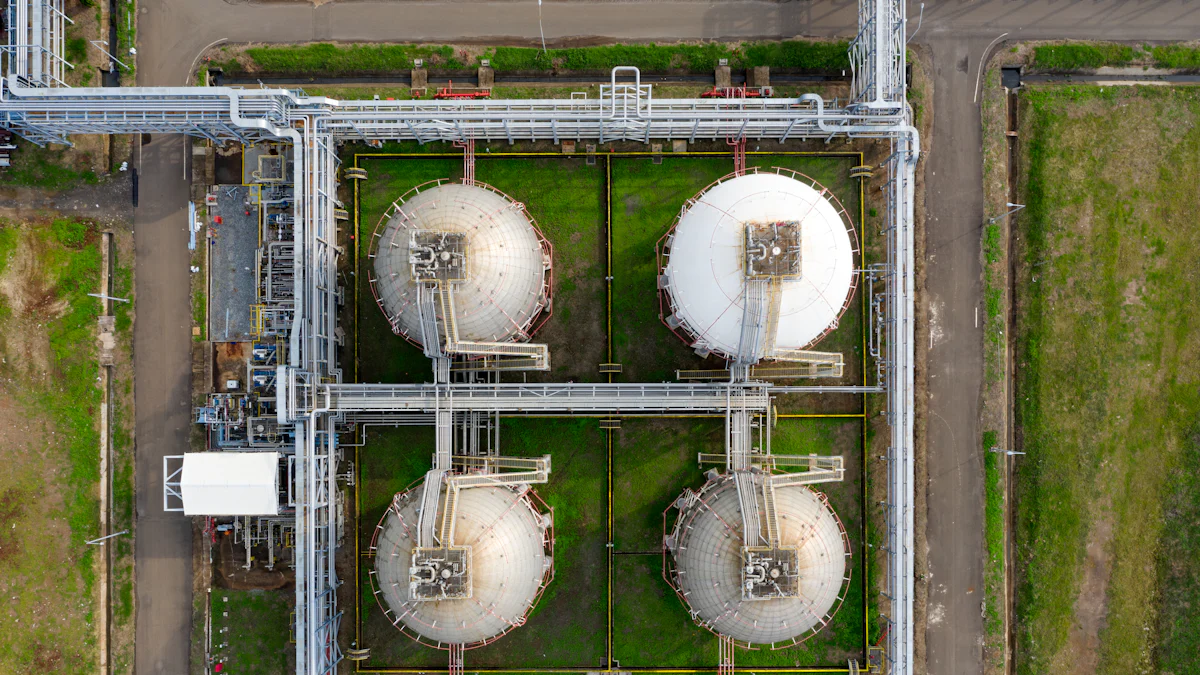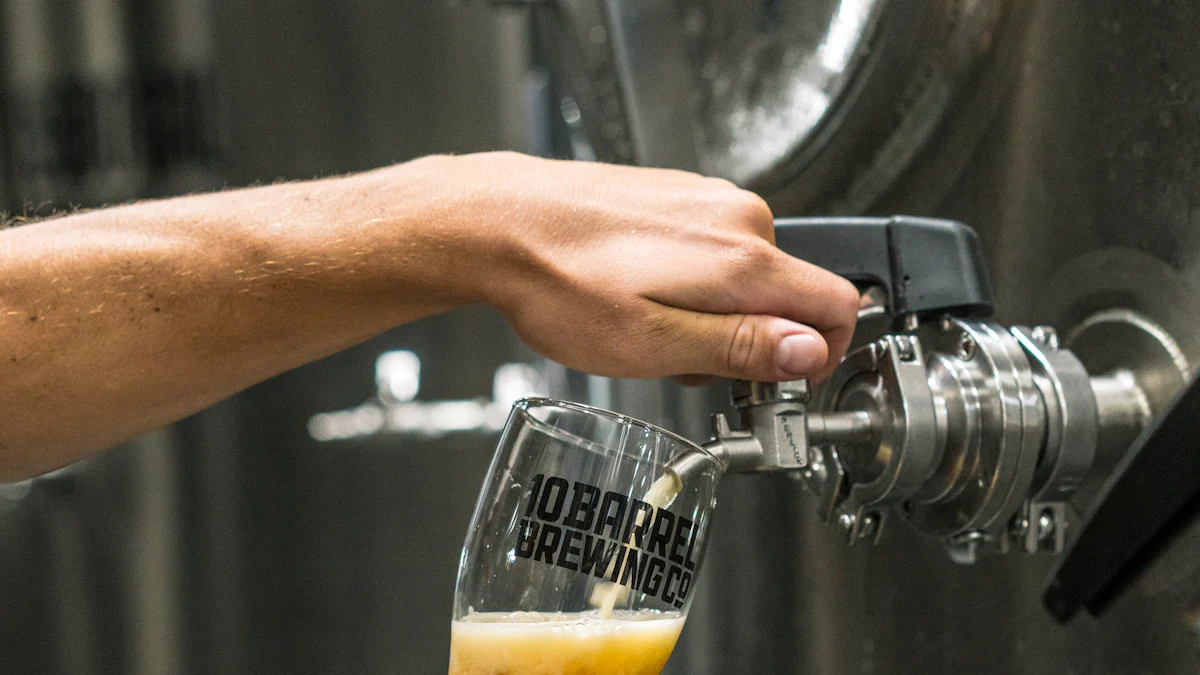

Mixing tanks come in a variety of shapes, each suited to a specific purpose. They can be categorized by function, material, appearance, or the type of mixer used. Choosing the right mixing tank is crucial to the final quality of the product. A suitable mixing tank helps the mixer operate efficiently, reduces waste, and improves product quality. Using the optimal mixing tank allows the mixer to achieve the best texture, aroma, and work efficiency.
Key Takeaways
- Mixing tanks have different shapes and materials. Each tank is made for a certain job. Picking the right tank helps things work better. It also makes products higher quality.
- Sanitary mixing tanks are very important in food and medicine. They keep things clean and safe. These tanks stop germs from getting in.
- Laboratory mixing tanks are used for testing small batches. They help try new recipes before making bigger amounts.
- Portable mixing tanks are good for small jobs. They are light and easy to carry. You can move them quickly for fast mixing.
- It is important to know about different agitator styles. Each style changes how well things mix. Some styles work better for certain materials and uses.
Mixing Tank Applications
Mixing tanks are used in many businesses. Each business uses a mixing tank for a special reason. The right mixing tank helps mixers do their job better. It also makes products safer for people. Some tanks mix food. Other tanks mix chemicals or help make wine. The shape, size, and material of a mixing tank depend on what the business needs.
Industrial Mixing Tanks
Industrial mixing tanks are essential in factories. They help agitators mix, dissolve, or react materials. Many businesses use these tanks, such as food, cosmetics, and chemical companies. The food and beverage industry uses the most mixing tanks. These tanks must be kept clean and durable. Industrial agitators typically require tanks made of stainless steel, polyethylene (PE), or polypropylene (PP). Chemical companies require tanks capable of handling high-viscosity liquids and high temperatures. Industrial mixing tanks come in a wide variety of sizes, from small to large. The table below shows how different companies use mixing tanks:
| Industry | Typical Applications | Material Specifications |
|---|---|---|
| Food | tomato sauces, dressings, salsa, soup, jam, jelly, etc. | food grade 304/316 stainless steel, PE, PP |
| Cosmetic | facial cream, lotion, nail polish | FDA + USP VI poly tanks, stainless mixing vessels |
| Chemical | shampoo, wax, sealants, solvent, toothpaste | corrosion-resistant materials, avoid strong oxidizers |
The food and beverage business uses about 35% of all mixing tanks. This is because they need clean and strong tanks for safe food. Chemical and water treatment companies also use many mixing tanks. They need tanks that can do hard jobs and follow safety rules.
Sanitary Mixing Tanks
Sanitary mixing tanks help mixers keep things clean and safe. These tanks are used in food, drink, and medicine factories. Sanitary mixers need tanks that are easy to clean. They also need tanks that do not let germs grow. The table below lists the main rules for sanitary mixing tanks:
| Standard | Description |
|---|---|
| Material Compatibility | Ensures ingredients are protected by using appropriate materials. |
| Easy-to-Clean Designs | Allows thorough cleaning and sanitization between batches. |
| Minimal Contamination Risk | Facilitates multiple processes in one facility. |
| Durability | Materials must withstand chemical corrosion, pressures, and temperatures. |
| Compatibility | Materials must work with cleaning solutions and bioprocessing conditions. |
| Homogeneity | Surfaces must be nonabsorbent, inert, and resistant to corrosion. |
| Cleanability | Equipment must respond well to cleaning methods without imperfections. |
| Drainability | Systems must be designed for effective drainage of bioburdens. |
| Additional Requirements | Equipment must allow for frequent cleaning and maintenance. |
Sanitary mixing tanks are often made from stainless steel. This material does not rust and is easy to clean. Sanitary mixers use these tanks to keep food and medicine safe.
Laboratory Mixing Tanks
Laboratory mixing tanks help stirrers experiment with new ideas and formulations. These tanks are smaller than those used in factories. They allow scientists to test new mixtures before large-scale production. Laboratory mixing tanks can be made of stainless steel, polyethylene (PE), or polypropylene (PP). The table below lists the types and sizes of laboratory mixing tanks:
| Material Type | Applications | Capacity Range |
|---|---|---|
| Stainless Steel | Food grade applications, resistant to strong acids | A few liters to several thousand liters |
| Polyethylene (PE) | Used for caustics, metal finishing, plating, and brine | A few liters to several thousand liters |
| Polypropylene (PP) | Suitable for many organic chemicals and etching chemicals | A few liters to several thousand liters |
Laboratory mixing tanks help mixers test small amounts. They can change the speed, heat, and time for mixing. This helps mixers find the best way to blend before making big batches.
Portable Mixing Tanks
Portable mixing containers offer mixers more options. They can be moved around the factory or laboratory. Portable mixing containers are smaller and lighter than stationary mixing containers. They help mixers mix small batches of materials or test new products. Many portable mixing containers are equipped with wheels or handles for easy movement. Mixers can use these containers for quick mixing or mixing in different rooms. Portable mixing containers can be made of stainless steel, polyethylene (PE), or polypropylene (PP). They come in various sizes, but most are relatively small.
Fermentation Mixing Tanks
Fermentation mixing tanks help winemakers brew beverages such as wine and beer. These tanks control the mixing and fermentation process. Shandong Chenma Machinery Co., Ltd. manufactures specialized wine fermentation tanks. These tanks are made of stainless steel and have many practical functions. The table below lists some of the important characteristics of these tanks:
| Feature | Description |
|---|---|
| Precision Control | Dual cooling zones maintain ideal fermentation temperatures |
| Hygienic Design | Automated CIP system achieves 99.99% sanitation |
| Pressure Safety | Certified relief valves and pressure gauges |
| Ergonomic Access | Side manways and ladder hooks for maintenance |
Fermentation mixing tanks must keep the right temperature and stay clean. Mixers use these tanks to blend juice, yeast, and other things. The size of the mixing tank can be small or very big. It depends on how much wine or beer is made. These tanks help mixers make good wine and other drinks.
Note: Different businesses need different mixing tanks. Food and drink factories need clean and strong tanks. Chemical plants need tanks that can do hard jobs. Wine makers need tanks that control temperature and keep drinks safe. Mixers must pick the right mixing tank for their work.
Mixing Vessel Materials
Mixing vessels are made from different materials. Each material gives the vessel special features. The choice depends on the job and how much it needs to hold. It also depends on what is being mixed. The table below shows common materials and their good points.
| Material | Advantages | Disadvantages |
|---|---|---|
| Stainless Steel | Does not rust, easy to clean, lasts long | Can cost a lot |
| Carbon Steel | Cheap, strong | Rusts if not coated |
| Nickel Alloy | Great at not rusting | Costs a lot |
| Fiberglass-Reinforced Plastic | Light, stands up to many chemicals | Not as strong as metals |
Stainless Steel Mixing Tanks
Stainless steel mixing tanks are used in food, drink, and chemical factories. They do not rust and are easy to clean. Many stainless steel vessels last for years. They are good for big jobs and places that must be very clean. Stainless steel mixing tanks help keep things safe and pure.
Plastic Mixing Tanks
Plastic tanks have many good points. They are lighter than metal tanks. They are easy to move around. Many businesses use plastic vessels because they do not rust. Plastic tanks cost less than metal ones. They can be made in different shapes and sizes. Some businesses, like farms and building sites, use plastic tanks because they are easy to carry and set up.
- Plastic mixing vessels do not rust.
- They are light and easy to move.
- They cost less and come in many sizes.
- Custom shapes help keep things safe.
Polypropylene (PP) Mixing Tanks
Polypropylene mixing vessels are good at handling chemicals. They work well with acids, bases, and solvents. The table below shows how PP mixing tanks handle chemicals at different temperatures.
| Chemical | Resistance at 20˚C | Resistance at 70˚C | Resistance at 100˚C |
|---|---|---|---|
| Hydrofluoric acid | OK | ||
| Nitric acid | OK | ||
| Phosphoric acid | OK | ||
| Sodium hydroxide | OK | ||
| Sulfuric acid | OK | △ | OK |
Polypropylene mixing vessels work well with many organic solvents. They handle weak acids and bases. They do not work well with strong oxidizers or some solvents when hot. Many labs and factories use PP mixing tanks for jobs that need safety and medium size.
Polyethylene (PE) Mixing Tanks
Polyethylene mixing vessels are used for water treatment and storage. They cost less than PP mixing tanks. PE mixing vessels are not as strong and can crack more easily. They do not stand up to strong chemicals as well as PP mixing vessels. The table below compares PE and PP mixing vessels.
| Property | Polyethylene (PE) | Polypropylene (PP) |
|---|---|---|
| Cost | Costs less | Costs more |
| Durability | Weaker, cracks easier | Stronger, resists better |
| Chemical Resistance | Not as good | Better |
| Temperature Tolerance | Lower | Higher |
PE mixing tanks are best for small to medium jobs and simple mixing. They are good for storing water and weak chemicals.
Tip: The best mixing vessel material depends on how much it holds, what chemicals are used, and what the job needs. Stainless steel mixing tanks are good for clean and strong jobs. Plastic tanks save money and are easy to use. PP and PE mixing vessels are good for different chemical jobs.
Mixing Tank Designs

The way a mixing tank is shaped changes how well things mix. It also affects how easy it is to clean. Some shapes help mixers do their work better. Picking the right shape makes mixing faster and helps make better products.
Cylindrical Mixing Tanks
Factories use cylindrical tanks a lot. These tanks have round sides. This helps mixers blend thick liquids well. Stainless steel is used because it is strong and does not rust. The smooth sides are easy to clean and stop germs from growing. Many businesses like these tanks for big or small jobs. Mixers can choose the size and features they want.
Rectangular Mixing Tanks
Rectangular tanks help factories use space in a smart way. Their shape lets them hold more than round tanks. Mixers can blend things fast and evenly. One tank can fit in small spots and handle different amounts. This shape helps factories work faster and better.
Cone-Bottom Mixing Tanks
Cone-bottom tanks have a pointy bottom. This shape lets all the liquid drain out. It stops stuff from building up at the bottom. Mixers save money because less is wasted. The cone shape makes cleaning simple and cuts down on repairs. Factories use these tanks when they want good quality and quick emptying.
Flat-Bottom Mixing Tanks
Flat-bottom tanks are good for holding a lot. Mixers use them to store big amounts. Flat bottoms can let stuff build up, so cleaning often is needed. If mixers skip cleaning, the product can get worse and mixers might not work right.
Tip: Mixers should check flat-bottom tanks often to keep them clean and working well.
Dish-Bottom Mixing Tanks
Dish-bottom tanks have a rounded bottom. This shape helps mixers blend liquids that can make sediment. Food and drink factories use these tanks for drinks and sauces. Medicine and chemical companies use them too. The dish shape makes cleaning easier and keeps things safe.
| Tank Design | Mixing Efficiency | Cleaning Ease | Typical Use |
|---|---|---|---|
| Cylindrical | High | Easy | Industrial, food, beverage |
| Rectangular | High | Moderate | Manufacturing, space-saving |
| Cone-Bottom | Very High | Very Easy | Sediment removal, cost savings |
| Flat-Bottom | Moderate | Moderate | Bulk storage |
| Dish-Bottom | High | Easy | Food, beverage, pharma, brewery |
Mixers need to pick the best tank shape for their job. The right shape helps mixers blend, clean, and store things safely.
Type of Mixing Tank: Wall and Jacket

Single-Wall Mixing Tanks
A single-layer mixing tank has only one wall, without an outer jacket or additional insulation layer. This type of tank is suitable for environments with minimal temperature fluctuations and is often used for simple mixing operations. However, the internal temperature is affected by room temperature; as room temperature rises, the internal temperature also rises; conversely, as room temperature falls, the internal temperature also falls. This makes it difficult to maintain a suitable mixing temperature in the tank.
Tip: Single-wall tanks are cheaper and simple to clean. They are good for water-based mixes. They work for jobs that do not need heating or cooling.
The table below shows how single-wall and jacketed tanks control temperature:
| Tank Type | Temperature Control Capability |
|---|---|
| Single-wall Tank | Uses room temperature, hard to change temperature |
| Jacketed Tank | Made for better temperature control |
Single-wall mixing tanks are used in small factories and labs. They are also used where the mix does not need tight temperature control.
Jacketed Mixing Tanks
Jacketed mixing tanks have a special outside layer called a jacket. The jacket lets people heat or cool what is inside. Water, steam, or coolant goes through the jacket. This keeps the temperature steady. Mixers can control the process better and make better products. Jacketed tanks stop big changes in temperature. They keep the mix safe.
- Single-wall tanks use room temperature, so the temperature can change.
- Jacketed tanks can heat or cool, so the temperature stays the same.
Many businesses use jacketed mixing tanks. They need to control the temperature exactly. The table below shows where these tanks are used:
| Industry | Specific Uses |
|---|---|
| Food | Used for soup, sauce, dressings, ice cream, and cake mix. |
| Pharmaceutical | Mixing ingredients and solvents, keeping the right temperature for good products. |
| Chemical | Mixing and helping chemical reactions, used for paints, detergents, and glue. |
| Cosmetic | Mixing creams and ointments, where temperature must stay the same. |
Jacketed mixing tanks help factories make safe and good products. They are important for food, medicine, and chemical jobs that need steady heat or cold.
Type of Mixing Tank: Agitator Styles
Mixers are very important in mixing tanks. The way a mixer moves changes how well things mix. Different mixers are made for different jobs. Each agitator style helps with special tasks. Some blend liquids, others make creams, or keep chemicals safe.
Top-Entry Mixing Tanks
Top-entry mixing tanks have their agitators located at the top, dipping directly into the liquid. This design allows the agitator to penetrate deep into the tank, thoroughly mixing various materials. Top-entry agitators are versatile and can be used to mix food, chemicals, and pharmaceuticals. They are commonly used in factories to mix liquids, powders, or thick pastes.
| Application Area | Mixing Capabilities |
|---|---|
| Food and Beverage | Blends evenly, mixes well, dissolves ingredients |
| Chemical Processing | Mixes chemicals and raw materials efficiently |
| Pharmaceuticals | Mixes carefully to keep quality high |
| General Industrial Use | Mixes liquids, semi-solids, or powders thoroughly |
Top-entry mixers are easy to fix. They help keep tanks clean and safe. Many factories like this style for small and big batches.
Side-Entry Mixing Tanks
Side-entry mixing tanks have their agitators located on the side of the tank. This type of mixing tank is best suited for very large tanks. The agitator pushes the liquid to the side, keeping it flowing. Side-entry agitators prevent solids from settling. Compared to top-entry agitators in large tanks, side-entry agitators consume less energy.
- Side-entry mixers fit storage tanks with little space on top.
- They keep liquids moving and stop build-up.
- These mixers save energy and lower costs.
Factories use side-entry mixing tanks for oil, water, and chemicals. They help mix the whole tank, even when it is huge.
Bottom-Entry Mixing Tanks
Bottom-entry mixing tanks have mixers at the bottom. This style works best for thick or sticky liquids. The mixer starts at the bottom and pushes liquid up. This helps blend heavy materials that might not move with other mixers.
- Bottom-entry mixers handle thick fluids well.
- They work in big tanks and help with tough jobs.
- These mixers make sure every part gets mixed.
Factories use bottom-entry mixing tanks for glue, creams, and thick products. This style saves time and makes sure the product is even.
Magnetic Mixing Tanks
Magnetic mixing tanks use a special mixer that does not touch air. The mixer moves with magnets, not a shaft. This keeps the tank sealed tight. No germs or dirt can get in. Magnetic mixers are very important in medicine factories.
| Evidence Description | Explanation |
|---|---|
| Magnetic mixing tanks are sealed tightly. | This stops leaks and keeps products pure. |
| They use magnetic coupling instead of shaft seals. | This stops leaks, which is important for clean mixing. |
| Used for mixing sensitive drugs or sterile solutions. | These jobs need strict control to keep things clean. |
| Meet strict rules for making medicine. | Following rules is important for safety and good medicine. |
Medicine companies use magnetic mixing tanks to keep products safe and pure. These mixers help meet strict rules for making medicine.
Static Mixing Tanks
Static mixing tanks do not have moving parts. They use fixed shapes inside the tank or pipe. As liquid flows, it moves around these shapes and mixes itself. Static mixers are simple and need little care.
- No moving parts means less fixing.
- They use liquid flow for mixing.
- Static mixers save space and energy.
- They give the same mixing results every time.
Static mixing tanks work well for jobs that never stop. Factories use them in pipes to mix chemicals, water, or food as it moves.
Jet Mixing Tanks
Jet mixing tanks use fast jets of liquid to mix. The mixer pushes liquid through nozzles, making strong currents. These currents stir the tank and keep solids from settling.
- Jet mixers make strong movement and circulation.
- They use fast jets to mix chemicals and keep solids up.
- The nozzles can move to mix the whole tank.
Water treatment plants use jet mixing tanks to mix chemicals quickly. This style helps keep water clean and safe.
In-Line Mixing Tanks
In-line mixing tanks mix liquids as they flow through pipes. The mixer sits inside the pipe, not in a big tank. This style works well for fast, steady mixing. Factories use in-line mixers for chemicals, food, and medicine. They help save space and keep the process moving.
- In-line mixers blend liquids without stopping flow.
- They work for small or big amounts.
- This style helps factories control mixing closely.
High Shear Mixing Tanks
High shear mixing tanks use mixers that spin very fast. These mixers break up solids and blend thick liquids. The high speed makes strong forces that help make smooth creams, gels, and lotions.
| Application Type | Examples |
|---|---|
| Emulsifying products | Creams, lotions |
| Creating stable dispersions | Gels, serums, sunscreens |
| Reducing particle size | Actives, exfoliants |
Cosmetic companies use high shear mixing tanks to make face creams, shampoos, and body lotions. These mixers help make products smooth and even.
Note: The right agitator style changes how well a mixing tank works. Paddle, turbine, anchor, and ribbon mixers each have special uses. Paddle mixers are best for gentle mixing of thin liquids. Turbine mixers handle thick liquids and make strong blends. Anchor and ribbon mixers help with sticky or thick materials. Picking the right mixer helps factories save time, use less energy, and make better products.
| Agitator Style | Characteristics | Mixing Performance |
|---|---|---|
| Paddle Agitator | Simple shape, slow stirring, good for thin materials. | Makes gentle flow, good for soft mixing. |
| Turbine Agitator | Fast, many blades, good for thick materials. | Makes strong force, good for mixing thick stuff. |
| Anchor Agitator | Big stirring area, slow speed, good for sticky materials. | Makes gentle flow, saves money for soft materials. |
| Ribbon Agitator | Spiral blades, wide stirring, good for thick materials. | Mixes well, often used with other mixers. |
Mixers must match the job and material. The right choice leads to better mixing, safer products, and lower costs.
Conclusion
Mixing tanks are categorized by application, material, tank shape, temperature control method, and agitator type. Selection requires a comprehensive consideration of material characteristics, process objectives, and production scale. CHENMA offers customized solutions to help users find the optimal balance between efficiency, safety, and cost.
FAQ
What is the main purpose of a mixing tank?
A mixing tank is used to mix things together. It can help blend, dissolve, or make materials react. People use these tanks to make food, drinks, chemicals, and medicine. The shape of the tank helps mixers work faster. It also helps keep products safe for people.
How does material choice affect mixing tank use?
The material of a tank changes how it works. Stainless steel does not rust and is easy to clean. Plastic tanks are lighter and cost less money. Polypropylene and polyethylene are good with chemicals. Each material is best for different jobs.
Why do some mixing tanks have jackets?
Jacketed tanks help control the temperature inside. The jacket lets hot or cold liquid move around the tank. This keeps the mix at the right temperature. Factories use jacketed tanks for food, chemicals, and medicine.
What makes a wine fermentation tank special?
A wine fermentation tank keeps the temperature just right. It also keeps the mix clean and safe. Companies like Shandong Chenma Machinery Co., Ltd. make these tanks for winemakers. The tanks use stainless steel and are easy to clean. They help make safe wine.
How do agitator styles change mixing results?
Agitator styles move liquids in different ways. Top-entry mixers mix deep tanks well. Side-entry mixers save energy in big tanks. Bottom-entry mixers are good for thick liquids. Magnetic mixers keep products very clean. Each style is made for a special job.