
Variable capacity wine tanks — also called always-full tanks — are stainless steel vessels with a specialized floating lid and inflatable perimeter seal. The lid moves freely to rest directly on the surface of the wine, creating an airtight seal regardless of liquid volume.
This design solves a critical winemaking problem: standard fixed-volume tanks leave empty headspace when partially filled, and trapped oxygen quickly spoils wine flavor and aroma. Variable capacity tanks eliminate this headspace entirely, making them indispensable for wineries dealing with variable harvest yields, small-batch production, and incremental aging.
Key Takeaways
- Variable capacity wine tanks reduce headspace by allowing the floating lid to move with the wine level, helping limit oxygen exposure during storage and aging.
- Flexible capacity supports changing production volumes, making these tanks useful for variable harvest yields, smaller batches, and custom crush operations.
- One adjustable tank can handle different fill levels, reducing the need to maintain multiple fixed-capacity tanks for different batch sizes.
- Tank selection should focus on material grade, seal performance, cooling options, interior finish, and overall construction quality.
- Regular gasket inspection and maintenance are essential to maintain a reliable seal and protect wine from unwanted oxygen exposure.
Why Wineries Choose Variable Capacity Wine Tanks

Eliminate Headspace & Prevent Oxidation
Oxygen exposure is the top cause of wine spoilage during storage and aging. Fixed tanks always leave empty headspace above the liquid when batches are smaller than total capacity, and the oxygen in that space damages delicate fruit aromas, causes browning, and shortens wine shelf life.
Variable capacity tanks solve this with a floating pneumatic lid that glides down to sit directly on the wine surface. An inflatable gasket creates a tight seal between the lid edge and the tank wall, forming a physical oxygen barrier. This removes the need for nitrogen blanketing to protect partially filled batches, reducing ongoing operational costs.
Flexible Volume for Efficient Cellar Management
Harvest yields naturally fluctuate year to year due to weather, vine age and soil conditions. With fixed tanks, small harvests leave partially filled vessels wasted and at risk of oxidation.
With a floating lid design, a single tank can adapt to any liquid volume within its total capacity. Winemakers can combine small batches, scale production up or down, and manage incremental topping without needing a full fleet of different-sized fixed tanks. This flexibility reduces capital equipment costs and maximizes usable cellar floor space.
When Are Variable Capacity Wine Tanks Most Useful?

Variable Harvest Yield Management
Unpredictable crop sizes are one of the biggest challenges for wineries. In low-yield years, filling fixed tanks to capacity can be impossible, leaving wine vulnerable to oxidation.
Variable capacity tanks adapt instantly to smaller batch sizes: staff simply lower the floating lid to the wine surface and inflate the seal. This also simplifies topping-off routines during aging, as volume lost to evaporation can be matched by adjusting the lid height instead of adding topping wine. For wineries with wide year-to-yield variation, this flexibility reduces waste and preserves quality across every vintage.
Small-Batch & Custom Crush Production
Small craft wineries, custom crush facilities and experimental wine programs benefit most from adjustable tank capacity. A single vessel can support multiple small batches of different grape varieties or wine styles, rather than requiring separate fixed tanks for each run.
- Red wine fermentation: The open-access floating lid design supports punch-downs and pump-overs for cap management.
- White wine fermentation: Integrated cooling jackets deliver precise low-temperature control for clean, aromatic ferments.
- Sparkling wine production: The sealed design supports secondary pressure storage for sparkling wine base wines.
This versatility makes variable capacity tanks a cost-effective choice for growing wineries with diverse product lines.
How to Choose and Maintain Variable Capacity Wine Tanks
What to Look for When Buying
When evaluating variable capacity wine tanks, prioritize these core specifications:
- Stainless steel grade: 304 stainless steel is sufficient for most winery applications; 316L is recommended for high-acid wines or harsh cleaning environments.
- Seal quality: Food-grade inflatable gaskets with reliable pressure retention are critical for consistent oxygen exclusion.
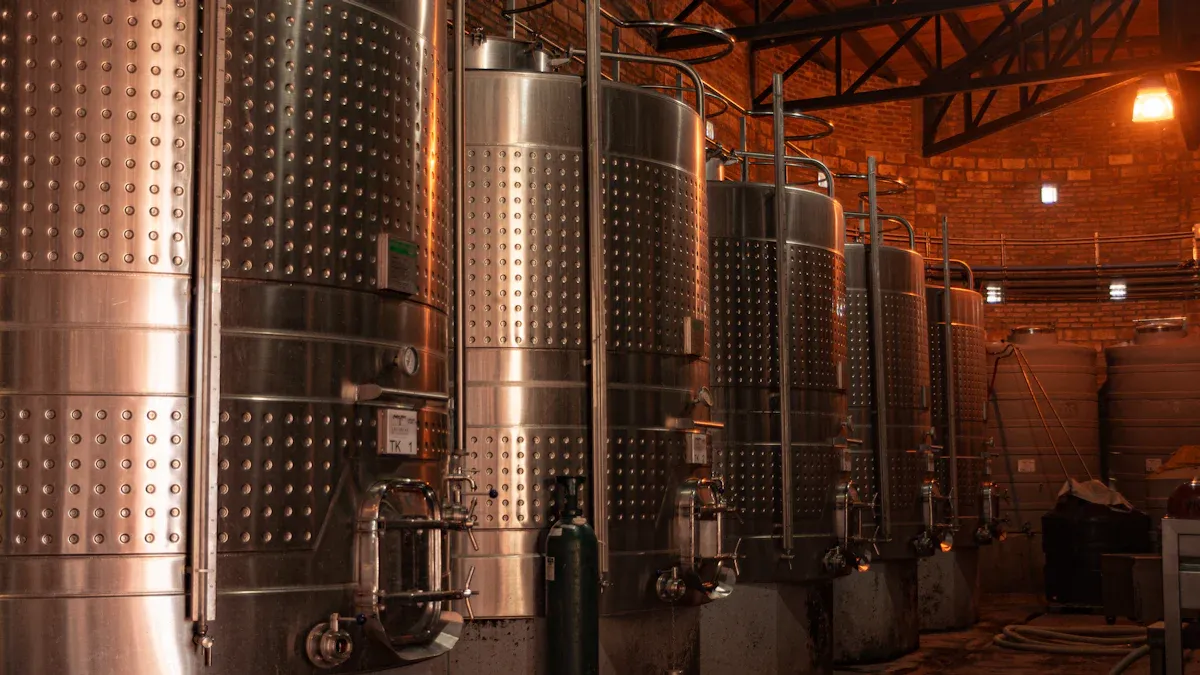
- Cooling capability: Dimple jackets for glycol cooling are essential if the tank will be used for fermentation, not just storage.
- Interior finish: A smooth polished interior (Ra ≤ 0.8 µm) prevents tartrate adhesion and supports easy cleaning.
- Structural build: Laser-welded seams and robust construction ensure long-term structural integrity under pressure and temperature cycling.
Routine Seal Maintenance
The inflatable lid seal is the most critical component for performance.
- Check pressure weekly: Test seal pressure every 7 days to catch slow leaks before they allow oxygen ingress. A drop in pressure means air is entering the tank, putting wine at risk of spoilage.
- Inspect for wear: Regularly check the gasket for cracks, abrasions or degradation, and replace it as needed to maintain a tight seal.
- Clean carefully: Wash the seal and lid gently during tank cleaning to avoid damaging the gasket material.
FAQ
How do variable capacity wine tanks prevent oxidation?
Variable capacity tanks use a floating lid that rests directly on the wine surface, with an inflatable gasket sealing the gap between the lid and tank wall. This eliminates empty headspace above the liquid, blocking oxygen contact to preserve aroma and flavor throughout aging.
How often should you inspect the floating lid seal?
Inflatable seals should be pressure-checked at least once per week. Regular testing catches slow leaks early before they allow oxygen to reach the wine. Worn or damaged gaskets should be replaced promptly to maintain airtight performance.
Can variable capacity tanks be used for both red and white wine?
Yes. They support red wine fermentation with cap management techniques like punch-downs and pump-overs, and white wine fermentation with precise temperature control via integrated cooling jackets. Many models also work for sparkling wine base wine storage.
What sizes do variable capacity wine tanks come in?
Variable capacity tanks are available in a wide range of sizes, from small 100-gallon experimental batches to large 10,000-gallon production vessels. This scalability makes them suitable for both micro-wineries and large commercial operations.
Are variable capacity tanks more expensive than fixed tanks?
Yes, they have a higher upfront purchase and installation cost. However, because one variable tank can replace multiple fixed-size tanks and reduce wine waste from oxidation, they often deliver a better return on investment for wineries with variable batch sizes.
Final Thoughts
Variable capacity wine tanks are more than just flexible storage — they are a quality tool that protects wine from oxidation across every stage of production and aging. For wineries dealing with fluctuating harvest yields, small-batch craft production, or limited cellar space, they solve real operational and quality challenges that fixed tanks cannot.
By eliminating headspace at any fill level, these tanks preserve delicate fruit aromas, reduce wine waste, and simplify cellar management. When paired with regular seal maintenance and proper cleaning, a well-built variable capacity tank is a versatile, long-lasting addition to any winery.