
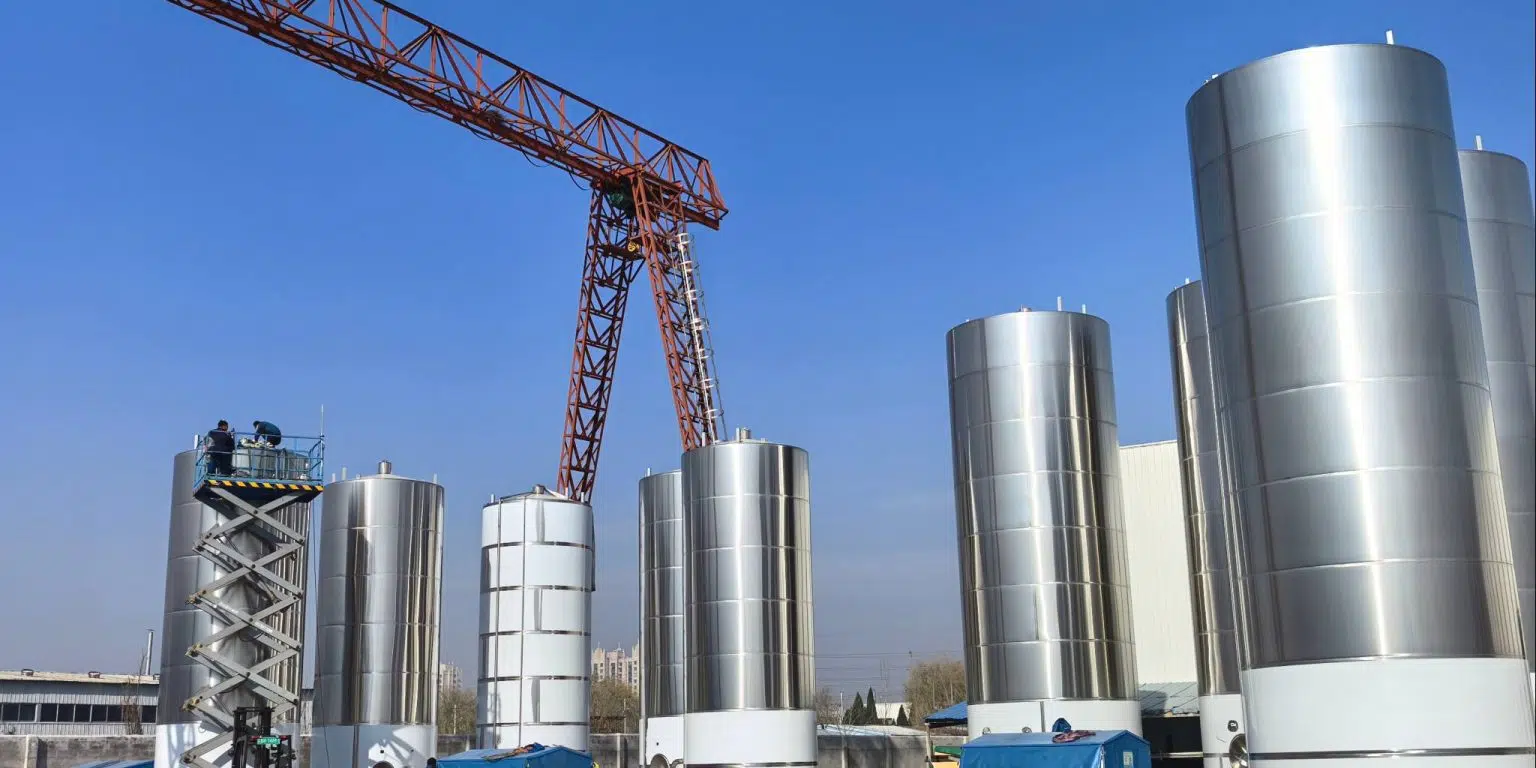
Milk tanks are essential equipment in dairy farming and processing. They are used to store, cool, transport, and process milk at different stages of the supply chain. Understanding the different types of milk tanks helps improve milk quality, ensure food safety, and optimize dairy operations.
Key Takeaways
- Milk tanks include storage, cooling, transport, pasteurization, coagulation, and fermentation types
- Each tank serves a specific role in milk handling and processing
- Stainless steel is the industry standard for hygiene and durability
- Rapid cooling to 36–38°F (2–3°C) is critical to maintain milk quality
- Choosing the right tank improves efficiency and reduces operational risks
Main Types of Milk Tanks

Milk Storage Tanks
Milk storage tanks are used to hold cooled raw milk at a stable low temperature before transport or processing. They help maintain freshness and prevent bacterial growth. These tanks are commonly used on farms, in collection centers, and in processing facilities, with capacities ranging from 300 to over 50,000 gallons.
Milk Cooling Tanks
Milk cooling tanks rapidly chill fresh milk immediately after milking, which is essential to limit bacterial growth and preserve quality. Most systems cool milk from around 98°F to 36–38°F within 15–30 minutes.
Horizontal Milk Cooling Tanks
Horizontal tanks are widely used for bulk cooling, typically ranging from 1,000 to 5,000 gallons. Their wide, low-profile design allows faster and more uniform cooling while making cleaning and maintenance easier.
Vertical Milk Cooling Tanks
Vertical tanks are ideal for farms with limited space. Their upright design saves floor space and supports even temperature distribution. They are also easy to integrate with milk collection and transport systems.
Milk Transport Tanks
Milk transport tanks are designed to move raw milk from farms to processing plants while maintaining a temperature of 2–4°C (35–39°F) to prevent spoilage. They are made from stainless steel with insulated walls, internal baffles, and temperature monitoring systems to ensure safe and hygienic transport. Strict cleaning and handling standards must be followed to avoid contamination.
Pasteurization Tanks
Pasteurization tanks heat milk to specific temperatures to eliminate harmful bacteria and extend shelf life.
- Batch Pasteurization (LTLT): heats milk to 63°C (145°F) for 30 minutes, suitable for small-scale production
- Continuous Pasteurization (HTST): heats milk to 71.7°C (161°F) for 15 seconds, ideal for large-scale processing
These systems improve food safety, extend shelf life, and enable commercial distribution.
Coagulation Tanks
Coagulation tanks are used in cheese production to convert milk into curds using cultures and enzymes. They provide controlled temperature and mixing conditions, ensuring consistent curd formation and higher product quality.
Fermentation Tanks
Fermentation tanks are used to produce cultured dairy products such as yogurt and kefir. They maintain precise temperature and gentle mixing to support bacterial growth and ensure consistent texture and flavor.
How to Choose the Right Milk Tank

Choosing the right milk tank depends on your operation size and production needs:
- Small farms: cooling and storage tanks
- Medium farms: horizontal cooling + storage systems
- Large dairies: vertical or silo tanks with integrated systems
- Processing plants: pasteurization and fermentation tanks
Key factors to consider include capacity, cooling efficiency, hygiene systems, and future expansion needs.
Conclusion
Milk tanks play a critical role in every stage of dairy production. From cooling and storage to transport and processing, each type serves a specific function in maintaining milk quality and safety. Selecting the right tank ensures efficient operations, regulatory compliance, and high-quality dairy products.
FAQ
What is the main purpose of a milk cooling tank?
To rapidly cool milk after milking, limiting bacterial growth and preserving quality.
Why is stainless steel used in milk tanks?
Because it is hygienic, corrosion-resistant, and easy to clean.
Can one tank handle both cooling and storage?
Yes, combination tanks are commonly used on small and medium dairy farms.
How quickly should milk be cooled after milking?
Milk should be cooled as quickly as possible after milking, typically reaching 36–38°F (2–3°C) within a short period to maintain quality and meet food safety standards.


