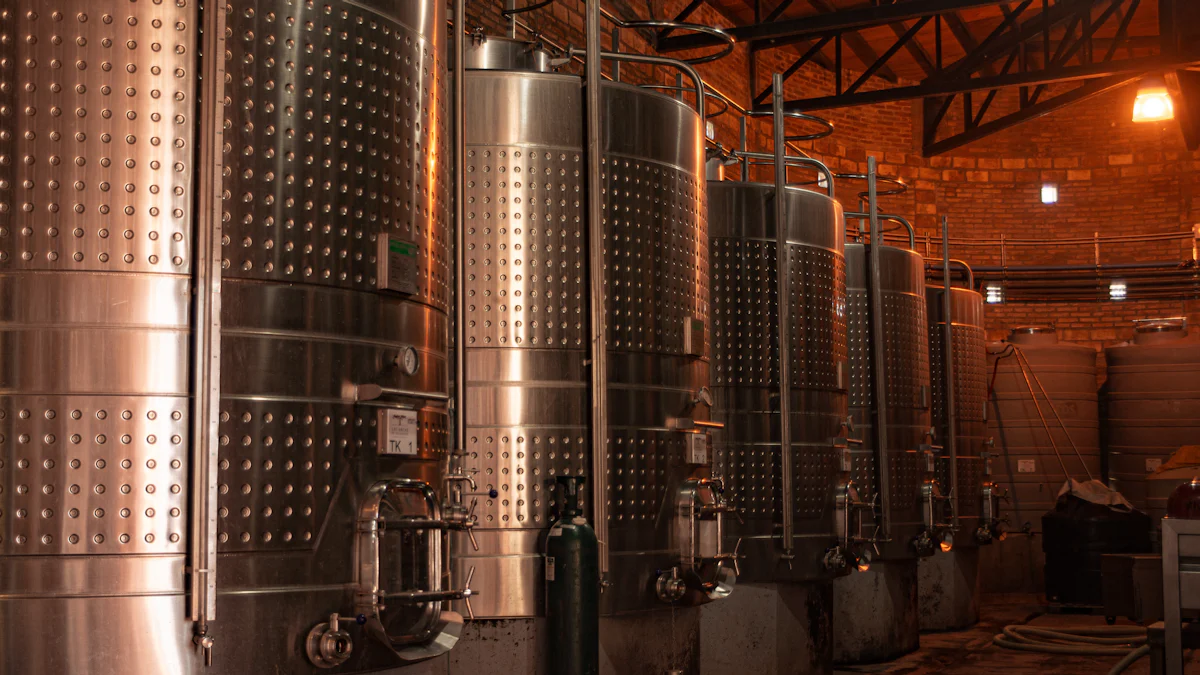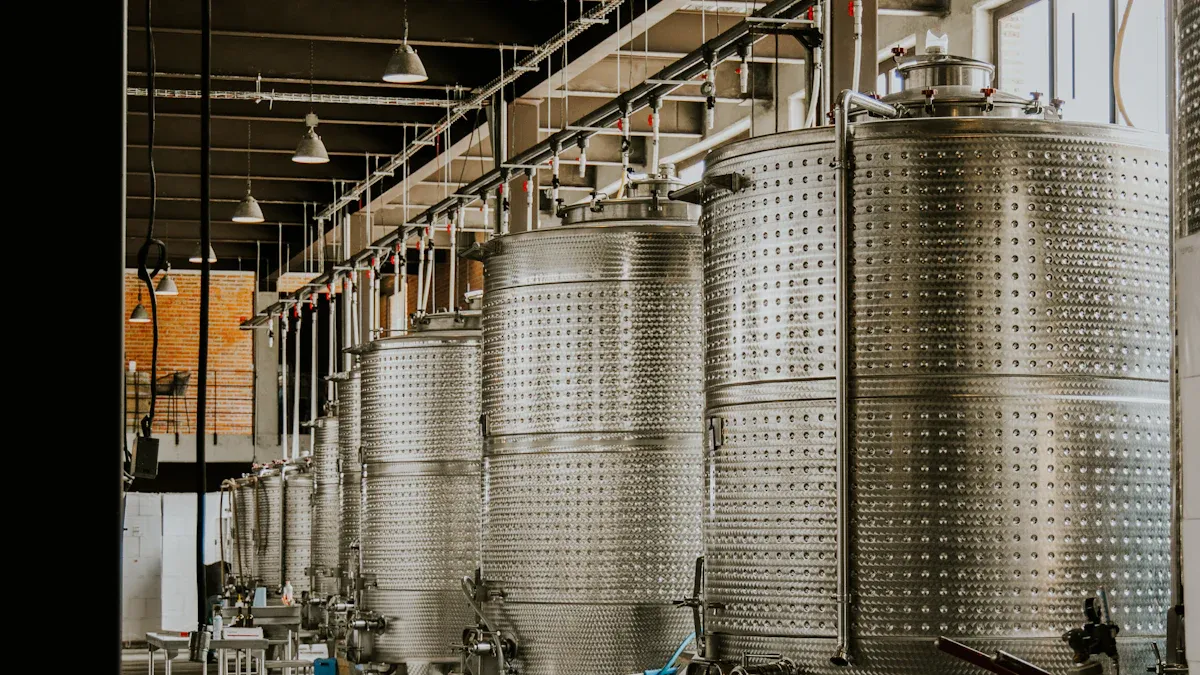

There is no single “best” stainless steel grade for all storage tanks — the right choice depends entirely on your stored medium, operating environment, temperature, and compliance requirements. Grade 304 is the cost-effective workhorse for general-purpose indoor storage. Grade 316/316L adds molybdenum for superior chloride and chemical corrosion resistance. Duplex 2205 delivers the highest strength and corrosion performance for aggressive, heavy-duty service.
Over-specifying a premium alloy raises upfront costs unnecessarily, while under-specifying leads to premature corrosion and early tank failure. This guide breaks down the three most common tank grades, compares their real-world performance, and outlines the key decision factors to match the material to your exact duty.
Key Takeaways
- Grade 304 stainless steel is the most economical choice for everyday storage, including indoor potable water, wine, dairy, and edible oils.
- Grade 316/316L adds 2–3% molybdenum to resist pitting and crevice corrosion from chlorides, salts, and industrial chemicals.
- Duplex 2205 offers roughly double the yield strength of standard austenitic grades, plus exceptional chloride resistance for severe service.
- Always select grade based on your stored medium, site environment, operating temperature, and regulatory requirements.
- Consult an experienced tank fabricator to confirm wall thickness, weld quality, and compliance before finalizing your specification.
Common Stainless Steel Grades for Storage Tanks

Three alloy families cover nearly all industrial and commercial storage tank applications. In European specifications, 304-series alloys fall under the V2A grouping, while 316-series alloys are classified as V4A, a designation often required for hygienic product-contact surfaces.
304 / 304L: General-Purpose Workhorse
The most widely used tank alloy, 304 (18% chromium, 8% nickel) forms a self-healing passive oxide layer that resists rust in most everyday environments. The low-carbon 304L variant minimizes carbide precipitation during welding, preserving corrosion resistance in the heat-affected zone around seams.
Best for: Indoor potable water, rainwater collection, dairy, wine, edible oils, and mild neutral liquids. It delivers reliable performance at the lowest material cost for light-to-moderate duty. Limitations: Vulnerable to pitting from chloride-rich media, salt spray, and harsh outdoor exposure.
316 / 316L: Corrosion-Resistant Upgrade
Grade 316 adds 2–3% molybdenum to the base chromium-nickel composition, which stabilizes the passive layer and dramatically improves resistance to chloride-induced pitting and crevice corrosion. The 316L low-carbon variant maintains corrosion resistance after welding, making it ideal for fabricated tank shells.
Best for: Chloride-bearing liquids, saline solutions, coastal outdoor installations, hygienic product-contact surfaces, and processes with frequent chemical washdowns. It is the standard upgrade for tanks exposed to salt air or mildly corrosive process fluids. Limitations: Higher material cost than 304; not intended for extreme high-chloride or high-pressure heavy industrial duty.
Duplex 2205: High-Strength Severe Service
Duplex stainless steel has a two-phase (austenite + ferrite) microstructure that delivers roughly twice the yield strength of standard austenitic grades, plus industry-leading chloride corrosion resistance. This allows thinner wall designs for the same load capacity, or higher pressure ratings at standard wall thickness.
Best for: Heavy-duty marine exposure, high-chloride chemical storage, high-pressure tanks, and applications where strength and corrosion resistance are both critical. Limitations: Highest material cost; requires controlled welding procedures to maintain phase balance, so fewer fabricators have deep experience with it.
How Do Stainless Steel Grades Compare?
| Property | 304 / 304L | 316 / 316L | Duplex 2205 |
|---|---|---|---|
| General corrosion resistance | Good for neutral, mild service | Strong against chlorides and mild chemicals | Excellent for aggressive chloride duty |
| Weldability | Easy with standard methods | Easy with standard methods | Requires tight heat input control |
| Relative material cost | Lowest | Moderate | Highest |
| Typical applications | Indoor water, dairy, wine, edible oils | Coastal tanks, saline fluids, hygienic service | High-strength, heavy chemical / marine duty |
Key Factors for Selecting the Appropriate Grade of Stainless Steel Storage Tank

1. Stored Medium
The fluid inside the tank is the single biggest driver of grade selection:
- Neutral, low-chloride liquids (potable water, wine, edible oils) work reliably with 304.
- Fluids with salt, sodium-based chemicals, or mild corrosives require 316/316L.
- Highly aggressive chloride or acidic process fluids justify duplex 2205.
2. Operating Environment
Outdoor and coastal exposure adds airborne chloride load even if the stored medium is mild. Indoor tanks see almost no atmospheric corrosion load, while coastal outdoor tanks face constant salt spray attack. For this reason, 316 is almost always the standard choice for coastal water tanks, even for plain potable water.
3. Operating Temperature
Elevated temperatures accelerate corrosion reactions. Hot process fluids or frequent high-temperature washdowns raise corrosion risk and usually call for a higher alloy grade than the same medium at ambient temperature.
4. Compliance & Regulatory Requirements
Food, beverage, pharmaceutical, and potable water applications all have specific hygiene and material standards. Both 304 and 316 can meet these requirements with proper surface finish and documentation. CE-marked tanks for regulated European markets also require full material traceability and fabrication records.
FAQ
Is 304 or 316 better for a storage tank?
304 is the most cost-effective choice for mild duty like indoor drinking water, wine, and edible oils. 316 is the better pick for coastal sites, saline fluids, or hygienic food-contact service, as its molybdenum content provides far better chloride corrosion resistance.
When does duplex 2205 make sense for storage tanks?
Duplex 2205 is justified for applications requiring both high mechanical strength and strong chloride corrosion resistance. Its dual-phase microstructure delivers roughly double the yield strength of standard austenitic grades, allowing thinner walls or higher pressure ratings. It is most commonly used for heavy chemical and marine service.
How long do stainless steel storage tanks last?
With proper grade selection, high-quality welding, and routine maintenance, a stainless steel tank can last 20 years or more. Smooth interior surfaces and precision welding reduce residue buildup and corrosion initiation, extending service life significantly.
Can I customize a stainless steel water tank?
Yes. CHENMA builds fully custom tanks to match project requirements, with configurable size, orientation, ports, level indicators, manholes, and heating or insulation options. Capacities range up to 50,000 liters, and all units are built to ISO quality standards with CE marking available on selected models.
Do I need a low-carbon L-grade for welded tanks?
Low-carbon L-grades (304L, 316L) are preferred for welded tank construction. They limit carbide precipitation in the weld heat-affected zone, preserving full corrosion resistance at the seams. For large tanks with many welded joints, L-grade material is strongly recommended.