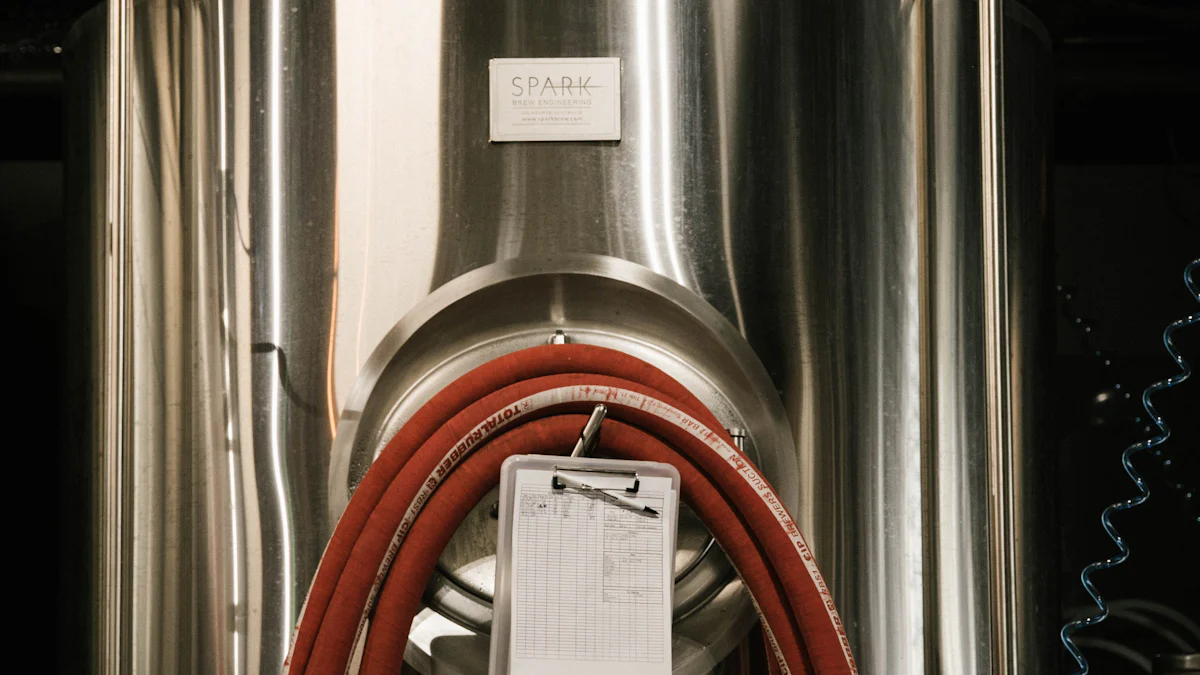
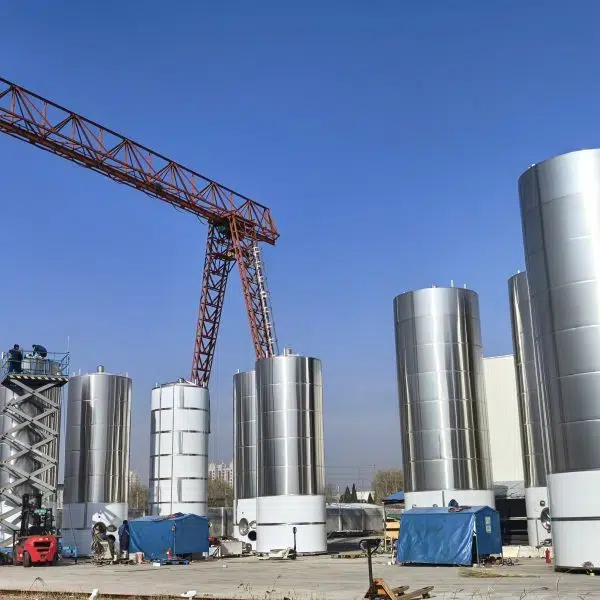
Milk cooling tanks are used to store and cool freshly collected milk. Using milk cooling tanks can quickly lower the milk temperature, ensuring its safety for drinking. Nearly 70% of dairy farmers choose to use milk cooling tanks to keep milk fresh and slow bacterial growth.
You can see how fast cooling makes a difference in milk safety:
| Temperature (°C) | Time to reach 105 cfu mL−1 (min) |
|---|---|
| 10 | No increase in microbial count |
| 14 | 1020 |
| 16 | 600 |
| 20 | 480 |
Milk cooling tanks offer a simple way to keep milk safe and fresh.
Key Takeaways
- Milk cooling tanks make fresh milk cold very fast.
- This stops bacteria from growing. It keeps the milk safe and good to drink. – It is very important to control the temperature. Cooling milk to 39°F in two hours keeps it fresh.
- You must clean and take care of the tank often. This stops germs from getting in and helps the tank work well.
- Picking the right tank size and type for your farm is important. It helps store milk better and saves energy.
- Stainless steel tanks are easy to keep clean and last a long time. They are a good and safe choice for cooling milk.
How does a milk cooling tank work?
Cooling process
After milking, the milk must be immediately transferred to cooling tanks for cooling. According to dairy safety standards, milk should be cooled from approximately 35°C (95°F) to below 4°C (39°F) within two hours of milking, and ultimately maintained at a storage temperature of 1–3°C (33–38°F). Rapid cooling significantly slows microbial growth and is crucial for maintaining milk freshness.
Cooling systems typically employ process chillers, which absorb heat from the milk through refrigerant circulation. Some systems also include pre-cooling units that utilize well water for pre-cooling, reducing the load on the main refrigeration system.
Operation steps
- Pre-cooling: Using well water or other media to initially cool the milk reduces subsequent refrigeration energy consumption.
- Storage: Milk enters the cooling tank and the main cooling phase begins.
- Tank cooling: The refrigeration system operates, lowering the milk temperature to the target storage temperature. The in-tank agitator runs continuously to ensure uniform milk temperature and prevent fat from rising to the top.
- Heat recovery: The system recovers the heat generated during the refrigeration process and uses it to heat the cleaning water, thus achieving energy conservation.
- Wash: After the milk is shipped out, the cleaning system automatically cleans the inside of the tank to ensure hygiene.
Tip: Always look at the control panel for temperature and cleaning alerts. This helps you cool milk well and keep it safe.
Main components of milk cooling tanks
Tank body
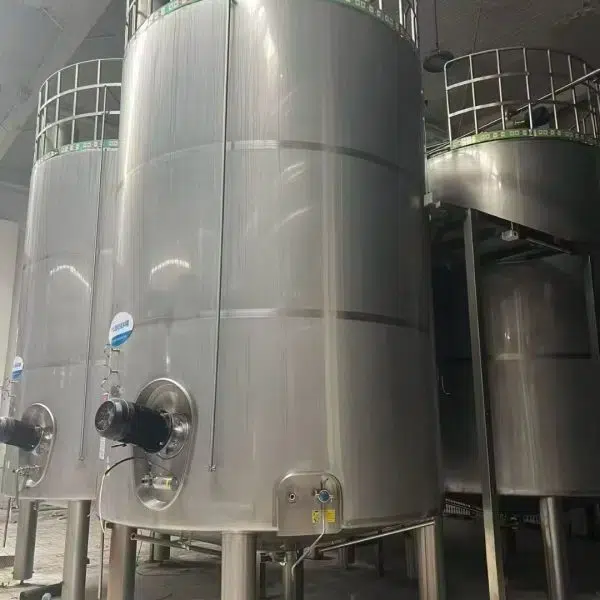
You’ll find that the tank body is the main component of the milk cooling tank. Manufacturers typically use food-grade stainless steel, especially 304 stainless steel, to make these tank bodies. This material is strong and easy to clean. Stainless steel helps maintain the milk at the appropriate temperature and prevents contamination. You can choose different sizes of tanks to meet the actual needs of your farm. Many tanks have smooth surfaces and rounded corners. These features make cleaning easier and help you meet stringent hygiene standards.
Cooling system
The cooling system maintains the milk at approximately 4°C until collection. You’ll see that the tanks can rapidly cool milk from 38°C to 4°C. Some tanks use closed systems, while others use open systems. Most tanks are equipped with agitators to assist the cooling process and maintain a uniform milk temperature. Process coolers play a crucial role in the cooling process. They utilize a coolant to absorb heat from the tank. The coolant circulates within pipes surrounding the tank, thus maintaining a stable temperature. This method works effectively even with changing weather conditions.
Agitator
The agitator mixes milk inside the tank. This mixing keeps the temperature the same everywhere in the tank. When you use agitation, you make sure that the difference in temperature between the middle and bottom stays very small. This helps all the milk cool at the same rate. You get better quality and less risk of spoilage.
Control panel
The control panel allows you to manage all the functions of the milk tank. You can view the temperature, start the cleaning program, and control the stirring. Many panels are equipped with a digital display to show the temperature. Some panels also have a fault alarm system. The control unit is located on the front for easy operation. Some milk tanks incorporate smart technology. These systems allow you to monitor the temperature and milk quality in real time. You can even receive alerts and change settings anytime, anywhere via your mobile phone.
| Feature | Description |
|---|---|
| Monitoring System | Watches milk temperature, cleaning, cooling time, and stirring. |
| Notification System | Sends alerts if something is wrong. |
| Digital Temperature Display | Shows the temperature clearly. |
| Accessibility | Easy to reach on the front of the tank. |
Automation in control panels helps you keep milk safe. You do not need to check everything by hand. The system keeps the tank working well and stops mistakes.
Milk cooling tanks use strong materials, smart cooling systems, and easy controls. These features help you keep milk fresh and safe every day.
Types of milk cooling tanks
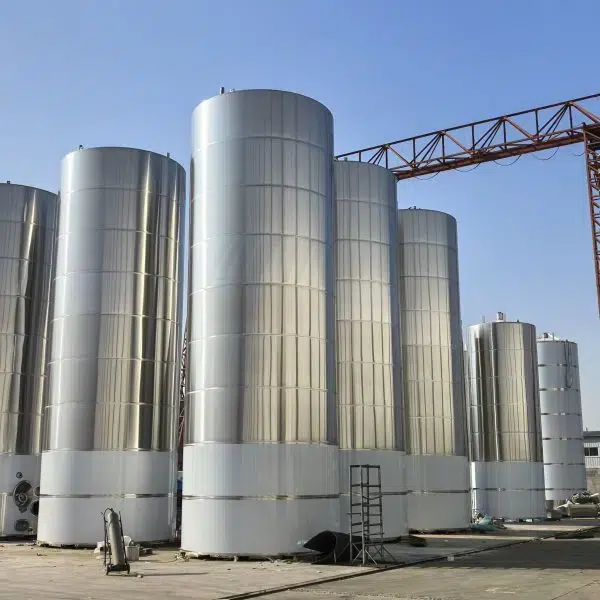
When you look for a milk cooling solution, you will find three main types of tanks. Each type works in a different way to keep your milk safe and fresh.
Direct expansion tanks
Direct expansion tanks give you fast cooling. These tanks use large compressors to cool milk as soon as it enters the tank. You often see these tanks on big dairy farms. They work best when you have three-phase electric power. You get rapid cooling, but you may notice higher energy costs because the compressors use a lot of power.
Here is a table to help you compare direct expansion tanks and ice bank tanks:
| Feature | Direct Expansion Tanks | Ice Bank Tanks |
|---|---|---|
| Cooling Method | Rapid cooling as warm milk enters, needs large compressors | Uses ice around copper tubes, cools with water and melting ice |
| Suitability | Best for large farms with three-phase electric power | Better for small family farms with single-phase electric power |
| Energy Efficiency | Higher energy costs | Lower operating costs |
Tip: If you run a large farm and need a strong milk cooling solution, direct expansion tanks can handle big volumes quickly.
Ice bank tanks
Ice bank tanks use a different method. These tanks build up ice around copper tubes during the day or night. When you add milk, the ice melts and cools the milk through circulating water. You do not need a large compressor, so you save on energy costs. Ice bank tanks work well for small family farms or places with single-phase power.
- You get lower operating costs.
- You can use these tanks even if you do not have strong electric power.
- The cooling is steady and gentle.
If you want a milk cooling solution that saves energy, ice bank tanks are a smart choice for smaller operations.
Bulk milk coolers
Bulk milk coolers offer a simple way to store and chill milk. You often see these coolers on small to medium farms. They work well with manual or semi-automatic milking systems. You get easy operation and reliable cooling. However, bulk milk coolers may cool slower than other types, especially if you do not use a pre-cooler. For large volumes, you might see higher electricity use.
Here is a quick look at how bulk milk coolers compare:
| Feature | Bulk Milk Coolers | Other Types |
|---|---|---|
| Pros | Simple operation, good for small to medium farms | N/A |
| Cons | Slower cooling for large volumes, higher electricity use | N/A |
Note: Bulk tank cooling gives you a reliable way to keep milk fresh, but you should check if the cooling speed matches your farm’s needs.
You can choose the best milk cooling solution by looking at your farm size, power supply, and cooling needs. Each tank type helps you protect milk quality in a different way.
Benefits of milk cooling tanks
Preserves milk quality
You certainly want your milk to stay fresh and of high quality. Milk cooling tanks help you cool your milk immediately after milking. When milk is cooled from 37°C to 4°C, the rate of bacterial growth slows significantly, preventing spoilage. Made of bright stainless steel, these tanks are easy to clean and effectively prevent bacterial growth. Many tanks also come equipped with special sensors and software that help maintain the right temperature and prevent operational errors. Good temperature control is key to ensuring the safety and freshness of your milk.
- Fast cooling keeps bacteria low.
- Sensors and software help stop mistakes.
- Stainless steel tanks are clean and strong.
- Plate coolers and chillers save energy and keep milk cold.
State rules say you must cool milk to 45°F or less before putting it on a truck. This keeps milk safe while it travels.
Ensures food safety
Compliant cooling and storage are crucial for ensuring dairy product safety. According to industry standards, raw milk must be cooled to below 50°F (approximately 10°C) within four hours of milking begins, and further cooled to below 45°F (approximately 7°C) within the following two hours. Using specialized cooling tanks helps farms strictly adhere to these requirements, ensuring that the milk leaving the factory is safe and compliant.
Improves efficiency
Milk cooling tanks can help your farm operate more efficiently. These tanks cool milk quickly, saving time and energy. Keeping milk at the right temperature prevents spoilage, meaning you can reduce milk waste. If you maintain your cooling system properly, it won’t break down often, saving you money. Pre-cooling also reduces the load on the main cooler, saving energy.
Good milk cooling and storage help you save money and keep your farm running well.
FAQ
How often should you clean a milk cooling tank?
You should clean your milk cooling tank after every milk collection. This keeps milk safe and fresh. Regular cleaning stops bacteria from growing inside the tank.
What size milk cooling tank do you need?
You need a tank that matches your daily milk production. Always choose a tank with a little extra space. This helps you avoid spills and lets you grow your business.
Can you use a milk cooling tank for other liquids?
Yes, you can use a milk cooling tank for other food-safe liquids like juice or water. Always clean the tank well before switching products.
Why does milk need to cool so quickly?
Milk needs fast cooling to stop bacteria from growing. Quick cooling keeps milk fresh and safe for drinking. If you cool milk slowly, it can spoil faster.