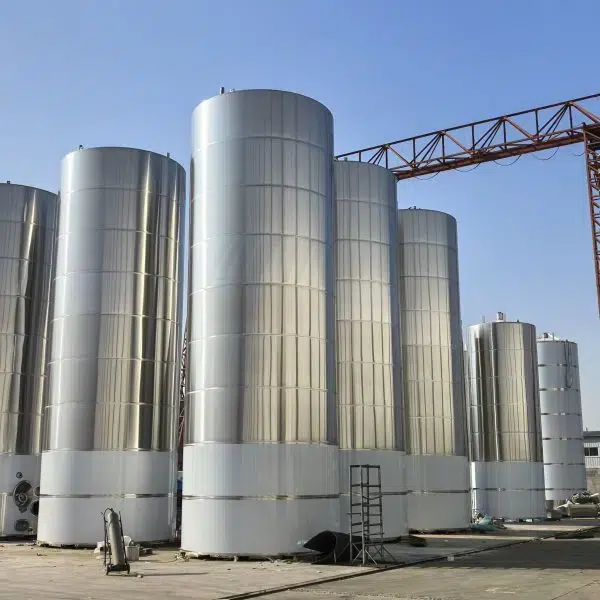

An Intermediate Bulk Container (IBC tank) is a reusable bulk storage container designed for storing and transporting liquids, semi-solids, and powders. With typical capacities of 800 to 1,500 liters, IBC totes help businesses replace multiple smaller drums, reduce handling time, and improve storage efficiency.
IBC tanks are widely used in industries that require safe, efficient, and reusable bulk packaging, including chemical processing, food and beverage production, agriculture, water storage, and manufacturing.
Key Takeaways
- IBC tanks are mainly used for bulk storage, transportation, and handling of liquids, semi-solids, and powders.
- Common applications include chemicals, food ingredients, water storage, agriculture, and industrial materials.
- Stainless steel IBC tanks provide better durability, hygiene, and corrosion resistance for demanding applications.
- Plastic and stainless steel models are available for different industries and storage requirements.
- Custom options include capacity, valves, fittings, insulation, and other accessories.
Common Uses of IBC Tanks

Bulk Liquid Storage and Transportation
The primary purpose of an IBC tank is storing and moving large quantities of liquid products. Compared with traditional drums, IBC containers offer higher capacity, better space efficiency, and easier handling.
A standard IBC tote can replace several smaller containers while using less warehouse space. The integrated pallet base allows forklifts and pallet jacks to move the tank easily, reducing labor requirements during loading, unloading, and storage.
Common liquids stored and transported in IBC tanks include:
- Industrial chemicals
- Water and cleaning solutions
- Oils and lubricants
- Food ingredients
- Beverages and liquid additives
- Pharmaceutical materials
The choice of material depends on the product being stored. Plastic IBC tanks are lightweight and cost-effective for many general applications, while stainless steel IBC tanks provide improved durability, corrosion resistance, and hygiene for more demanding environments.
Industrial Applications of IBC Tote Tanks

Chemical and Pharmaceutical Industries
Chemical and pharmaceutical companies use IBC tote tanks for safe bulk handling of liquids such as solvents, acids, alcohols, and specialty chemicals.
Stainless steel IBC tanks are often preferred for these applications because they offer:
- Excellent corrosion resistance
- Smooth and easy-to-clean surfaces
- Strong structural durability
- Long service life
For regulated industries, manufacturers can provide options such as sanitary welds, food-grade finishes, compatible gaskets, and customized valves to meet specific handling requirements.
Food and Beverage Processing
IBC containers are widely used in food and beverage production for storing and transporting ingredients, including:
- Syrups
- Oils
- Dairy ingredients
- Flavorings
- Liquid additives
Food-grade stainless steel IBC tanks help maintain product quality because the non-reactive surface reduces contamination risks and supports easier cleaning.
Many food manufacturers choose customized IBC tanks with:
- Sanitary fittings
- Polished inner surfaces
- Drainage outlets
- Temperature-control options
These features help improve hygiene and production efficiency.
Manufacturing and Industrial Facilities
Manufacturing facilities use IBC tanks to store, transfer, and manage bulk materials during production. They are commonly used for:
- Lubricants and oils
- Coatings and resins
- Cleaning agents
- Industrial processing liquids
With a stackable design, protective cage, and integrated pallet base, IBC tote tanks are easy to move and organize in factories and warehouses. Their space-efficient structure helps reduce manual handling, improve storage capacity, and support more efficient material management.
IBC Tanks for Agricultural and Water Storage Applications
Irrigation and Livestock Water Storage
IBC tanks are commonly used on farms for storing and distributing water. Their large capacity makes them suitable for:
- Rainwater collection
- Livestock drinking water
- Emergency water storage
- Irrigation systems
Farmers can connect IBC tanks with pumps, hoses, or irrigation systems to deliver water efficiently across fields.
For drinking water applications, buyers should select food-grade tanks made from suitable materials and confirm the required certifications before use.
Fertilizer and Farm Chemical Storage
Agricultural operations also use IBC tote tanks for storing and transporting fertilizers, pesticides, and other liquid farm chemicals.
Important considerations include:
- Chemical compatibility of tank materials
- Proper valve selection
- Suitable gasket materials
- Safe storage conditions
Choosing the correct IBC specification helps reduce leakage risks and improves handling safety.
How to Choose the Right IBC Tank for Your Application
IBC tanks are mainly available in plastic and stainless steel versions.
Plastic IBC Tanks
Plastic IBC containers are commonly used for general liquid storage because they are:
- Lightweight
- Cost-effective
- Easy to transport
They are suitable for many non-corrosive liquids and standard industrial applications.
Stainless Steel IBC Tanks
Stainless steel IBC tanks are designed for applications requiring higher durability and hygiene.
Common materials include:
- 304 stainless steel for general food and industrial applications
- 316 stainless steel for stronger chemical and corrosion resistance
Typical capacities range from 800 to 1,500 liters, with custom sizes available for specific requirements.
Valves, Outlets, and Custom Options
IBC tanks can be customized with different components depending on the application.
Common options include:
- Butterfly valves
- Ball valves
- Drain outlets
- Custom fittings
- Insulation jackets
- Temperature-control systems
- Agitators
- Level monitoring systems
Manufacturers can also customize tank design based on product compatibility, filling methods, transportation needs, and industry requirements.
FAQ
What industries use IBC tanks?
IBC tanks are widely used in chemical, pharmaceutical, food and beverage, agriculture, water storage, and manufacturing industries.
What is the difference between plastic and stainless steel IBC tanks?
Plastic IBC tanks are lightweight and economical, while stainless steel IBC tanks provide better durability, corrosion resistance, and hygiene for demanding applications.
What size is a standard IBC tank?
Most standard IBC tanks hold between 800 and 1,500 liters, with 1,000-liter models being the most common option.
Are IBC tanks reusable?
Yes. Many IBC tanks are designed for repeated use when properly cleaned, maintained, and used with compatible materials.
Can I customize an IBC tank?
Yes. Manufacturers can customize capacity, materials, valves, fittings, insulation, and other features based on your application requirements.