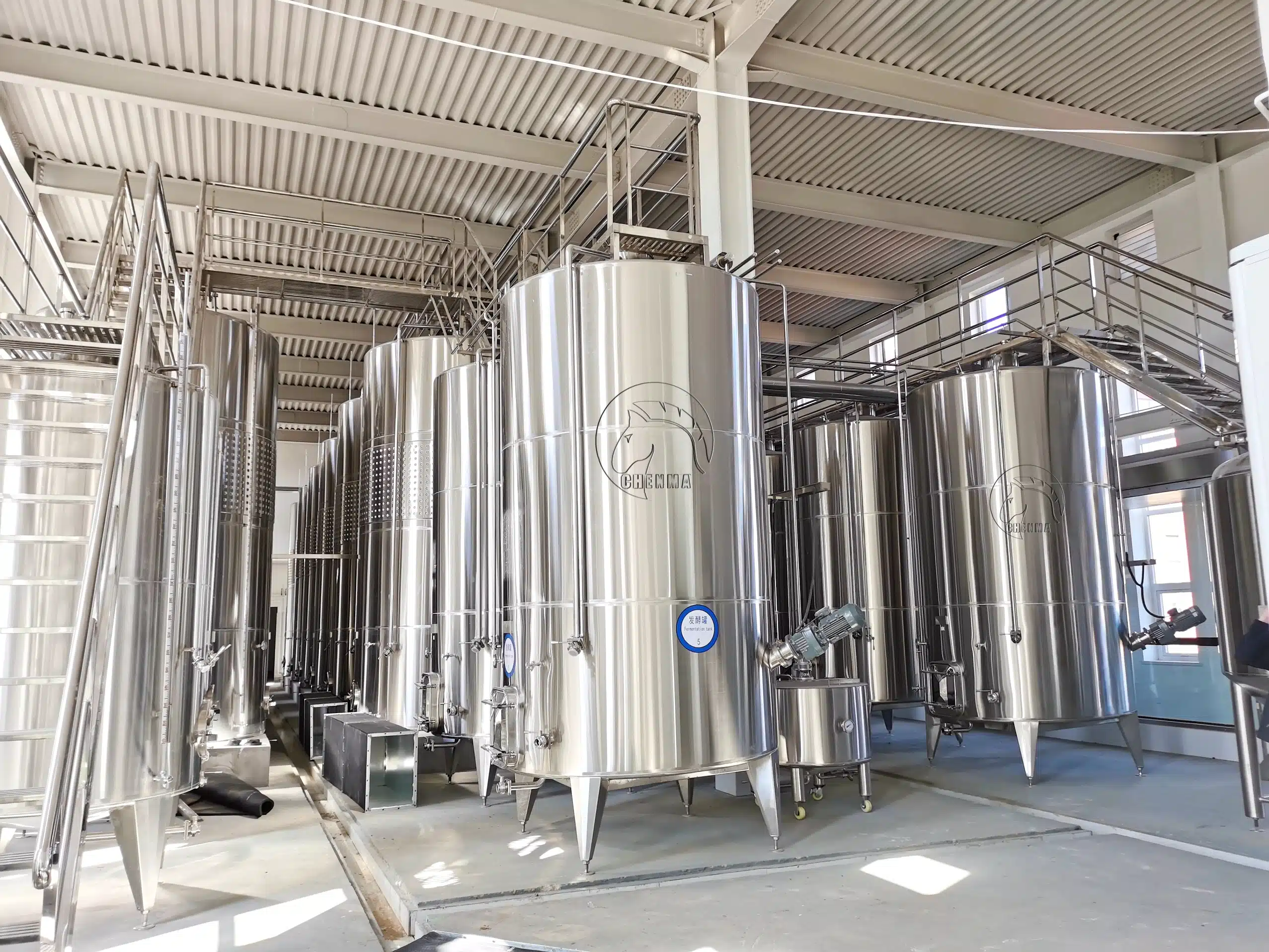
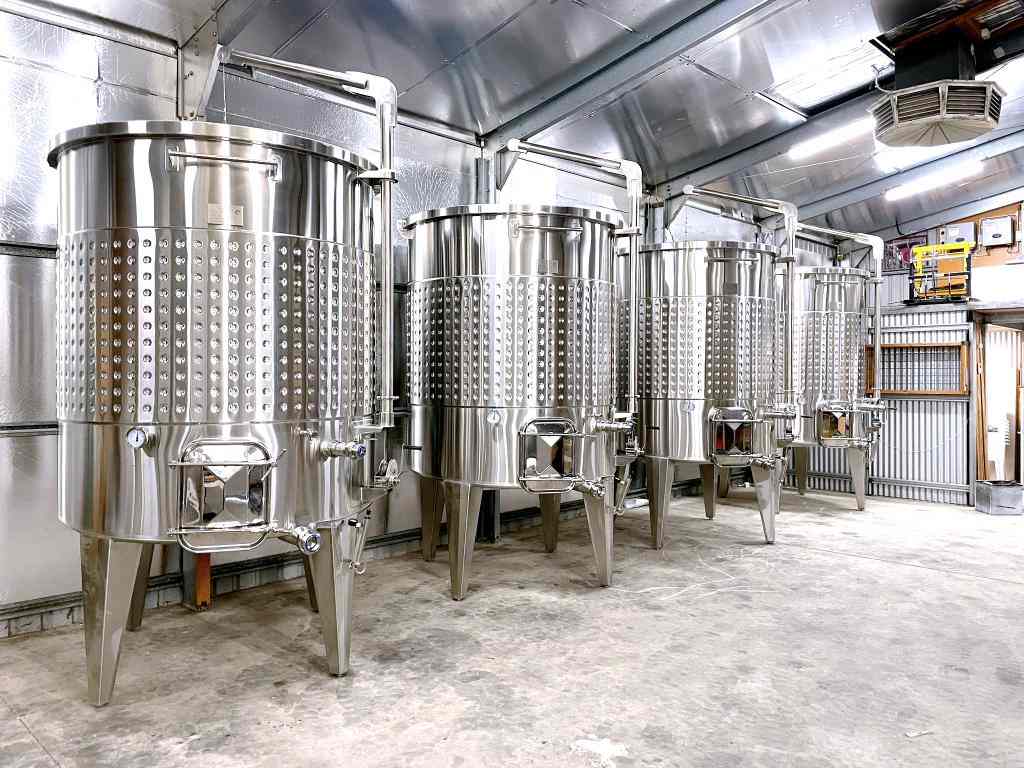
The short answer: stainless steel is the best all-around fermentation container for most winemakers, from small craft producers to commercial wineries. It offers a strong balance of temperature control, hygiene, neutral flavor impact, durability, and versatility. Oak, glass, plastic, and concrete all have specific advantages, but stainless steel is generally the most practical choice for primary fermentation.
Key Takeaways
- Stainless steel is the top choice for primary fermentation: it is durable, easy to clean, and enables precise, consistent temperature control.
- Oak barrels add vanilla, spice and toast character via micro-oxygenation, but they require high maintenance and are best reserved for aging, not routine primary fermentation.
- Glass, plastic and concrete serve specific niche use cases, but they lack the versatility and consistency of stainless steel.
Best Container for Fermenting Wine: Material Comparison
Stainless Steel: The Modern Workhorse
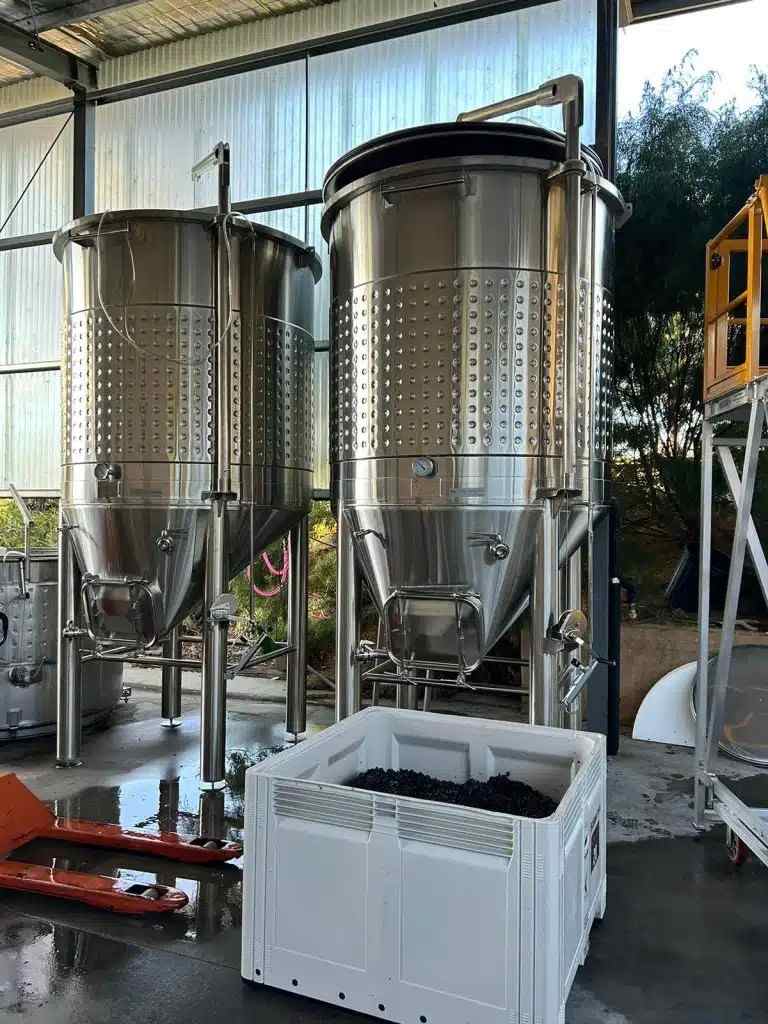
Stainless steel is the standard for modern commercial winemaking, and for good reason. The material is completely inert, so it adds no flavor, aroma or color to wine — every batch tastes true to the fruit. Its smooth, non-porous surface resists bacterial growth and cleans easily with hot water, steam or standard sanitizers, drastically reducing contamination risk between batches.
Jacketed stainless steel tanks also allow winemakers to control fermentation temperature more precisely, making them suitable for both white and red wine production. With different sizes and configurations available, stainless steel tanks can support everything from small-batch production to large commercial wineries.
Oak Barrels: The Traditional Choice
Oak barrels are the historic fermentation vessel, and they remain important for specific wine styles. The wood allows slow, gentle micro-oxygenation that softens tannins and builds aromatic complexity, and it leaches vanilla, baking spice and toast notes into the wine. These traits are highly valued for bold reds, Chardonnay and other age-worthy wines.
However, oak has major drawbacks for routine primary fermentation:
- No active temperature control, making it hard to manage fermentation pace consistently.
- High maintenance: barrels must stay hydrated, require regular sanitization, and lose their flavor contribution after 3–8 uses.
- Far higher cost per liter than stainless steel.
Note: Many traditional winemaking regions do use oak for primary fermentation to achieve specific style characteristics. For most modern commercial production, however, the standard workflow is ferment in stainless steel for control, age in oak for flavor.
Glass: For Home Winemaking and Small Batches
Glass carboys remain popular with home winemakers and for small experimental batches. Glass is fully inert, so it does not alter wine flavor at all, and its transparent walls let you visually monitor fermentation activity.
The downsides are significant for scale: glass is heavy, fragile and has very poor thermal insulation, making temperature control difficult without additional climate control. It is best reserved for 5–25 liter test batches and home hobby production.
Food-Grade Plastic: Budget Hobby Option
Plastic containers are the lowest-cost option for small-scale home winemaking. Food-grade HDPE and PET are widely available, lightweight and shatterproof.
Important limitations:
- Only use NSF-approved food-grade HDPE or PET — avoid PVC, which can leach plasticizers into wine.
- Plastic is slightly oxygen-permeable, which can affect quality over long aging.
- Scratched surfaces harbor bacteria and are hard to fully sanitize.
Plastic works well for short, primary fermentation at home, but it is not recommended for commercial production or long-term aging.
Concrete: Niche for Texture and Natural Wine
Concrete tanks have grown in popularity among producers making natural, low-intervention wines. The material holds temperature passively for steady fermentation, and its porous walls allow very subtle micro-oxygenation similar to oak — but without adding wood flavor. This creates wines with rounded texture and integrated tannin structure.
Drawbacks include high upfront installation cost, difficult cleaning and higher contamination risk if not properly sealed. Concrete remains a niche choice for producers targeting a specific textural style, not a general-purpose fermentation solution.
Why Stainless Steel Excels for Most Winemakers

Stainless steel dominates modern winemaking because it solves the three biggest challenges of fermentation: temperature consistency, hygiene and repeatable quality.
Durability and Low Maintenance
A well-cared-for stainless steel tank can serve for 20–30 years or longer. It does not rust, does not degrade with repeated cleaning, and requires far less routine maintenance than oak, concrete or wood. The smooth, seamless surface eliminates crevices where bacteria and spoilage organisms can grow, which is critical for consistent batch-to-batch quality.
Precision Temperature Control
Temperature is the single biggest lever winemakers have over fermentation speed, yeast health and flavor development. Jacketed stainless steel systems deliver the most accurate and consistent temperature control of any fermentation vessel. This is especially valuable for white wines, sparkling wines and any production where consistency across vintages is a priority.
Neutral, Consistent Flavor
Stainless steel adds nothing to the wine. What goes in is what comes out — pure grape character, unaltered by wood, plastic or concrete. This makes it the most versatile vessel: you can use the same tank for reds, whites and rosés by adjusting lid, airlock and temperature settings.
Versatility and Scalability
Stainless steel tanks are available in capacities ranging from 50L home units to 100,000L+ commercial vessels, with configurable features such as open tops, cooling jackets, CIP systems, racking ports, and sample valves.
As a professional stainless steel wine tank manufacturer, CHENMA offers standard and custom fermentation tanks tailored to different production needs. With flexible options for capacity, tank configuration, cooling, insulation, and process connections, wineries can select equipment that fits their current workflow and supports future expansion.
How to Choose the Right Fermentation Tank
Match Tank Size to Batch Volume
Tank size directly impacts fermentation health.
- Too large: Excess headspace slows yeast activity and increases oxygen exposure.
- Too small: Rising foam and cap spill over during active fermentation, creating waste and contamination risk.
Rule of thumb: Fill the tank to 70–80% of total volume, leaving 20–30% headspace for foam and cap rise. For example, a 1,000L tank is best for 700–800L batches.
Small commercial wineries typically start with 1,000–2,000L tanks, then add capacity as production grows.
Match Tank Design to Wine Style
- Red wines: Open-top tanks work well for punch-downs and cap management during maceration.
- White / sparkling wines: Closed, sealed tanks with airlocks limit oxygen exposure and preserve delicate aromatics.
- All styles: Jacketed tanks are recommended if you do not have full climate control in your winery space.
Certifications and Compliance
For commercial production, verify these key certifications before purchasing:
- ASME: Pressure vessel design and construction standard
- NSF / FDA: Food contact safety compliance (US market)
- UL 142: Safety standard for atmospheric storage tanks
Reputable manufacturers provide these certifications and supporting documentation as standard.
Conclusion
For the vast majority of winemakers — from serious hobbyists to mid-sized commercial wineries — stainless steel is the best fermentation vessel. It delivers the most consistent results, the lowest long-term cost of ownership, and the most flexibility across wine styles.
FAQ
How does temperature control compare between stainless steel and other containers?
Jacketed stainless steel tanks offer the most precise temperature control, with systems capable of 0.3–0.5°C per hour cooling and hold accuracy of ±0.1°C. Glass and plastic have no active control and poor insulation. Oak has no active cooling. Concrete holds temperature passively but cannot be adjusted up or down.
Can you use one tank for both red and white wine fermentation?
Yes. Stainless steel tanks are fully versatile between styles. You simply swap lid and airlock setups to manage oxygen: open-top configurations for red wine punch-downs, and closed sealed tanks for white wine fermentation with low oxygen exposure.
What size fermentation tank should a small winery start with?
Match tank volume to your standard batch size, leaving 20–30% headspace for foam. Most small commercial wineries start with 1,000L tanks, which comfortably handle 700–800L batches. You can add larger or additional tanks as production grows.
Can oak barrels be used for primary fermentation?
Yes, and many traditional winemaking regions do use oak for primary fermentation to achieve specific micro-oxygenation and flavor effects. For most modern commercial production, however, oak is more commonly used for aging, while stainless steel is used for controlled, consistent primary fermentation.
How often do you need to clean a stainless steel fermenter?
Clean and sanitize stainless steel tanks after every single batch. The smooth, non-porous surface cleans quickly with hot water, steam or standard food-grade sanitizers. Tanks with CIP systems automate this process for larger operations. Proper cleaning prevents cross-batch contamination and extends tank life.
Is stainless steel or oak better for wine quality?
It depends on your style goal. Stainless steel preserves pure fruit character and produces clean, consistent results. Oak adds flavor, tannin structure and aromatic complexity. Most wineries use both: stainless steel for controlled fermentation, oak for aging and flavor development.