

Wine storage plays a critical role in preserving flavor, aroma, and overall wine quality. Improper temperature, humidity, or light exposure can quickly damage both aging and ready-to-drink wines.
Whether you store a few bottles at home or manage large volumes in a winery, choosing the right wine storage solution helps maintain consistent conditions and protects long-term value. Proper wine storage depends on maintaining stable temperature, humidity, and light conditions while choosing a storage solution that fits your collection size and available space.
Key Takeaways
- Store wine at a steady temperature of 45–65°F (7–18°C) to preserve flavor and aroma
- Maintain 50–80% humidity to prevent corks from drying out or growing mold
- Keep wine in a dark place to protect it from UV light damage
- Store bottles on their sides to keep corks moist and airtight
- Avoid vibration, which disrupts the aging process
- Choose a storage option that fits your collection size, budget, and space
Wine Storage Fundamentals
Temperature Control
Temperature is the single most important factor in wine storage. Even small fluctuations can damage wine by causing corks to expand and contract, letting air in.
| Wine Type | Recommended Temperature (°C) | Recommended Temperature (°F) |
|---|---|---|
| Red Wines | 13–18 | 55–65 |
| White Wines | 7–13 | 45–55 |
| Sparkling Wines | 4–10 | 40–50 |
| All Wines (General) | 12–15 | 53–59 |
Pro Tip: Use a digital thermometer to monitor temperature. Aim for less than 2°F (1°C) of fluctuation per day.
Humidity Management
The ideal humidity for wine storage is 50–80%, with 65–70% being optimal.
- Too dry: Corks shrink, allowing air to enter and spoil the wine
- Too humid: Mold grows on corks and labels
Light Protection
UV rays from sunlight and bright indoor lights break down compounds in wine, causing “light-struck” flavors – a skunky, unpleasant odor that is permanent. White wines are more sensitive than red wines because they contain less tannin (a natural preservative).
Always store wine in dark cabinets, cellars, or opaque containers. Even dark glass bottles offer only partial protection.
Bottle Position
Store wine bottles horizontally to keep the cork moist. A dry cork will shrink, allowing air to enter and oxidize the wine.
Vibration Control
Constant vibration disturbs sediment in wine and disrupts the aging process. Avoid placing wine storage near washing machines, dryers, or other sources of vibration.
Wine Storage Options Compared

Traditional Storage Solutions
Wine Cellars
The gold standard for long-term wine aging. Underground cellars naturally provide stable temperature, humidity, and darkness.
| Factor | Ideal Condition |
|---|---|
| Temperature | 55–60°F (13–16°C) |
| Humidity | 70% (range 50–80%) |
| Light | No direct sunlight |
| Vibration | Minimal |
| Air Quality | Good ventilation, no strong odors |
Best for: Large collections (100+ bottles), long-term aging of fine wines
Cost: $5,000–$100,000+ (HomeAdvisor)
Wine Refrigerators
A modern alternative for home use. Wine fridges provide precise temperature control and UV protection in a compact size.
- Single-zone: One temperature setting for all wines
- Dual-zone: Separate compartments for red and white winesBest for: Small to medium collections (10–100 bottles), apartments and kitchensCost: $200–$3,000
Wine Racks
Affordable and space-saving. Wine racks keep bottles horizontal and make it easy to organize your collection.
Best for: Short-term storage (1–2 years), display purposes
Cost: $20–$500
Modern Commercial Storage: Stainless Steel Tanks
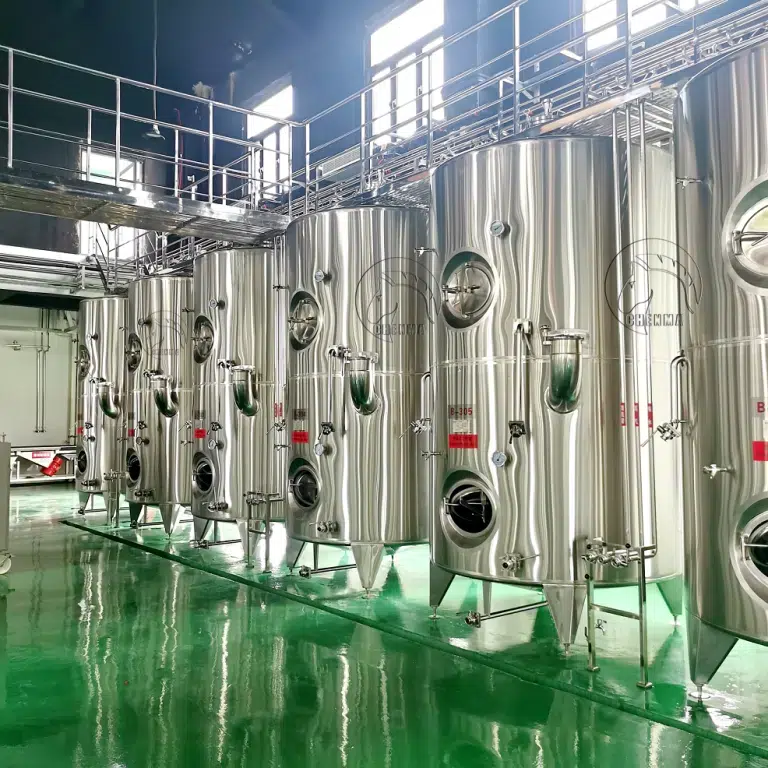
The preferred choice for wineries, breweries, and commercial wine bars. Stainless steel tanks provide unmatched temperature control and hygiene.
CHENMA stainless steel wine storage tanks feature:
- Precision temperature control (±0.5°C accuracy)
- Seamless welding to eliminate bacteria growth
- Corrosion-resistant food-grade stainless steel
- Airtight environment to prevent oxidation
- ISO9001 and EU CE certified
| Aspect | CHENMA Stainless Steel Tanks |
|---|---|
| Hygiene | Smooth surface for easy cleaning and sanitization |
| Durability | 20+ year lifespan, rust-resistant |
| Preservation | Minimizes oxygen exposure, preserves fresh fruit flavors |
| Customization | Available in all sizes and configurations |
Best for: Wineries, commercial wine bars, large-scale storage
Cost: Varies by size and features
How to Choose the Right Wine Storage
Assess Your Space
- Measure the available height, width, and depth
- Consider unused spaces: closets, under stairs, basements
- Wall-mounted racks save floor space in small areas
Set Your Budget
- Under $500: Wine racks and small basic wine fridges
- $500–$3,000: Mid-size dual-zone wine fridges
- $3,000+: Custom wine cellars and commercial stainless steel tanks
Plan for Growth
- Choose modular racks that can be expanded as your collection grows
- Select a wine fridge with 20–30% more capacity than you currently need
- For commercial use, CHENMA offers scalable tank solutions
Match Your Style
- Modern Minimalist: Black metal and glass racks
- Rustic Farmhouse: Reclaimed wood and iron designs
- Industrial Chic: Black steel and mesh with LED lighting
- Commercial: Stainless steel tanks for a professional look
Conclusion
The best wine storage depends on your needs:
- Home use (small collections): Wine refrigerator or high-quality wine rack
- Home use (large collections): Temperature-controlled wine cellar
- Commercial use: Stainless steel storage tanks
No matter which option you choose, remember the golden rules: steady temperature, proper humidity, darkness, no vibration, and horizontal storage. With the right conditions, your wine will age beautifully and be ready to enjoy at its peak.
To learn more about CHENMA stainless steel wine storage tanks for wineries and commercial applications, contact our technical team today. We offer custom solutions tailored to your specific production needs.
FAQ
What is the ideal temperature for storing wine?
Most wines are best stored at 53–59°F (12–15°C). Red wines prefer slightly warmer temperatures (55–65°F), while white and sparkling wines prefer cooler temperatures (40–55°F).
How long can wine be stored?
Most table wines are best consumed within 2–5 years of purchase. Fine wines can be stored for 10–50 years or more under ideal conditions.
Can I store wine in a regular refrigerator?
No. Regular refrigerators are too cold (35–38°F), too dry, and produce vibration that damages wine. Use a dedicated wine refrigerator for long-term storage.
Are floating wine shelves good for small spaces?
Yes. Floating wine shelves save floor space and create a stylish display. They are ideal for storing 10–20 bottles in kitchens or living rooms.
Why do wineries use stainless steel tanks?
Stainless steel tanks provide precise temperature control, are easy to clean, and do not impart any unwanted flavors to the wine. They are also extremely durable and long-lasting.


