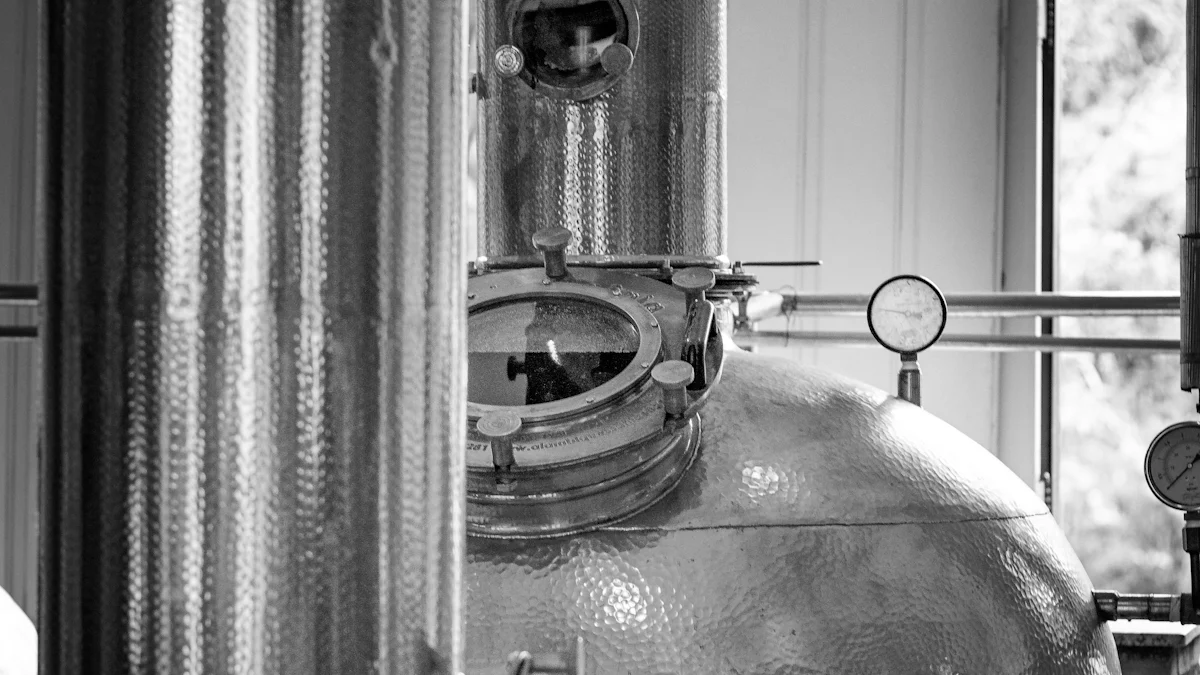

Every year, hundreds of people get sick from contaminated milk and dairy products. A single foodborne illness outbreak can shut down a factory, ruin a brand’s reputation, and cost millions of dollars in recalls.
Pasteurization tanks are the first line of defense against these risks. They heat liquids to precise temperatures to kill harmful bacteria while preserving taste, nutrition, and product quality. In this complete guide, we’ll explain everything you need to know about pasteurization tanks and how to choose the right one for your facility.
Key Takeaways
- Pasteurization tanks heat liquids to kill harmful bacteria while preserving natural taste and nutrition
- The industry standard HTST (High Temperature Short Time) process uses 72°C for 15 seconds
- Two primary systems: batch (flexible for small batches) and continuous (high-efficiency for large production)
- High-quality tanks feature food-grade stainless steel and automated CIP (Clean-In-Place) systems
- CHENMA pasteurization tanks meet global food safety standards and deliver consistent, reliable performance
- Regular maintenance and proper cleaning are essential for compliance and food safety
Pasteurization Tanks and Food Safety

What Is a Pasteurization Tank?
A pasteurization tank is a specialized industrial container designed to heat liquids to specific temperatures for a controlled period of time. This process, called pasteurization, destroys pathogenic bacteria like Salmonella, E. coli, and Listeria that cause foodborne illnesses.
According to the U.S. Centers for Disease Control and Prevention (CDC), universal pasteurization of milk and cheese would prevent approximately 732 illnesses and 21 hospitalizations each year in the United States.
Pasteurization tanks are the backbone of modern food processing, used in dairy plants, juice factories, breweries, and beverage production facilities worldwide. CHENMA milk tanks are industry-leading for their hygienic design and reliable performance in these critical applications.
Why Pasteurization Tanks Are Critical for Food Safety
Pasteurization tanks eliminate 99.999% of harmful microorganisms while minimizing changes to product flavor and nutritional value. They help food manufacturers:
- Comply with strict global food safety regulations
- Extend product shelf life
- Protect consumers from foodborne diseases
- Maintain consistent product quality batch after batch
Critical Food Safety Warning: Improper pasteurization temperatures can leave harmful bacteria alive, leading to foodborne illness outbreaks. Always follow exact time-temperature parameters for your product and clean the tank thoroughly after each use.
Pasteurization Systems
How Pasteurization Tanks Work
The most common method is HTST (High Temperature Short Time) pasteurization, which follows this standardized process:
- Cold raw milk enters the tank at 4–5°C
- The liquid passes through a heat exchanger and preheats to 38°C
- A secondary preheater raises the temperature to 54°C
- The milk enters the pasteurization loop and is heated to 72°C for exactly 15 seconds
- A diversion valve automatically redirects underheated milk back for reprocessing
- Pasteurized milk cools to 53°C and undergoes deodorization
- The heat exchanger recovers energy to preheat incoming cold milk
- A refrigeration unit chills the final product to 7°C for bottling
The table below shows standard time-temperature combinations for different pasteurization methods:
| Temperature (°C) | Time (seconds) | Common Applications |
|---|---|---|
| 63 | 1800 | Vat pasteurization |
| 72 | 15 | HTST milk pasteurization |
| 89 | 1 | Ultra-pasteurization |
| 100 | 0.01 | Flash pasteurization |
Batch vs. Continuous Pasteurization Systems
Pasteurization tanks operate in two primary configurations, each suited for different production needs:
| Aspect | Batch Process | Continuous Process |
|---|---|---|
| Production Scale | Small to medium | Large industrial |
| Flexibility | High – easy to switch products | Low – best for long runs |
| Automation Level | Semi-automated | Fully automated |
| Energy Efficiency | Lower | Higher (with heat recovery) |
| Initial Cost | Lower | Higher |
| Downtime | Higher (cleaning/changeovers) | Lower (continuous operation) |
Batch systems are ideal for artisanal dairies, small juice producers, and facilities that make multiple product types. Continuous systems are designed for high-volume factories processing 20,000+ liters per day.
Benefits of Modern Pasteurization Tanks
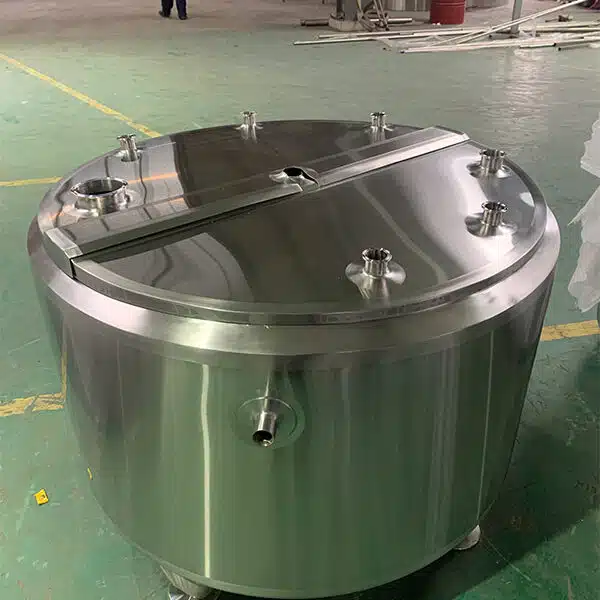
Unmatched Food Safety
Pasteurization tanks help ensure food and beverage safety. They use a short, high-temperature process to heat liquids, killing harmful bacteria in them. These tanks primarily target bacteria such as Salmonella, E. coli, and Listeria. The process also reduces the number of other bacteria, such as Campylobacter and Mycobacterium bovis. Studies have shown that pasteurization can reduce the number of E. coli by almost half.
Improved Efficiency and Quality
The table below shows the performance improvements from upgrading to modern pasteurization technology:
| Metric | Before Modernization | After Modernization | Improvement |
|---|---|---|---|
| Energy Consumption | 0.48 kWh/liter | 0.32 kWh/liter | 33% reduction |
| Product Shelf Life | 10 days | 14 days | 40% extension |
| Microbial Rejection Rate | 3.2% | 0.8% | 75% reduction |
| Daily Production Capacity | 180,000 L | 220,000 L | 22% increase |
| CIP Water Usage | 8,000 L/day | 5,200 L/day | 35% reduction |
Environmental Sustainability
Modern tanks use heat recovery systems that reuse up to 90% of the energy from the cooling process, significantly reducing carbon emissions and utility costs. Pasteurization tanks are also environmentally friendly. They consume less energy and water, generate less waste, and support green packaging.
Industry Applications of Pasteurization Tanks
Dairy Processing
Pasteurization tanks are essential for milk, yogurt, cheese, and ice cream production. CHENMA milk tanks are trusted by dairies worldwide for their ability to maintain consistent product quality and meet strict hygiene standards.
Beverage Production
These tanks are used to pasteurize:
- Fruit juices and pulps
- Plant-based milks (soy, almond, oat)
- Beer and wine
- Sports drinks and functional beverages
Other Applications
Pasteurization tanks also process honey, sauces, soups, and ready-to-eat meals, ensuring safety and extending shelf life across the food industry.
How to Choose the Right Pasteurization Tank
When selecting a pasteurization tank for your facility, prioritize these factors:
- Production Volume: Choose batch systems for <5,000 L/day and continuous systems for >20,000 L/day
- Product Type: Different products require specific time-temperature profiles
- Hygiene Requirements: Look for 316L stainless steel and fully automated CIP systems
- Compliance: Ensure the tank meets regional standards (PMO, EU 605/2010, FSSAI, etc.)
- Customization: Select a manufacturer that can tailor the tank to your specific needs
CHENMA offers custom pasteurization solutions for facilities of all sizes, from small artisanal dairies to large industrial food processing plants.
Conclusion
Pasteurization tanks are an indispensable piece of equipment in the global food industry. They ensure the safety of our food supply, extend product shelf life, and help manufacturers comply with strict regulatory standards.
When investing in pasteurization tanks, it is essential to choose a manufacturer with a proven track record of superior quality and reliability. CHENMA pasteurization tanks are designed to the highest industry standards, ensuring stable performance, hygiene and safety, and delivering long-term value to your business.
FAQ
What is the main purpose of a pasteurization tank?
A pasteurization tank heats liquids to precise temperatures to kill harmful bacteria, making food and beverages safe for consumption while preserving taste and nutrition.
How often should a pasteurization tank be cleaned?
Pasteurization tanks must be thoroughly cleaned and sanitized after each production run. Automated CIP systems ensure consistent cleaning and reduce the risk of bacterial contamination.
Can pasteurization tanks process products other than milk?
Yes. These tanks are used to pasteurize juice, honey, yogurt, plant-based drinks, beer, wine, and many other liquid food products.
What makes CHENMA milk tanks different from other brands?
CHENMA tanks feature premium 316L stainless steel construction, precision temperature control, fully automated CIP systems, and compliance with all major global food safety standards. We also offer flexible customization options to meet your specific production needs.
Do pasteurization tanks help save energy?
Yes. Modern CHENMA tanks use advanced heat recovery systems that reuse up to 90% of the energy from the cooling process, reducing energy consumption by up to 33% compared to older models.