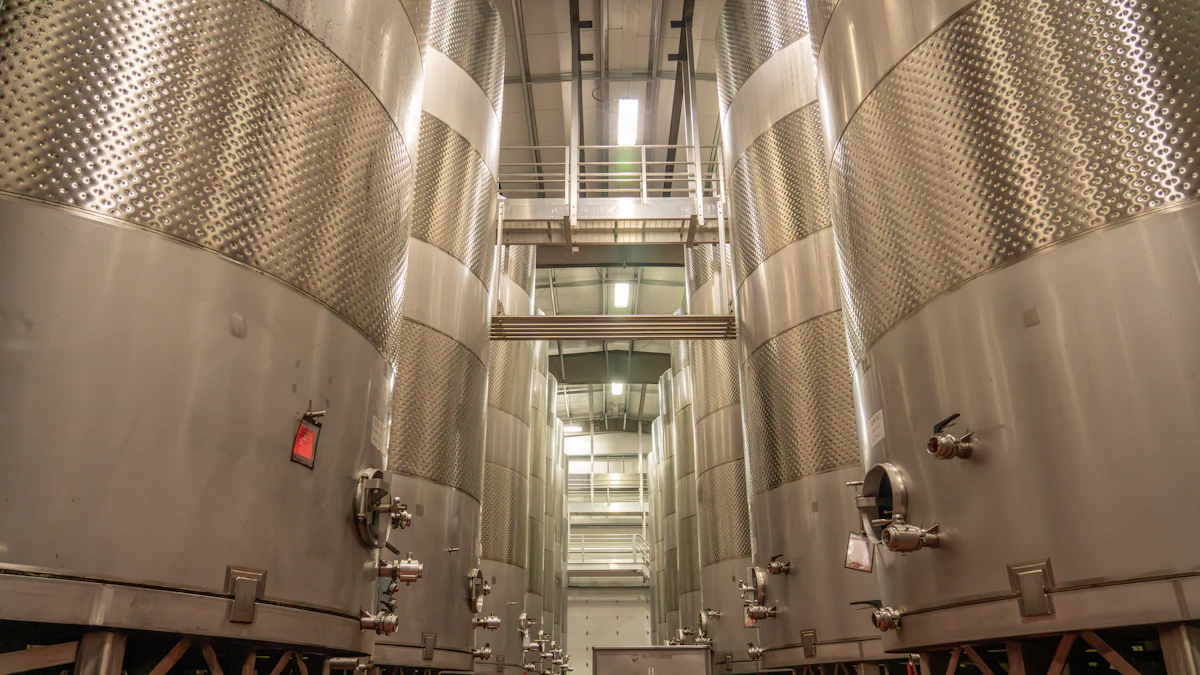

Every milk cooling tank requires an agitator to deliver uniform, fast cooling, consistent fat content, and safe storage quality. Without agitation, milk cools unevenly, develops warm spots that accelerate bacterial growth, and separates into cream and skim layers — directly risking product quality, farmer revenue, and compliance with safety standards. The cooler alone cannot do the job: consistent stirring is what makes the refrigeration system work efficiently and protects every drop of milk.
Key Takeaways
- Agitators maintain uniform milk temperature (0–4°C) by eliminating warm spots and preventing insulating ice film on cooling walls.
- Continuous gentle stirring prevents cream separation, keeping butterfat evenly distributed for accurate sampling and fair pricing.
- Uniform cold temperatures slow bacterial growth, reducing spoilage risk and protecting milk flavor and quality.
- Agitation improves cooling efficiency, cutting compressor runtime and lowering energy use.
- It also supports thorough CIP cleaning by keeping solids suspended and letting cleaning solution reach all tank surfaces.
How an Agitator Ensures Uniform, Efficient Cooling
Without agitation, milk in a cooling tank forms natural temperature gradients: warm milk rises to the top, while cold milk sinks near the refrigerated jacket walls. An insulating ice film quickly forms on the cold inner surfaces, slowing heat transfer and forcing the compressor to run longer and harder to hit the target storage temperature.
The agitator creates constant, controlled circulation, pushing warm milk down to the cold walls and sweeping cooled milk upward to eliminate temperature layers entirely. This removes warm pockets where bacteria would multiply, and prevents ice buildup on cooling surfaces. The result is fast, uniform cooling to the ideal 0–4°C storage range across every liter of milk.
This improved heat transfer also boosts energy efficiency: the refrigeration compressor runs shorter cycles, uses less electricity, and experiences less wear over time, extending the cooler’s service life.
Why Agitation Prevents Cream Separation
Milk fat naturally rises to the surface when milk sits still, creating an uneven fat gradient — higher butterfat at the top, lower at the bottom. This separation undermines product consistency and leads to inaccurate butterfat sampling, which can cost farmers hundreds of dollars per load in mispricing.
The agitator’s steady, gentle stirring disperses fat globules evenly throughout the entire batch, so every sample matches the true average butterfat content. This ensures fair pricing and consistent product quality from the first drop to the last. Variable-frequency drive agitators let operators adjust speed to match tank volume and milk level, for optimal mixing without damaging fat structure.
How Agitation Protects Milk Quality & Hygiene
Reduces Bacterial Growth & Spoilage
Warm pockets in unstirred milk create ideal environments for bacteria to multiply rapidly. By maintaining a uniform cold temperature throughout the entire batch, agitation slows microbial growth significantly, protecting milk flavor, somatic cell counts, and food safety standards. This eliminates the risk of off-flavors, high bacteria counts, and costly spoiled batches.
Supports Thorough CIP Cleaning
Agitation also improves milk tank sanitation. Constant movement keeps solids and bacteria from settling and adhering to tank walls, so cleaning solutions can reach every interior surface during clean-in-place (CIP) cycles. This removes residue more thoroughly, maintains hygienic storage conditions between batches, and extends the service life of the tank.
FAQ
How often should the agitator run during cooling?
The agitator should run continuously throughout the entire cooling and storage cycle. Interrupted movement leads to uneven temperatures, cream separation, and increased spoilage risk.
Can a milk cooling tank work without an agitator?
No. Without an agitator, warm milk stays trapped at the top, ice forms on cooling walls and insulates the batch, bacteria multiply in warm spots, and cream separates. The result is rapid quality loss and likely total batch spoilage.
What happens if the agitator stops during storage?
Temperature gradients form quickly, cream rises to the surface, and bacterial growth accelerates in warm pockets. This can ruin an entire batch and lead to lost revenue, rejected loads, or compliance issues.
How does agitation improve tank cleaning?
Constant stirring keeps solids suspended instead of settling on tank walls, allowing cleaning solutions to contact and sanitize every interior surface during cleaning cycles.
Does agitator speed matter?
Yes. The right speed prevents cream separation without damaging fat globules. Variable-frequency drives let operators match speed to tank size and milk volume for optimal results.
Conclusion
An agitator is not an optional add-on for a milk cooling tank — it is an essential component that makes effective cooling, quality control, and safe storage possible. It works in tandem with the refrigeration system to deliver fast uniform cooling, consistent butterfat content, and reduced spoilage risk, while also lowering energy costs and supporting thorough sanitation.
For dairy farmers, running the agitator continuously during cooling and following a regular maintenance schedule protects both milk quality and long-term revenue.