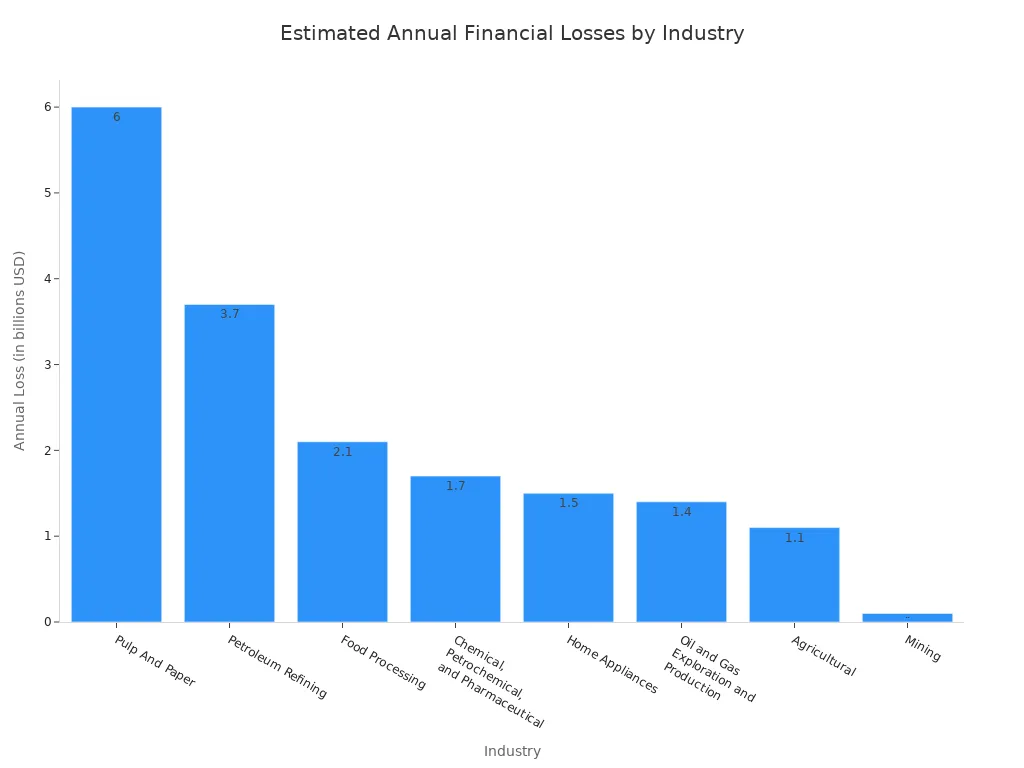
Choosing the right material is the most critical part of your chemical mixing tank design. An incorrect material for your tank leads to hazardous chemical leaks and costly failures. These failures contribute to significant financial losses from downtime and tank replacement.
The chemical, petrochemical, and pharmaceutical industries alone face an estimated $1.7 billion in annual losses due to corrosion.
This single design decision protects your investment, your team, and the quality of your chemical mixing. The integrity of your tank is fundamental for safe mixing operations.
Key Takeaways
- Choosing the right tank material is very important. It prevents dangerous leaks and saves money.
- Always check a chemical resistance chart. This helps you pick a material that works well with your chemicals.
- Consider how hot or cold your tank will get. Temperature and chemical strength affect how well a material performs.
- Think about how your tank will be used every day. It needs to handle bumps, pressure, and mixing actions.
- The cheapest tank material is not always the best. A good material saves you money in the long run by lasting longer and needing fewer repairs.
Matching Tank Materials to Chemical Properties

The foundation of a reliable chemical mixing tank is choosing a material that can withstand its contents. A chemical that is harmless to one material can destroy another. You must carefully analyze your chemical’s properties to select a tank that ensures safety and longevity. This process prevents corrosion, leaks, and product contamination.
How to Use a Chemical Resistance Chart
A chemical resistance chart is your primary tool for material selection. These charts, often provided by material suppliers or tank manufacturers, rate how well different materials hold up against specific chemicals. However, you need to interpret them correctly.
Pro Tip: Charts from sources like Integra Enclosures or Industrial Specialties Mfg. are excellent starting points. They provide ratings from ‘A’ (Excellent) to ‘D’ (Poor) or ‘S’ (Satisfactory) to ‘U’ (Unsatisfactory).
Here is a simple process for using these guides:
- Locate Your Chemical: Find the specific chemical you will be mixing in the chart.
- Check the Temperature: Select a material with a maximum use temperature that is higher than your operational needs.
- Consult an Expert: If a material seems borderline, contact a technical expert for more advice.
- Perform a Physical Test: The only way to guarantee success for your specific application is to test the material under your actual operating conditions.
A chart might look something like this:
| Chemical | Polycarbonate | ABS | Polyester Glass | Stainless Steel | Steel |
|---|---|---|---|---|---|
| Acetic Acid (10%) | S | L | S | S | S |
Remember to consider all variables. Factors like chemical concentration, pressure, and mechanical stress can all affect a material’s performance.
Common Materials and Their Chemical Strengths
You have several material options for your mixing tank. Each has unique strengths.
- Stainless Steel (Grades 304 and 316L)
You will find stainless steel is a popular choice for its strength and cleanability. However, not all grades are equal. Grade 304 is a cost-effective solution for many applications, like storing process water. Grade 316L contains molybdenum, giving it superior resistance to chlorides and acids. This makes 316L a better choice for harsher environments.
| Environment/Chemical | Grade 304 Resistance | Grade 316L Resistance |
|---|---|---|
| Brine or weak acid storage | Failed from pitting within 1 year | Extended lifespan 3–5 times longer |
| Freshwater transport | Reliable | Widely used for piping |
At Shandong Chenma Machinery Co., Ltd., our engineers manufacture custom stainless steel tanks. We can help you select the right grade and design for your unique mixing needs.
- Polyolefins (HDPE and Polypropylene)
High-Density Polyethylene (HDPE) and Polypropylene (PP) are plastics known for excellent chemical resistance. PP often provides better performance against strong acids, alkalis, and aggressive solvents. HDPE handles many common chemicals well but can degrade with certain reactive solvents.
| Feature | Polypropylene (PP) Tank | HDPE (High-Density Polyethylene) Tank |
|---|---|---|
| Chemical Resistance | Excellent against strong acids, alkalis, and solvents | Very good but less durable with aggressive solvents |
- Fiberglass-Reinforced Plastic (FRP)
FRP is a composite material valued for its inherent corrosion resistance. It can handle a broad spectrum of acids and alkalis, making it a great choice for many corrosive chemical storage needs. FRP is also lightweight and can be used for high-purity goods like medicine or purified water. However, it has a higher initial cost and can be damaged by UV radiation if not properly treated.
The Impact of Concentration and Temperature
A material’s compatibility is not a simple yes-or-no answer. It depends heavily on the chemical concentration and the operating temperature of your mixing process.
A material might resist a dilute chemical but fail when exposed to a concentrated version. For example, carbon steel performs well in concentrated sulfuric acid because it forms a protective film. In dilute sulfuric acid, this film does not form, and the steel corrodes quickly.
Temperature also plays a huge role.
- Higher temperatures accelerate chemical reactions, which can increase corrosion rates and damage your tank.
- For instance, an HDPE tank is rated for service up to 130°F (54°C). However, storing sodium hypochlorite above 60°F (15°C) speeds up its decomposition and increases its interaction with the polyethylene, reducing the tank’s service life.
- Temperature also affects liquid viscosity. A change in viscosity can impact your mixing efficiency and the stress placed on the tank and agitator. Managing temperature is key to controlling both the chemical reaction and the physical properties, like viscosity, of your mixture.
Aligning Your Chemical Mixing Tank Design with Operational Demands
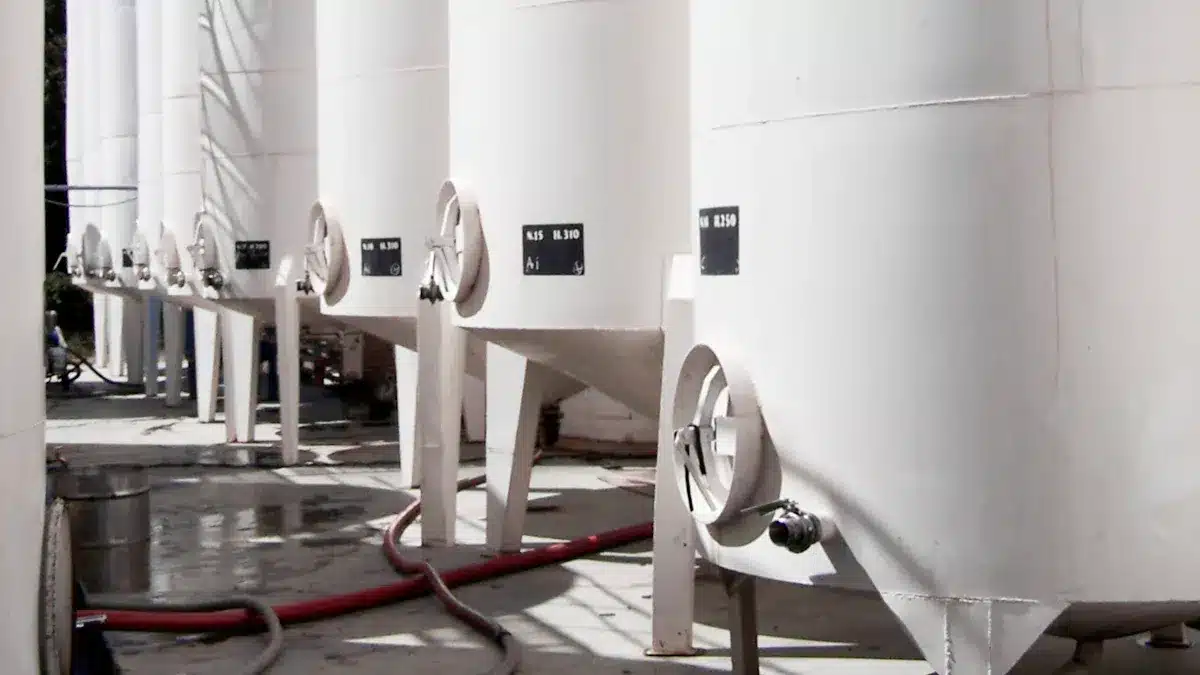
Beyond chemical compatibility, your tank must withstand the physical stresses of your daily operations. A successful tank mixing setup depends on a design that accounts for temperature, pressure, physical impacts, and the forces generated by the mixing process itself. Aligning your material choice with these demands is essential for safety and performance.
Factoring in Temperature and Pressure
Temperature and pressure are two of the most significant operational forces your tank will face. All materials expand in heat and contract in cold. This movement can cause deformation, create vacuum effects during cooling, or stress fittings and valves, leading to leaks.
- For outdoor tanks or those in environments with extreme temperature swings, you might consider UV-stabilized HDPE or double-walled tanks.
- However, stainless steel is often a more robust choice, offering superior resilience against significant temperature fluctuations.
Pressure presents another challenge. Your chemical mixing tank design must safely manage both internal pressure and potential vacuum conditions. Key design specifications help ensure this safety:
- Design Pressure: You should set this 5–10% above your peak operating pressure. If your tank could be exposed to a vacuum, the design must also handle a full vacuum.
- Maximum Allowable Working Pressure (MAWP): This is the highest pressure the tank can safely handle at a specific temperature, preventing you from operating beyond safe limits.
- Design Temperature: You should set this well above your highest operating temperature and below your lowest, as a material’s strength changes with temperature.
To manage these forces, you can incorporate various safeguards into the tank design.
| Safeguard Type | Common Safeguards | Key Function |
|---|---|---|
| Overpressure | Free Vent, Overflow Line, Reclosing Pressure Vent | These prevent pressure buildup by allowing vapors or liquids to escape safely. |
| Vacuum | Free Vent, Continuous Inert Blanketing, Reclosing Vacuum Breaker | These prevent tank collapse by allowing air in or maintaining positive pressure. |
Assessing Abrasion and Impact Resistance
Your facility is a dynamic environment. You need a tank material that can resist accidental bumps from forklifts, tools, or personnel. The material’s durability directly impacts its lifespan and safety.
While plastics like HDPE offer good resistance, stainless steel provides superior durability and sturdiness. Its resilience allows it to withstand the demands of daily industrial use, ensuring longevity for your mixing tank. This makes it an ideal choice for high-traffic areas where the risk of impact is greater.
Agitation Method and Baffling Needs
The goal of in-tank mixing is to create a homogenous product, and your tank’s internal design is crucial for maximizing efficiency. The agitation method, tank size and shape, and liquid viscosity all influence the need for baffles.
You can achieve better mixing and performance by incorporating baffles, which offer several advantages:
Baffles are flat plates installed inside a tank to disrupt swirling and promote top-to-bottom fluid movement. This action is critical for achieving proper mixing. Without them, a centrally mounted mixer can create a vortex, which reduces mixing efficiency and puts stress on the mixer.
- Improved Mixing Efficiency: Baffles eliminate vortexes, forcing your chemical product back toward the impeller for more effective blending.
- Consistent Product Quality: They create uniform flow patterns, ensuring a thoroughly mixed and consistent final product.
- Reduced Wear and Tear: By preventing vortexing, baffles reduce stress on the mixer’s impeller, shaft, and seals, extending equipment life.
- Enhanced Solids Suspension: They promote upward liquid flow, which is essential for keeping solid particles evenly distributed throughout the tank.
The need for baffles often depends on the viscosity of your liquid.
- Low Viscosity (under 100 cp): Baffles are essential for proper mixing. Four standard baffles are typical.
- Medium Viscosity (over 100 cp): You can reduce the size of the baffles as the liquid’s own resistance begins to help.
- High Viscosity (over 10,000 cp): Baffles are often unnecessary. The high viscosity of the liquid provides a natural “self-baffling” effect that dampens vortex formation.
For smaller tanks (under ten feet in diameter), you can sometimes achieve good mixing by offsetting the mixer instead of using baffles. However, for larger tanks, properly sized mixers and baffles are key to maximizing efficiency.
Navigating Regulatory and Purity Standards
Your tank material must not only withstand your process but also meet strict industry regulations. For industries like drinking water, food, and pharmaceuticals, compliance is non-negotiable. Choosing a certified material and a sanitary tank design protects public health and ensures your product’s integrity.
Meeting FDA and NSF Requirements
When your process involves potable water, you must meet specific standards. The most common is NSF/ANSI 61, which certifies components for drinking water systems. Achieving this certification is a rigorous process.
To earn NSF/ANSI 61 certification, a material must undergo extensive testing. This ensures no harmful contaminants leach into the water.
Key requirements for certification include:
- Chemical Contaminant Testing: The material is tested for any impurities that could transfer into the drinking water.
- Exposure Water Simulation: The tank material is exposed to waters of varying pH levels to simulate diverse real-world conditions.
- Complete System Certification: The entire system, including the tank, fittings, and washers, must meet the standard.
Choosing Materials for High-Purity Applications
Industries like semiconductor manufacturing demand extreme purity. In these environments, even microscopic contamination can ruin a product. Your material choice is critical for preventing leaching and maintaining a pure chemical stream.
For this type of high-purity application, you will often use advanced polymers. Materials like Perfluoroalkoxy (PFA) are ideal because of their superior properties. PFA offers exceptional chemical inertness and has a very smooth, non-porous surface. This prevents particles from sticking and ensures the tank can be cleaned easily, protecting the purity of your process fluids.
Sanitary Designs for Food and Pharmaceuticals
In the food, beverage, and pharmaceutical industries, preventing microbial growth is the top priority. A sanitary tank design eliminates places where bacteria can hide. This involves more than just selecting stainless steel.
Design features are crucial for cleanability:
- Internal Radii: All internal corners must be rounded to prevent product buildup.
- Crevice-Free Welds: Welds must be smooth and continuous, leaving no gaps or crevices.
- Surface Finish: The tank interior should be polished to a smooth finish. Standards like ASTM B912 guide the electropolishing process, which creates a microscopically smooth surface that resists contamination and is easy to sanitize.
These design elements work together to create a hygienic environment, ensuring your final product is safe and pure.
Balancing Initial Cost Against Long-Term Value
Selecting the right material involves more than just technical specifications; it requires a careful financial evaluation. The cheapest option today could become your most expensive problem tomorrow. You must look beyond the initial price tag to understand the true, long-term cost of your investment.
Upfront Investment vs. Total Cost of Ownership
The initial purchase price is only one part of the equation. While some materials appear more affordable at first, their total cost of ownership can be much higher. You should consider all expenses over the tank’s entire service life.
For example, a steel tank might have a lower upfront cost than a plastic one, but this can be misleading.
| Tank Type | Small (250-gallon) | Large (50,000-gallon) |
|---|---|---|
| Steel | $500 | $50,000+ |
| Fiberglass/Polyethylene | $2,000 | $100,000+ |
Polyethylene tanks often have a lower total cost of ownership. They resist corrosion from chemicals that would damage steel, reducing the need for costly repairs and downtime. This superior performance makes them a smarter long-term investment.
Factoring in Maintenance and Lifespan
A material’s durability directly impacts your operational budget. A tank that requires frequent maintenance or early replacement will quickly erase any initial savings. Materials with inherent corrosion resistance, like stainless steel or HDPE, demand less upkeep.
Consider the expected service life for different materials:
| Tank Material | Service Life (Years) |
|---|---|
| Plastic (Polyethylene) | 10-20 |
| Fiberglass (FRP) | 25-30 |
| Stainless Steel | 20+ |
A stainless steel or high-quality plastic tank may last for decades with minimal maintenance. In contrast, a carbon steel tank exposed to corrosive chemicals might fail quickly, leading to significant replacement costs and operational disruptions.
A Final Material Selection Checklist
Before you make a final decision, use this checklist to guide your conversation with a tank manufacturer. Answering these questions will ensure you select the best material for your needs.
Pro Tip: Asking the right questions upfront prevents costly mistakes and ensures your equipment meets all requirements.
- What specific chemicals will the tank hold, and at what concentrations?
- What is the required operating temperature range?
- Will the tank be located indoors or outdoors?
- Are there any industry-specific regulations (e.g., FDA, NSF) you must meet?
- What level of customization is needed for your process?
- Does the manufacturer comply with recognized standards like ISO or ASME?
A thorough review using these points will help you secure a durable, compliant, and cost-effective solution for your chemical mixing operation.
Your material choice is the foundation of a successful chemical mixing tank design. It ensures safety and long-term efficiency for your mixing process. This strategic decision protects your chemical product. Proper mixing in the right tank prevents costly failures.
Final Step: Always consult an expert before finalizing your chemical mixing tank design. A trusted manufacturer like SDCHENMA can review your specific chemical mixing data. They will help you create the perfect tank design.
FAQ
How do I choose between 304 and 316L stainless steel?
You should choose Grade 316L stainless steel for mixing corrosive chemicals like chlorides or acids. It offers superior corrosion resistance. Grade 304 is a cost-effective choice for less aggressive applications, such as mixing with process water. Your specific chemical determines the best grade.
Are baffles always necessary for efficient mixing?
You need baffles for most low-viscosity mixing applications. They prevent a vortex and ensure your product blends thoroughly. However, you may not need them for very small tanks or when mixing high-viscosity liquids, as the liquid’s thickness provides natural resistance.
Why shouldn’t I just choose the cheapest tank material?
The cheapest material often leads to higher long-term costs. A low-cost tank may corrode quickly, requiring expensive repairs, downtime, and early replacement. Investing in the correct material from the start protects your operation and saves money over the tank’s lifespan.
What information should I provide for a custom tank quote?
To get an accurate quote, you must provide key details.
- The specific chemicals for mixing
- Operating temperatures and pressures
- Required capacity
- Any regulatory standards (FDA, NSF)
This information helps engineers design a tank that perfectly suits your needs.