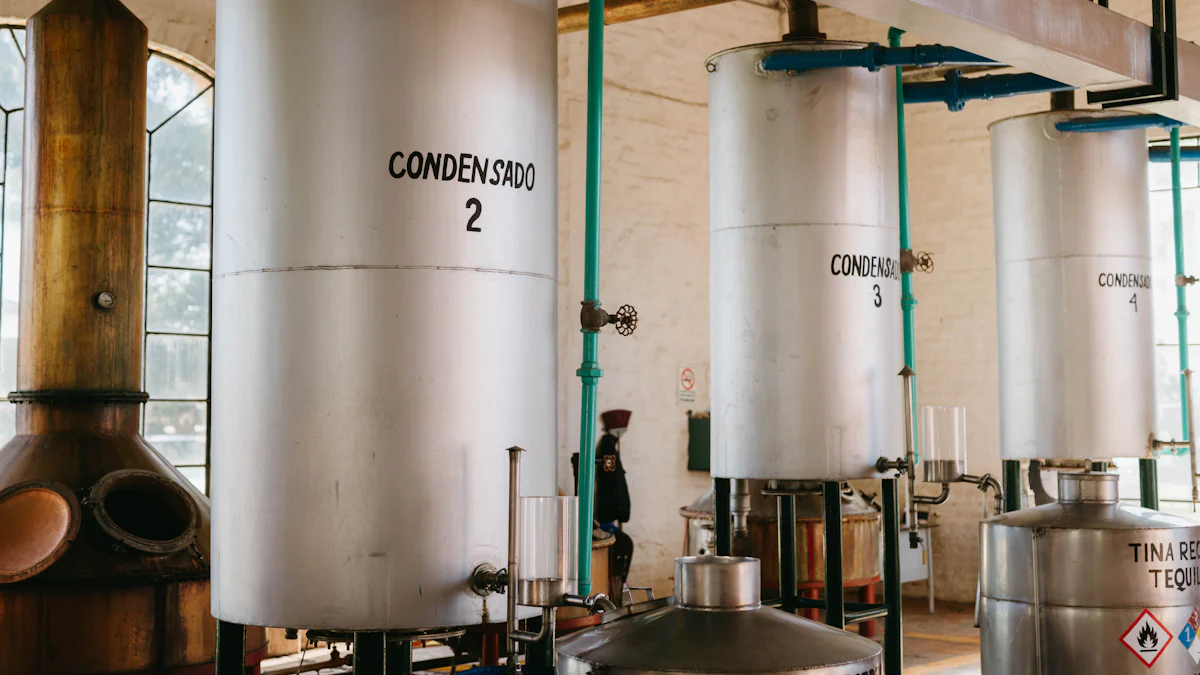
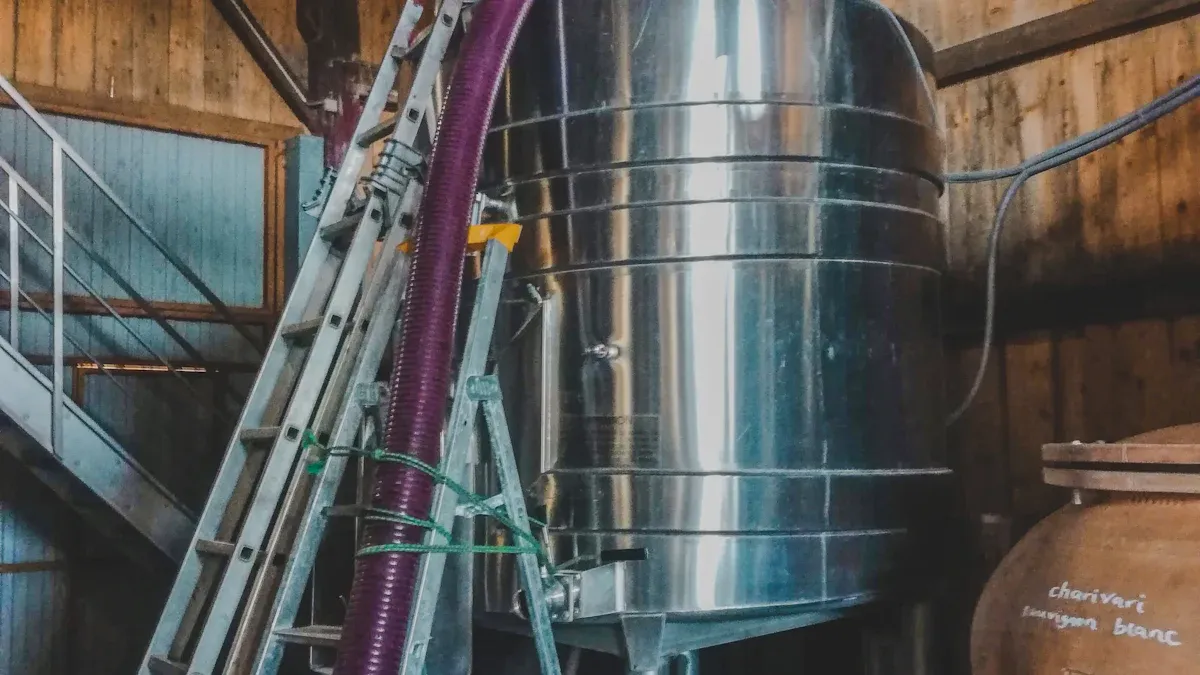
A winemaker selects a fermentation tank for wine from several key materials. The most popular choices are stainless steel, concrete, oak, and clay. Each material uniquely impacts the fermentation process. This choice is a critical step in crafting a high-quality wine. The vessel shapes the final wine’s character, from its flavor to its texture. The right fermentation method helps define the finished wine.
Key Takeaways
- Winemakers choose different tanks like steel, concrete, oak, or clay. Each tank changes the wine’s taste and feel.
- Stainless steel tanks keep wine fresh and fruity. They are easy to clean and control temperature well.
- Concrete tanks make wine feel smoother and richer. They let in a little air, which helps the wine taste better.
- Oak barrels add flavors like vanilla and spice. They help wine age well and become more complex.
- Clay pots, called amphorae, give wine an earthy taste and unique texture. They are good for natural wines.
Stainless Steel Wine Tanks: The Modern Standard for Purity
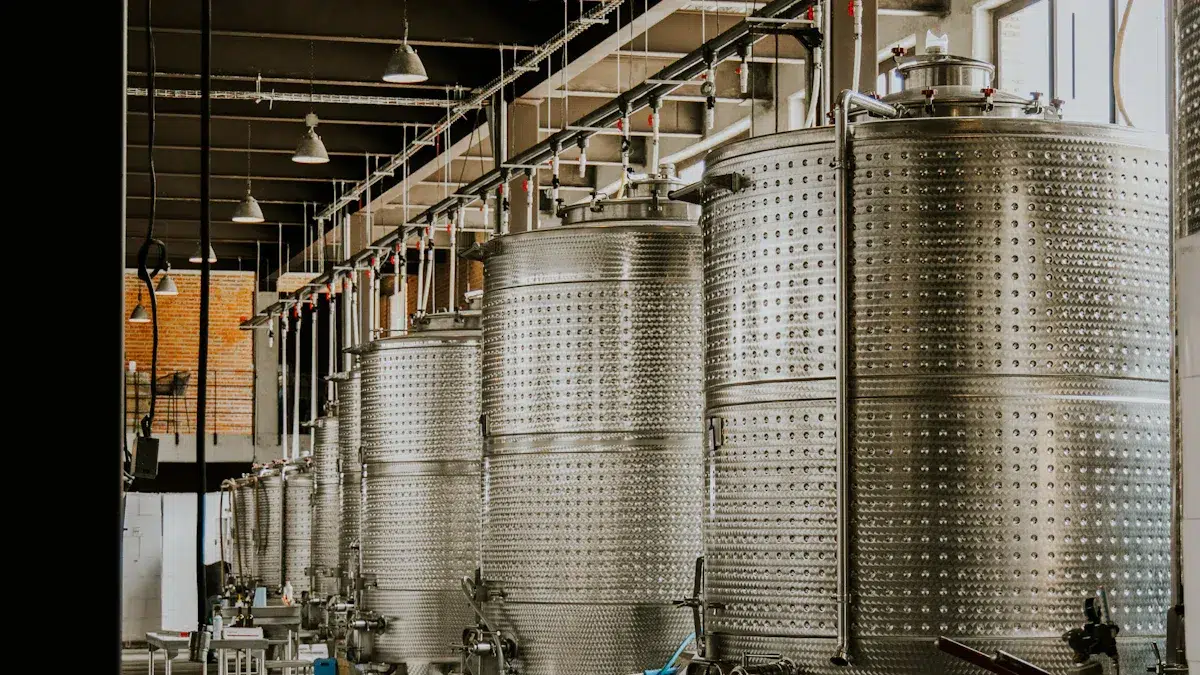
Stainless steel wine tanks are a cornerstone of modern winemaking. Winemakers favor them for their ability to produce clean, crisp, and fruit-forward wines. These vessels offer unmatched control over the fermentation process, making them a versatile choice for many wine styles. Their non-porous surface is also easy to clean and sanitize, ensuring a pure environment for every batch.
Preserving Primary Fruit Flavors
Stainless steel tanks excel at preserving the natural fruit character of the grapes. Scientific studies show these tanks help retain compounds like ethyl acetate and isoamyl alcohol. These compounds give the wine a fresh and aromatic profile. Reductive winemaking techniques, often used with steel, further protect these delicate aromas by limiting oxygen contact during fermentation. The final wine expresses its true varietal character without outside influence.
Advantages of Inert Steel
The primary advantage of stainless steel is its inert nature. It does not react chemically with the wine. This means the material imparts no additional flavors, aromas, or tannins.
While some evaluations note the absence of woody or spicy notes found in oak-aged wine, this confirms that steel maintains the wine’s primary fruit qualities. This neutrality makes stainless steel tanks the perfect vessel for winemakers who want the grape’s pure flavor to be the star of the show.
Precise Temperature Control
Temperature is a critical factor in a successful fermentation. Modern stainless steel wine tanks provide exceptional control over this variable. Precise temperature management ensures consistency and enhances wine quality. For example, white wines ferment best between 10-18°C to protect delicate aromas, while red wines need 20-32°C for ideal color and tannin extraction.
Advanced systems help maintain these exact temperatures:
- Integrated Cooling Jackets: These wrap around the tank, circulating glycol or cold water for even cooling.
- Digital Sensors and Controllers: These tools automate the heating and cooling cycles, reducing manual effort.
- Insulation: High-quality insulation maintains a steady temperature and improves energy efficiency.
This level of control prevents yeast stress and avoids off-flavors, leading to a stable and high-quality final product.
Best Wines for Steel Fermentation
Winemakers choose stainless steel tanks for wines that showcase pure, vibrant fruit flavors. This method is especially suited for aromatic white wine styles where freshness is the primary goal. The controlled, oxygen-free environment helps preserve the grape’s natural character without adding any external influence from the vessel itself.
Aromatic white varieties are the most common candidates for this process.
- Sauvignon Blanc: This grape’s signature aromatics come from compounds called thiols. These compounds are very sensitive and degrade quickly with oxygen exposure. Fermenting in sealed stainless steel tanks protects these thiols, resulting in a more expressive and aromatic wine.
- Riesling: The cool fermentation temperatures achievable in steel help retain the delicate floral and citrus notes characteristic of Riesling.
- Pinot Grigio & Other Crisp Whites: These styles benefit from steel’s neutrality, which produces a clean, crisp, and refreshing final product.
The inert nature of steel ensures that the fermentation process captures the true essence of the grape. It allows the varietal’s primary fruit and floral notes to shine through without any added complexity from wood or other materials.
Beyond whites, modern stainless steel wine tanks are also excellent for producing crisp rosé and certain light-bodied red wines. For these styles, the goal of the fermentation is to maintain bright acidity and fresh berry flavors. Using these wine tanks prevents the introduction of heavy tannins or oak flavors, ensuring a clean and refreshing final wine.
Concrete Tanks: Balancing Tradition and Wine Texture
Concrete tanks represent a fascinating middle ground between the neutrality of steel and the character of oak. Winemakers use these vessels to add texture and complexity to a wine without imparting the woody flavors of a barrel. This material, once a staple of old-world winemaking, is seeing a modern resurgence for its unique benefits.
Impact of Micro-Oxygenation
Unlike stainless steel, concrete is semi-porous. The material’s tiny pores allow a very small, gradual ingress of oxygen during fermentation. This slow exposure, known as micro-oxygenation, helps soften a wine’s structure and develop more complex flavors. The gentle interaction with oxygen can round out harsh tannins, making the final wine feel smoother and more integrated from a younger age. This process helps the wine evolve without adding any external flavor.
Enhancing Mouthfeel and Complexity
The primary appeal of concrete is its profound effect on a wine’s texture. The gentle oxygen exposure and the vessel’s properties work together to create a richer, more complex mouthfeel. Many modern concrete tanks are shaped like eggs, which promotes a natural circulation of the lees (spent yeast cells).
This constant, gentle movement of the lees imparts several desirable qualities:
- It contributes a richer body and helps balance the acidity.
- It builds weight and texture, especially in grapes with lower natural tannins.
- It can add a distinct sense of minerality and freshness to the wine.
The result is a wine with wonderful weight and a round mouthfeel that avoids becoming heavy or “flabby.”
Natural Thermal Insulation
Concrete’s thick walls provide excellent natural insulation. This property, known as high thermal inertia, helps maintain a very stable temperature throughout the fermentation process. While steel wine tanks often require external cooling jackets to manage temperature spikes, concrete fermentation tanks moderate temperature naturally. This stability creates a less stressful environment for the yeast, allowing for a slow, steady fermentation. This gentle process helps preserve the wine’s delicate aromatics and contributes to a smoother, more refined final product.
Ideal Wines for Concrete
Winemakers choose concrete for specific grape varieties that benefit from enhanced texture without the influence of oak. The material is exceptionally versatile, working well for both white and red wines where mouthfeel and complexity are desired. Concrete wine tanks help craft a unique style of wine that highlights both fruit and structure.
White grape varieties that thrive in concrete include:
- Sauvignon Blanc: Concrete fermentation builds body and softens the grape’s aggressive acidity. This creates a richer, more rounded wine while preserving its bright citrus and herbal notes.
- Chardonnay: For winemakers seeking an alternative to oak, concrete offers a way to develop texture and weight. It allows the grape’s pure fruit character to shine through with a creamy mouthfeel.
- Sémillon and Chenin Blanc: These grapes gain complexity and a waxy texture from concrete, enhancing their natural characteristics.
Concrete’s unique properties allow winemakers to build structure and roundness. The vessel softens tannins in red wines and adds weight to white wines, all while respecting the primary fruit character of the grape.
For red wines, concrete is excellent for varieties that benefit from gentle oxygen exposure to soften their tannins. Grapes like Grenache, Syrah, Malbec, and Merlot are ideal candidates. The slow integration of oxygen helps create a smoother, more polished final product. The process makes the tannins feel more integrated at a younger age, resulting in a wine that is approachable and well-balanced. This method is perfect for producing reds with pure fruit expression and a supple, velvety texture.
Oak Barrels: The Classic Choice for Complex Wine Fermentation
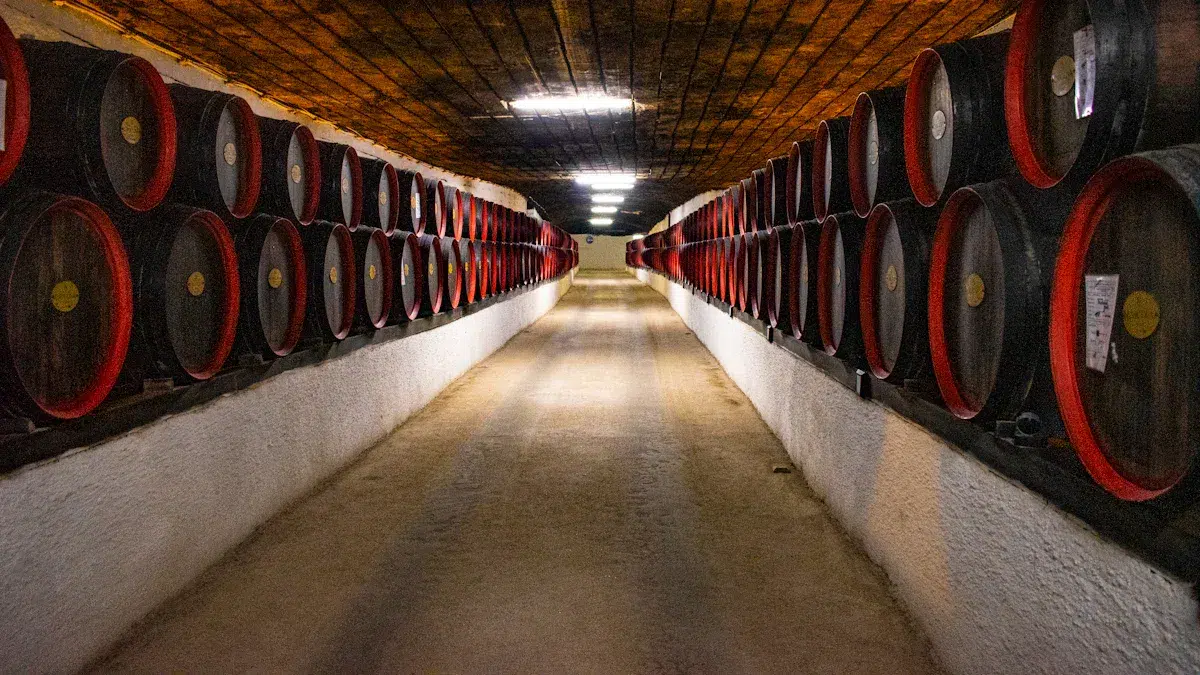
Oak barrels are the traditional choice for winemakers aiming to create a wine with depth, structure, and complexity. This classic oak vessel does more than just hold the liquid; it actively participates in the wine fermentation process. The wood interacts with the wine, adding layers of flavor and texture that cannot be achieved with other materials. This makes oak essential for crafting many of the world’s most celebrated wines.
Imparting Flavor and Aroma
An oak barrel imparts distinct flavors and aromas to a wine. The type of oak, its origin, and the toasting level of the barrel all contribute to the final profile. During fermentation and aging, the wood releases specific chemical compounds that enhance the wine’s character.
Key compounds from oak include:
- Vanillin: This adds a pleasant and familiar vanilla note.
- Oak Lactones: These are responsible for coconut and woody aromas. The cis-lactone isomer, in particular, gives a signature coconut scent along with hints of caramel and spice.
These elements integrate with the grape’s natural flavors, creating a more complex and layered final product.
The Role of New vs. Neutral Oak
Winemakers choose between new and neutral (used) oak barrels to control the intensity of flavor. A new barrel offers the strongest impact, while a neutral barrel provides gentle oxygenation with minimal added flavor. The origin of the wood is also a critical decision.
| Feature | French Oak Barrels | American Oak Barrels |
|---|---|---|
| Flavor Impact | Subtle spice, refined tannins | Strong vanilla, coconut, dill |
| Oxygenation | Slower, more gentle | Faster, more aggressive |
| Cost Range | $850 – $3600 | $360 – $500 |
A survey by Wine Business Monthly found that 65% of winemakers feel French oak gives a more refined profile. However, American oak is prized for its ability to complement bold, fruit-forward wines. As wine expert Josh Raynolds noted, American oak can add “a broader sensation in the mouth, complementing the intense fruit flavors of wines like Shiraz.”
Developing Structure and Aging Potential
Oak barrels are crucial for developing a wine’s structure. The wood is porous, allowing for a slow, controlled exposure to oxygen. This micro-oxygenation helps soften tannins, stabilize color, and create a richer mouthfeel. The fermentation process in oak builds a strong foundation for the wine. This structure is essential for wines intended for long-term aging. The gradual evolution inside the barrel helps the wine develop complexity over many years, making the wine fermentation in oak a key step for premium red and white wines.
Best Wines for Oak
Winemakers select oak barrels for grapes that can handle and benefit from the wood’s powerful influence. The goal is to create a balanced wine where fruit and oak characteristics work together. Certain varieties have the right structure and flavor intensity to pair perfectly with oak.
White wines like Chardonnay are prime candidates for oak. Chardonnay wines gain a creamy texture and layered flavor profile from this process. During the wine fermentation, yeast absorbs parts of the oak. This interaction gives the wine a fuller body and subtle hints of vanilla or clove. The result is a rich, complex white wine with a smooth mouthfeel. Other full-bodied whites, such as Viognier and some styles of Sauvignon Blanc (often labeled Fumé Blanc), also develop beautifully in oak.
Oak fermentation is essential for many premium red wines. The process softens firm tannins and adds layers of complexity, creating a wine built to last.
Red wines with strong tannins, like Cabernet Sauvignon, are ideal for oak. The slow oxygen exposure during fermentation is critical. It helps soften the grape’s firm tannins by causing them to link together in a process called polymerization. This changes how the tannins feel in the mouth, making the wine smoother. Other reds that flourish in oak include:
- Merlot: Oak adds structure and notes of spice that complement its plush fruit.
- Pinot Noir: This delicate grape requires gentle handling, and French oak can add subtle spice and texture without overpowering its red fruit and earthy notes.
- Syrah: The bold flavors of Syrah pair well with the smoky, spicy character that oak imparts.
Clay Amphorae: An Ancient Vessel for Natural Wine
Clay amphorae are making a comeback in the wine world. These ancient vessels connect modern winemaking to its earliest roots. Winemakers who favor a natural approach choose clay for its unique ability to shape a wine’s texture and flavor profile. The porous nature of clay allows for gentle interaction with oxygen, similar to concrete, but it imparts its own distinct character.
Unique Textural and Earthy Notes
Clay amphorae contribute a signature texture and earthy quality to wine. The material itself interacts with the liquid, adding complexity without the woody notes of an oak barrel. This process allows the grape’s true character to come forward, enhanced by subtle mineral undertones.
One winemaker describes their amphora wines as having a unique texture and a “dusty, chalky, mineral-driven mouthfeel” that showcases the place rather than adding external flavors like sweetness or smokiness from barrels.
- Subtle mineral notes that add complexity and depth.
- Earthy tones that complement the wine’s natural fruit.
- Enhanced aromatics from the interaction with the clay.
Natural Clarification and Regulation
Clay pots possess natural clarification properties that are built into the material itself. This characteristic allows the wine to clarify without the addition of fining agents. The gentle porosity of the vessel helps fine particles settle during the fermentation process, resulting in a clearer final product.
Winemaker Beckham observes that wine aged in clay appears as if it has been fined, in contrast to wine aged in wood. This suggests that clay pots possess inherent natural clarification properties.
This natural regulation creates a stable environment for the fermentation. It helps produce a wine that is pure and expressive of its origin.
Historical Significance in Winemaking
The use of clay vessels for winemaking dates back thousands of years. This ancient tradition highlights a long history of crafting wine in a natural, hands-off manner.
- Georgia’s method of using clay amphorae, called qvevris, is a UNESCO Intangible Cultural Heritage. This practice dates back 7,000 years.
- The Georgian National Museum displays artifacts from 3000 B.C. that depict grapes and vines.
- Archaeologists have also found Greco-Roman sarcophagi inscribed with drinking vessels.
Further evidence of this history exists in Portugal, where amphora winemaking stretches back over 2,000 years to the Roman era. This deep historical connection inspires many modern producers to return to this ancient and effective vessel.
Best Wines for Amphorae
Winemakers choose clay amphorae for grapes that benefit from enhanced texture and a pure expression of fruit. These ancient vessels are particularly suited for skin-contact white wines, also known as orange wines. The tradition of making this style of wine in clay has deep roots. It dates back approximately 8,000 years in Georgia, where winemakers use large amphorae called qvevri. Italian producers later revitalized this ancient practice.
Amphorae are perfect for fermenting orange wines because the porous clay allows for micro-oxygenation. This slow introduction of air naturally softens the tannins extracted from the grape skins. It also builds complexity in the final product. This process enhances the wine’s structure without adding any external flavors from wood, staying true to a minimal-intervention philosophy.
The use of amphorae allows the grape’s unique characteristics to take center stage. The vessel adds texture and a sense of place, rather than flavors like vanilla or spice, letting the fruit and terroir speak for themselves.
Beyond orange wines, other varieties also thrive in clay. The gentle oxygen exposure and textural benefits are ideal for:
- Aromatic Whites: Grapes like Rkatsiteli, Sauvignon Blanc, and Ribolla Gialla develop a richer mouthfeel while retaining their vibrant aromatics.
- Expressive Reds: Varieties such as Sangiovese, Grenache, and Zinfandel can develop softer tannins and a unique earthy complexity without the influence of oak.
This method is perfect for a winemaker who wants to create a wine with a distinct personality and a connection to ancient traditions.
Comparing Fermentation and Storage Tanks
Choosing between different fermentation and storage tanks is a key decision for any winemaker. Each material offers a unique combination of properties that directly influences the final wine. Understanding these differences in flavor impact, oxygen exposure, and temperature control helps a winemaker select the perfect vessel for their desired style.
Flavor and Aroma Impact
The material of a tank directly shapes a wine’s flavor and aroma. Some vessels are neutral, while others add distinct characteristics. This choice is fundamental to the wine fermentation process.
| Tank Type | Flavor Profile Imparted |
|---|---|
| Stainless Steel | Preserves primary fruit and floral notes for a crisp, fresh wine. |
| Concrete | Mostly neutral but can add a subtle minerality and a chalky texture. |
| Oak | Adds complex notes of vanilla, spice, toast, and coconut. |
| Clay (Amphorae) | Imparts earthy, savory, and mineral tones with a unique texture. |
Oxygen Exposure Levels
Oxygen plays a critical role during fermentation. The porosity of fermentation and storage tanks determines how much oxygen reaches the wine. This exposure level can soften tannins and build complexity.
- Stainless Steel: These wine tanks are non-porous and prevent any oxygen exposure, preserving the wine’s freshness.
- Clay: Porous clay vessels allow for slow, controlled oxygen ingress. For example, some clay tanks have measured oxygen transmission rates of 12.96 mg/L per year.
- Concrete: This material is also porous, but its oxygen transmission can vary. Coatings can make it nearly impermeable.
- Oak: Wood allows for gentle micro-oxygenation that helps a wine evolve and develop a smoother structure.
Temperature Stability
Consistent temperature is vital for a healthy fermentation. Different materials handle heat in very different ways.
Concrete has excellent natural insulation. Its thick walls maintain a steady temperature without needing much external help. This creates a stable environment for the yeast.
Stainless steel, on the other hand, requires integrated cooling jackets for precise temperature management. Oak and clay offer moderate insulation, falling somewhere between the stability of concrete and the responsiveness of steel.
Cost and Maintenance Comparison
Winemakers must weigh the initial investment against the long-term upkeep for each type of fermentation tank. These financial and labor considerations play a significant role in a winery’s operations. The cost and maintenance needs vary greatly between materials.
| Tank Type | Initial Cost | Maintenance Level |
|---|---|---|
| Stainless Steel | Low to Moderate | Easy |
| Concrete | Moderate to High | Moderate |
| Oak | High to Very High | Specialized |
| Clay (Amphorae) | High | Delicate |
Stainless steel tanks generally have the lowest upfront cost and are the easiest to maintain. Their non-porous surfaces allow for simple and effective cleaning, ensuring a sanitary environment with minimal effort. This makes them a cost-effective choice for many wineries.
Concrete tanks require a larger initial investment. Their maintenance is more involved than steel, as harsh chemicals can damage the surface. Winemakers must use specific cleaning protocols to preserve the tank’s integrity. Oak barrels represent the highest initial cost, particularly for new French oak. They also demand specialized maintenance. Barrels need careful sanitation to prevent microbial spoilage that could ruin a batch of wine.
A tank’s true cost extends beyond its purchase price. It includes the ongoing labor, cleaning supplies, and potential repairs needed throughout its operational life.
Clay amphorae are also a significant investment due to their artisanal nature. They are the most delicate of the vessels. Maintenance requires extremely gentle handling to prevent cracks or breakage. Each material presents a different balance of cost and care. A winemaker chooses the vessel that best fits their budget and production style for crafting their ideal wine.
Specialized and Transport Wine Tanks
Beyond the primary fermentation vessels, wineries often use specialized and transport wine tanks for specific tasks. These tanks offer unique designs that help winemakers manage production with greater precision and efficiency. From hands-on red wine techniques to flexible batch sizes, these tools play a vital role in the winemaking process.
Open-Top Fermenters for Red Wines
Open-top fermenters are a traditional choice for red wine production, especially for delicate grapes like Pinot Noir. Their design gives winemakers direct access to the “cap,” which is the layer of grape skins and seeds that rises to the surface. This access is crucial for cap management techniques.
Winemakers can manually “punch down” the cap to extract optimal color and flavor. Another method is délestage, where the liquid is drained and then pumped back over the cap. This process gently cools the fermentation and extends skin contact time.
These hands-on methods allow for precise control over the extraction process, resulting in a richer and more concentrated final wine.
Variable Capacity Tanks
Variable capacity tanks offer incredible flexibility for wineries of all sizes. These tanks feature a floating lid that can be adjusted to match the volume of the liquid inside. This design provides several key advantages:
- Flexibility: Allows for different batch sizes and experimentation.
- Cost Savings: Reduces the need for multiple tanks and minimizes wine loss.
- Efficiency: Optimizes winery space and simplifies cleaning.
This adaptability is perfect for handling varying harvest yields. A winemaker can lower the lid for a small batch to prevent air exposure or raise it for a larger one. This eliminates wasted space and protects the product.
Pico Transport Wine Tanks
Pico transport wine tanks are small, mobile containers designed for moving liquids within a winery. These versatile tanks, such as the 600-liter Zottel Pico model, are essential for various stages of production. Winemakers use them to transfer wine between different vessels, move it to the bottling line, or for blending small batches. Their mobility and compact size make them an efficient solution for daily winery operations.
Sourcing Your Ideal Fermentation Tank for Wine
Finding the right equipment is a crucial step in winemaking. A winemaker must consider suppliers, custom features, and production scale. These factors ensure the chosen vessel aligns perfectly with their goals for the final wine.
Finding Quality Equipment Suppliers
A search for quality equipment often begins with trusted manufacturers. Reputable suppliers provide durable and reliable wine tanks. For example, some distributors offer commercial tanks from esteemed European makers.
- Albrigi and InoxTechnica are known for precision-engineered stainless steel tanks.
- CLC crafts concrete wine tanks in various shapes, including their Arco, Venus, and Eggoist models.
Choosing an established supplier ensures access to high-quality materials and expert craftsmanship.
Custom Solutions from SDCHENMA
Some wineries require equipment tailored to their specific processes. SDCHENMA (Chenma) provides custom stainless steel solutions to meet these unique needs. Their engineering team designs tanks for fermentation, blending, and storage to optimize the winemaking process. They offer extensive customization options for each fermentation tank for wine.
- Customizable Shapes: Tanks can be cylindrical, conical, or square.
- Temperature Control: Jackets can be added for precise heating or cooling.
- Oxygen Management: Gas-tight seals and inert gas systems protect the wine.
- Monitoring Systems: Integrated sensors track temperature, pressure, and other data.
- Ease of Use: Manways and drain valves simplify cleaning and emptying.
Matching Tank Size to Production Needs
A winemaker must match tank size to their production goals. This calculation prevents wasted space and ensures efficiency. A simple formula helps determine the right number of tanks.
- First, define the batch size and the total time needed for fermentation.
- Next, calculate the tank turnover time, which is how long a tank is occupied per batch.
- Then, establish the total desired output for a specific period, like a month or year.
- Finally, divide the desired output by the batch size to find the minimum number of tanks needed. It is wise to add a buffer for cleaning and maintenance.
A winemaker selects the ideal fermentation tank for wine based on the desired style. Each vessel, from steel to concrete, is a specific tool for crafting the final wine.
Understanding these differences empowers a winemaker to produce a high-quality wine. The right fermentation tank for wine is essential for achieving a creative vision and shaping the character of the finished wine.
FAQ
What is the best fermentation tank for a beginner?
Stainless steel tanks are an excellent choice for beginners. They offer great control and are easy to clean. This helps a new winemaker produce a consistent, high-quality wine. The tank’s neutrality also allows the grape’s pure fruit flavors to stand out.
Can you ferment red wine in stainless steel?
Yes, winemakers ferment red wine in stainless steel. This method is ideal for light-bodied reds where the goal is to preserve fresh berry flavors and bright acidity. It produces a clean, refreshing wine without adding heavy tannins or oak flavors.
Why choose a custom wine tank?
A custom tank perfectly matches a winery’s unique production goals. Winemakers can specify the ideal size, shape, and features for their process. This level of customization helps optimize workflow and improve control over the final wine style, ensuring every detail meets their vision.
How does tank shape affect the wine?
Tank shape influences the wine’s texture. Egg-shaped concrete tanks, for example, promote natural circulation. This movement keeps the lees (spent yeast) suspended, which adds body and complexity to the wine’s mouthfeel without needing manual stirring.