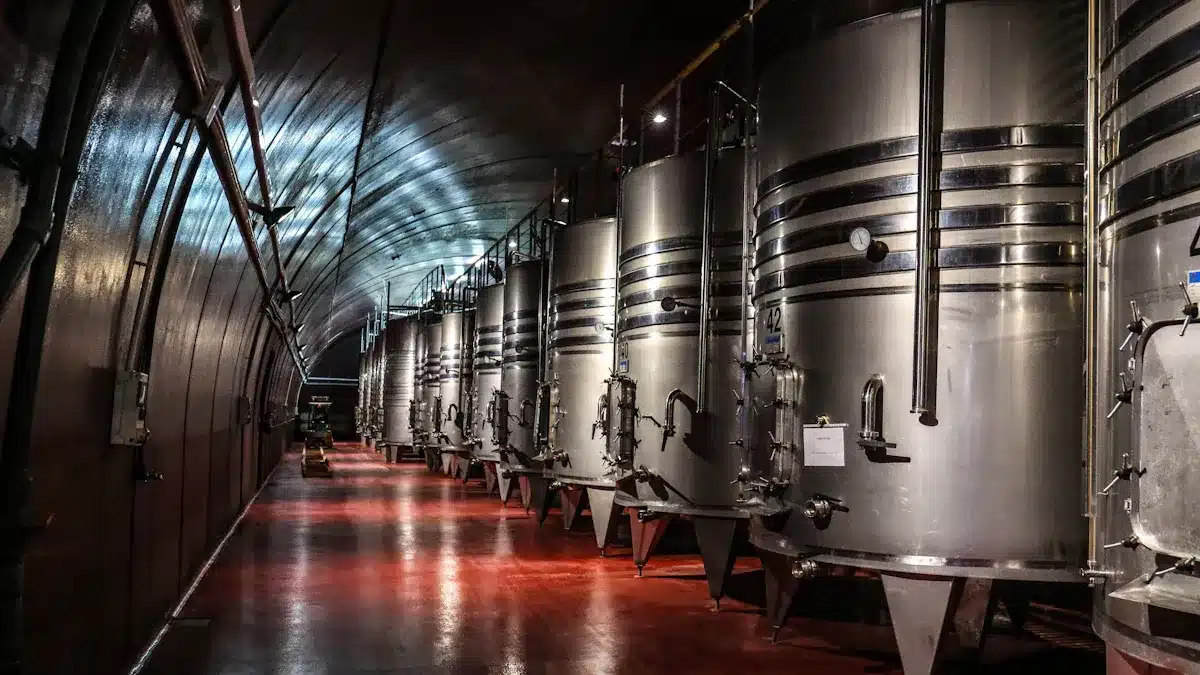

The best long-term storage container for olive oil is one that blocks light, seals out oxygen, maintains consistent cool temperatures, and does not react with the oil’s natural compounds. For large-scale commercial storage, food-grade stainless steel tanks are the industry standard. For home and small-batch use, dark amber glass bottles are the most practical option.
Key Takeaways
- Dark amber glass and food-grade stainless steel are the two best materials for long-term olive oil storage.
- Stainless steel tanks are the industry standard for bulk commercial storage, with total light blockage and excellent oxygen sealing.
- Storing oil at a cool, consistent temperature below 22°C (72°F) slows chemical breakdown and extends shelf life.
- Nitrogen blanketing in stainless tanks displaces oxygen from headspace, significantly slowing oxidation and preserving fresh flavor.
- Regular cleaning and airtight seals prevent bacterial growth and maintain oil quality over extended storage periods.
What Makes a Good Olive Oil Storage Container?
A high-quality storage container addresses all four primary causes of oil degradation:
Light Protection
UV and visible light break down oil lipids and destroy antioxidant compounds. Clear glass allows full light penetration, reducing antioxidant levels by up to 40% within six months. Amber glass blocks more than 99% of wavelengths below 450 nm, while opaque stainless steel blocks 100% of light.
Oxygen Barrier
Oxygen drives oxidation, the main cause of rancidity. Airtight seals prevent ambient oxygen from entering the container. For long-term bulk storage, active oxygen displacement with inert gas provides even greater protection.
Temperature Stability
Heat accelerates chemical breakdown. The ideal storage temperature is 15–18°C (59–65°F). Temperatures consistently above 22°C speed up rancidity noticeably. Cool storage at 6°C (43°F) further slows degradation for extended shelf life.
Material Inertness
The container material must not leach chemicals or react with the oil. Non-porous, food-safe materials prevent contamination and are easy to sanitize fully between batches.
| Container Material | Light Protection | Oxygen Seal Capability | Flavor Retention (12 months) | Best For |
|---|---|---|---|---|
| Amber Glass | Good (blocks 99% of UV) | Excellent with airtight cap | 85–90% | Home use, small retail batches |
| Food-Grade Stainless Steel | Excellent (100% blockage) | Excellent with gasket seals + nitrogen blanketing | 80–85% | Bulk commercial long-term storage |
| Clear Glass | Very poor | Good with cap | 50–60% | Short-term serving use only |
| Plastic | Poor | Moderate | 60–70% | Transport only, not long-term storage |
Why Stainless Steel Tanks Are Ideal for Long-Term Olive Oil Storage

For commercial producers and bulk storage, food-grade stainless steel is universally considered the best option.
Total Light Blockage & Durability
Fully opaque steel walls eliminate all light exposure, the single biggest driver of oil degradation in clear packaging. Stainless steel tanks are extremely durable, with a 30–50 year service life with proper maintenance — far longer than plastic or carbon steel alternatives.
304 vs. 316 Stainless Steel
There are two common food-grade stainless steel grades for olive oil storage:
- 304 Stainless Steel: The standard choice for most olive oil applications. It offers good corrosion resistance at a lower cost, and is suitable for normal olive oil pH and storage conditions.
- 316 Stainless Steel: Premium grade with 2–3% added molybdenum for enhanced corrosion resistance. It better resists pitting and acid attack from the natural fatty acids in olive oil, making it preferred for high-value extra virgin oil and long-term multi-year storage.
Advanced Storage Capabilities
Stainless steel tanks support industrial-grade preservation techniques that extend shelf life dramatically:
- Jacketed temperature control: Double-walled tanks with circulating coolant maintain consistent cool temperatures year-round, slowing oxidation and preserving fresh flavor.
- Nitrogen blanketing: Nitrogen gas is injected into the headspace above the oil to displace oxygen. This inert gas layer eliminates oxidative degradation, significantly extending shelf life and preserving delicate flavor compounds.
Manufacturers like Shandong Chenma produce both 304 and 316 stainless steel oil tanks, including jacketed models with built-in temperature control for precise storage conditions.
Best Practices for Long-Term Olive Oil Storage

Control Temperature
Store oil in a cool, dark place at a consistent 15–18°C. Avoid temperature fluctuations, which accelerate degradation. For long-term bulk storage, jacketed stainless tanks with temperature regulation are the gold standard.
Minimize Oxygen Exposure
- Keep containers tightly sealed at all times.
- For bulk tanks, use nitrogen blanketing to eliminate headspace oxygen.
- Transfer oil from large tanks into smaller dispensers for daily use, rather than repeatedly opening the main storage vessel.
Regular Cleaning & Maintenance
Proper sanitation prevents off-flavors and bacterial growth:
- Clean tanks between batches with a 3.5% citric acid solution at 85°C for 30 minutes, then rinse with clean water until pH reaches 6.5–7.5.
- Inspect gaskets and seals monthly for wear, and replace them promptly to maintain an airtight seal.
- For long-term storage, perform a full clean and inspection at least once per year.
Conclusion
For long-term bulk olive oil storage, food-grade stainless steel tanks are the industry best practice. They provide complete light protection, excellent oxygen sealing, temperature control capability and decades of durable service. For home use and small batches, dark amber glass bottles deliver excellent preservation at a smaller scale.
Pairing the right container with cool, consistent temperatures and minimal oxygen exposure will maximize olive oil shelf life, preserve fresh flavor and protect nutritional value for months or years.
FAQ
Is stainless steel better than glass for olive oil storage?
It depends on the scale. For bulk commercial long-term storage, stainless steel is better — it blocks all light, is far more durable, and supports advanced preservation like nitrogen blanketing. For home and small-batch use, amber glass works extremely well and preserves flavor slightly better over moderate time periods.
What is the ideal temperature to store olive oil long term?
The optimal storage temperature is 15–18°C (59–65°F). Consistent temperatures below 22°C prevent rapid rancidity. For extended storage, cool storage at 6°C (43°F) further slows degradation, though room-temperature cool dark storage works well for most everyday use.
Can you store olive oil in plastic containers long term?
It is not recommended. Plastic can leach compounds into the oil over time, and most plastic containers do not provide a sufficient oxygen barrier for long-term storage. Plastic is acceptable for short-term transport, but glass or stainless steel are far better choices for storage longer than a few weeks.
What is the difference between 304 and 316 stainless steel for oil tanks?
304 is the standard food-grade stainless steel, suitable for most olive oil storage at a lower cost. 316 grade adds molybdenum for superior corrosion resistance, better handling of the oil’s natural acids, and longer service life. It is preferred for high-value extra virgin olive oil and long-term multi-year storage.
How does nitrogen blanketing preserve olive oil?
Nitrogen blanketing replaces the oxygen in the empty headspace above the oil with inert nitrogen gas. Removing oxygen eliminates the main driver of oxidative rancidity, significantly extending shelf life and preserving the oil’s fresh flavor, aroma and antioxidant content.