
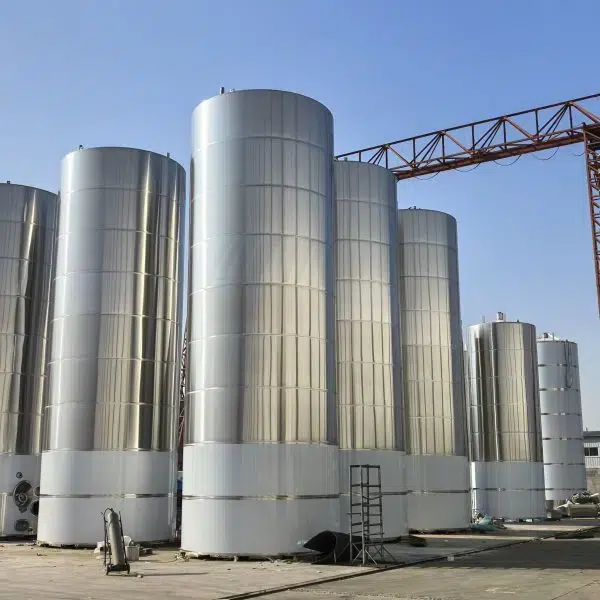
Milk tanks fall into two main categories: on-farm cooling tanks and transport tanker trucks. On-farm cooling tanks start as small as 30 gallons (115 liters) for family dairies, while transport tanker trucks range from 2,000 gallons (7,500 liters) for small delivery vehicles up to 8,000 gallons (30,000 liters) for large bulk haulers. CHENMA offers both standard and custom on-farm cooling tanks tailored to all dairy operation sizes.
Choosing the right tank size is critical for maintaining milk freshness, meeting hygiene standards, and optimizing operational efficiency. This guide breaks down all common milk tank sizes, their use cases, and how to select the perfect capacity for your dairy.
Key Takeaways
- Milk cooling tanks range from 30 gallons (115 liters) for micro-dairies up to 8,000 gallons (30,000 liters) for large commercial operations and bulk transport tankers.
- Always select a tank with 20–30% extra capacity to handle peak production days and accommodate future herd growth.
- Small tanks (30–400 gallons) are ideal for artisan producers and farms with 2–5 cows—they cool milk faster due to smaller volume.
- Medium tanks (400–2,000 gallons) work best for growing mid-scale dairies with 10–50 cows and support flexible pickup schedules.
- Large vertical silos (2,000–8,000 gallons) save floor space and include automated CIP cleaning systems for high-volume commercial dairies.
- Don’t overlook cooling rate and service clearance. Ensure the compressor matches peak milking volume, and leave at least 24 inches of walk-around access for maintenance.
Complete Milk Tank Size Guide by Capacity

Small Tanks (30–400 Gallons / 115–1,500 Liters)
Small milk cooling tanks are designed for low-volume operations with limited space. They feature open-top designs for easy cleaning and rapid cooling to preserve milk quality.
| Size (Gallons) | Size (Liters) | Typical Use Case |
|---|---|---|
| 30–50 | 115–190 | Micro-dairies, goat milk operations, home cheese making |
| 100 | 380 | Artisan cheese production, small family farms (2–5 cows) |
| 200 | 760 | Small herd operations, backup storage for larger farms |
| 400 | 1,500 | Growing farms, daily pickup schedules |
Tip: Small tanks cool milk faster than large tanks, making them ideal for operations that process milk on-site immediately after milking.
Medium Tanks (400–2,000 Gallons / 1,500–7,500 Liters)
Medium tanks are the most popular choice for mid-scale dairies. They feature closed-top designs for better hygiene and can be used as primary storage or paired with additional tanks for peak production.
Common sizes: 500, 600, 1,000, 1,300, and 1,600 gallons
- Ideal for farms with 10–50 cows
- Support every-other-day milk pickups
- Offer flexible installation options (horizontal or vertical)
Real-world examples:
- JASA Family Farm uses a 1,600-gallon tank for bi-weekly pickups
- Britton Farm upgraded to a 2,000-gallon tank to reduce energy costs and improve milk quality
Large Tanks (2,000–8,000 Gallons / 7,500–30,000 Liters)
Large commercial dairies rely on high-capacity vertical milk silos to store bulk milk efficiently. These tanks save valuable floor space and include automated cooling and cleaning systems.
Common sizes: 2,500, 5,000, and 8,000 gallons
- Designed for farms with 50+ cows or milk processing plants
- Feature fully automated CIP (Clean-in-Place) systems
- Meet strict FDA and international dairy safety standards
Note: CHENMA specializes in custom large-scale milk silos up to 8,000 gallons. Their 20,000 m² production facility can manufacture tanks in unique sizes and configurations to fit any facility layout.
How to Choose the Right Size Milk Tank
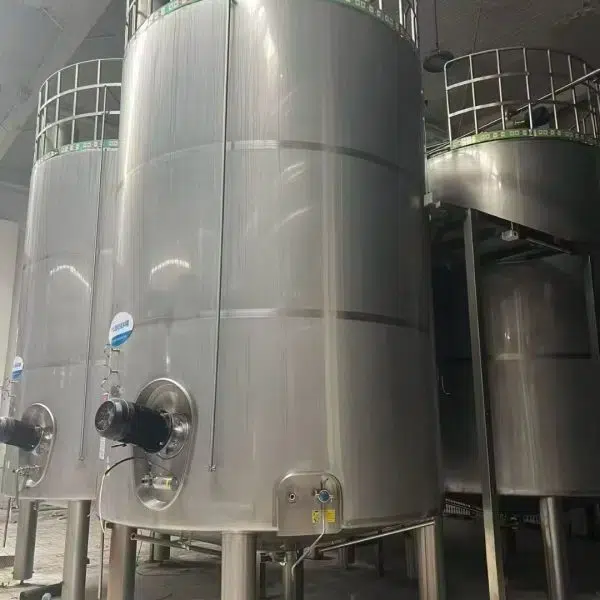
Match to Daily Milk Production
The most important factor is your average daily milk output. Calculate your peak production (typically during spring calving season) and add 20–30% extra capacity to avoid overflow.
| Daily Production | Recommended Tank Size |
|---|---|
| < 300 gallons | 30–400 gallons |
| 300–1,500 gallons | 400–2,000 gallons |
| > 1,500 gallons | 2,000+ gallons |
Consider Your Operation Scale
- Small family dairies: Horizontal open-top tanks for easy cleaning
- Mid-scale farms: Closed horizontal tanks or small vertical silos
- Large commercial dairies: Tall vertical silos to maximize storage while minimizing floor space
Evaluate Available Space
- Limited floor space: Choose vertical silos
- Ample space: Multiple smaller horizontal tanks for flexibility
- Custom layouts: Work with manufacturers like CHENMA to design tanks that fit unique spaces
Verify Compliance Standards
All milk tanks must meet local and international hygiene standards. Look for certifications like ISO 9001 (quality) and ISO 14001 (environmental) to ensure your equipment is safe and compliant.
Common Mistakes to Avoid When Buying a Milk Tank
Even with the right capacity calculation, first-time buyers often overlook critical technical details that impact milk quality and daily operations. Avoid these three common pitfalls to ensure your investment pays off.
Focusing Only on Volume, Ignoring Cooling Rate
Many buyers fixate on tank capacity (gallons) but overlook the cooling rate — the time required to bring fresh milk from body temperature (≈95°F / 35°C) to the safe storage temperature (≤40°F / 4°C).
- Why it matters: Milk quality degrades rapidly if not cooled quickly. Industry standards typically require cooling the first milking to 50°F (10°C) within one hour and to 40°F (4°C) within two hours. A large tank with an undersized compressor will fail this test, leading to bacterial growth and potential rejection by processors.
- What to check: Confirm the tank’s BTU rating or cooling capacity matches your peak milking volume per session, not just your daily total.
Forgetting to Reserve Space for Cleaning Access
Tanks require routine manual inspection and maintenance, even those with automated CIP systems. A common installation mistake is placing the tank flush against a wall or in a tight corner with no clearance for the operator to walk around.
- The consequence: Technicians cannot access the compressor for servicing, and you cannot visually inspect the tank exterior for leaks or condensation. Vertical silos, in particular, need floor space around the base for ladder access and valve maintenance.
- Recommendation: Leave at least 24–36 inches (60–90 cm) of clearance on all serviceable sides of the tank.
Buying for “Today’s” Herd Size Only
It is tempting to purchase the exact size tank that matches your current herd count to save upfront cost. However, dairy herds naturally fluctuate and often grow.
- The risk: If you add just 5–10 cows in two years, you may find yourself milking into a tank that overflows during peak season, forcing you to sell the used tank at a loss or install an expensive second tank.
- The fix: Apply the 20–30% buffer not just for seasonal peaks, but as a 3–5 year growth hedge. The marginal cost of upgrading from a 400-gallon to a 600-gallon tank upfront is significantly lower than replacing the entire system later.
Conclusion
Milk tanks are available in a wide range of sizes to fit every dairy operation, from 30-gallon compact tanks for micro-farms to 8,000-gallon vertical silos for commercial processing plants. Transport tanker trucks for bulk delivery typically range from 2,000 to 8,000 gallons.
The right size depends primarily on your daily milk production, available facility space, and operational scale. Always select a tank with extra capacity to handle peak production days, and prioritize equipment from certified manufacturers. For custom solutions or expert guidance, trusted suppliers like CHENMA can provide tailored recommendations and ISO-certified milk cooling tanks.
FAQ
What is the smallest milk tank size available?
The smallest standard milk cooling tanks start at 30 gallons (115 liters). These compact tanks are perfect for micro-dairies, goat milk operations, and artisan cheese producers. CHENMA offers custom even smaller tanks for specialized needs.
What is the most common milk tank size for dairy farms?
The most popular size for small to mid-sized dairy farms is 500–1,000 gallons (1,900–3,800 liters), which balances capacity, space, and cost. Large commercial dairies typically use 5,000–8,000 gallon (19,000–30,000 liter) vertical silos.
How do I know which milk tank size fits my dairy?
Calculate your average daily milk production and add 20–30% extra for peak days. Consider your available space and pickup schedule. CHENMA’s technical team can provide a free sizing assessment based on your specific operation.
Can CHENMA customize milk tanks for unique spaces?
Yes. CHENMA’s engineers design custom milk cooling tanks and silos to fit tight or unusual facility layouts. They can modify dimensions, add special features, and build tanks to meet your exact operational needs.
What certifications do CHENMA milk tanks have?
All CHENMA milk tanks are certified to ISO 9001 (quality management) and ISO 14001 (environmental management) standards. They also meet FDA and EU dairy safety requirements for food-grade equipment.


