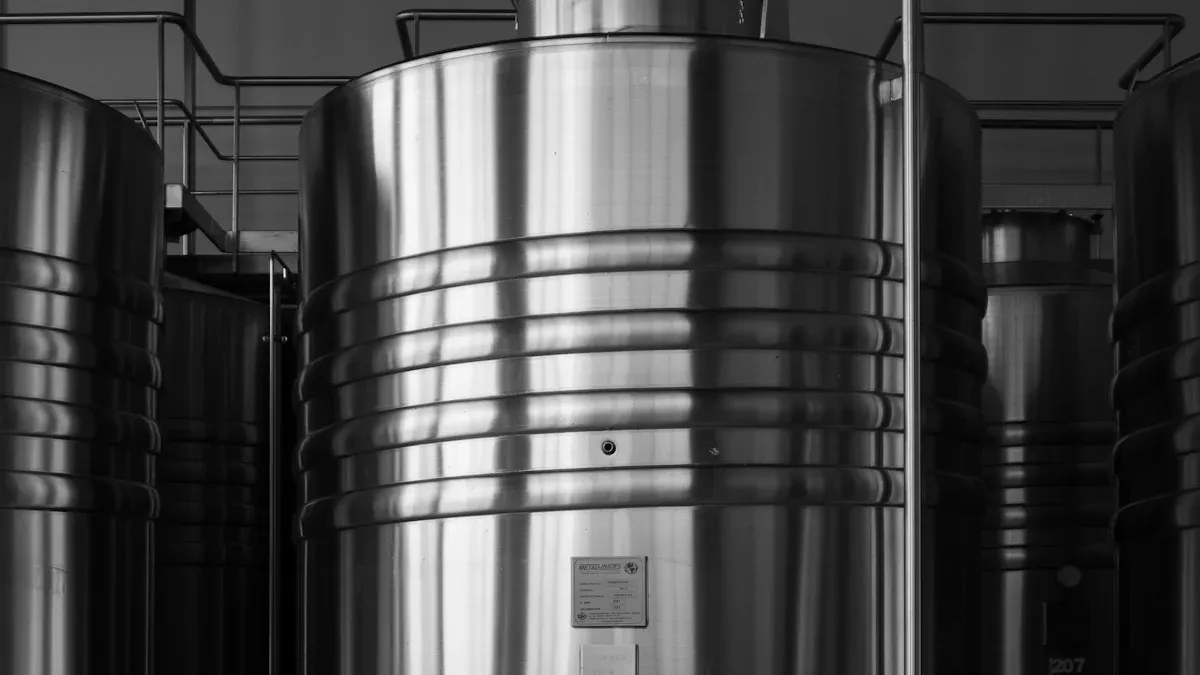

Using specialized dairy equipment, milk can be stored in milk tank. Modern milk silos are made of insulated stainless steel, which helps keep the milk safe and fresh. These silos come in various sizes, with standard silos having an average capacity between 5,000 and 70,000 gallons. The table below lists common silo types used for dairy products.
| Type of Silo | Capacity Range | Features |
|---|---|---|
| Standard Silos | 5,000 – 70,000 gallons | Features insulated stainless steel design to ensure product safety. |
| Custom Silos | Varies | Customized to specific needs, varying in shape and size. |
Key Takeaways
- Milk requires special storage methods to remain fresh and safe. Insulated stainless steel silos help prevent milk spoilage.
- Maintain a high level of cleanliness at all times. Regularly clean storage areas and equipment to prevent bacterial growth.
- Keep milk sufficiently cold. Store it at 4°C or lower to ensure safety and quality.
- Choose a silo size that suits your daily milk production. This helps you properly store milk and prevent spoilage.
- Clean and inspect silos regularly. Doing so ensures the safety and high quality of the milk.
Why Milk Needs Special Storage
Hygiene Standards for Milk
Milk is highly perishable and therefore requires a very clean storage environment. Strict regulations must be followed to ensure milk is safe for consumption. Dairy workers take many measures to prevent bacterial growth and milk spoilage.
- Workers quickly cool the milk to below 4°C (39°F) to prevent bacterial growth.
- They use clean, covered containers to transport and store milk.
- Milk storage areas are separated from cleaning areas to prevent the spread of bacteria.
- Staff use tools and conduct regular inspections to monitor temperature and cleanliness.
Milk is subject to stricter regulations than other liquid foods. East African Community (EAC) standards stipulate that pasteurized milk should not contain more than 10 cfu/ml of coliform bacteria, while raw milk can contain up to 50,000 cfu/ml. Studies have found that 21% of milk samples contained at least one type of bacteria. Ultra-high temperature (UHT) milk is the safest, while bulk milk carries the highest risk. If hygiene standards are not followed, milk becomes unsafe and its quality deteriorates. Poor temperature control and unsanitary environments lead to rapid bacterial growth, making the milk unsafe.
Tip: Keeping milk storage areas clean and separate from other work areas helps ensure the safety and quality of the milk.
Temperature Control in Milk Storage
Maintaining a low temperature for milk is crucial for its quality. International dairy regulations stipulate that milk stored in silos should be kept at 6°C or below, but 4°C is the optimal temperature.
Modern milk silos utilize advanced technology to keep milk at low temperatures. Insulated walls help maintain low internal temperatures and prevent spoilage. Cooling systems rapidly cool the raw milk after collection. Sensors continuously monitor the temperature and alert staff if there are any temperature changes. Clean temperature sensors and digital tools work together to prevent bacterial growth. Stainless steel materials are easy to clean and maintain the structural integrity of the silo.
If the temperature fluctuates, the quality of the milk will change and deteriorate. A good cooling system helps keep the milk fresh and allows businesses to sell the milk at a higher price. Maintaining the correct temperature ensures that the milk is safe and suitable for consumption.
Milk Silo Types and Features

Modern dairy farms use specialized equipment to ensure milk safety. Milk storage tanks are much larger than grain storage tanks. Grain storage tanks are typically constructed from simple steel or concrete. Milk storage tanks must adhere to strict hygiene regulations. These regulations help maintain the quality and safety of the milk for consumption.
Food-Grade Milk Storage Silo
Food-grade milk storage tanks utilize special materials and designs. These designs protect the milk from bacterial contamination and spoilage. Grain storage tanks do not need to comply with as many regulations. Milk storage tanks must meet numerous industry standards. The table below lists some important milk storage standards:
| Standard | Description |
|---|---|
| 3-A Sanitary Standards | Guidelines for dairy equipment, ensuring hygienic design and construction. |
| FDA Grade “A” PMO | Regulations for pasteurized milk, ensuring safety and quality. |
| USDA Guidelines | Standards for dairy equipment, ensuring compliance with federal regulations. |
| ASME Boiler and Pressure Vessel Code | Standards for the design and construction of pressure vessels. |
| FDA Food Contact Materials | Guidelines for materials that come into contact with food. |
| ISO 9001 | Quality management system standard, ensuring consistent quality. |
| EHEDG Principles | Guidelines for hygienic design in food processing. |
| State and Local Regulations | Additional requirements specific to local jurisdictions. |
Food-grade milk storage tanks offer several advantages over ordinary storage tanks:
- Smooth stainless steel surfaces prevent bacterial growth.
- Cooling systems keep the milk at 4°C or lower.
- Gentle agitation prevents cream separation.
- Automatic cleaning systems keep the tanks clean.
- Insulation saves energy.
- Stainless steel does not rust, so the milk remains safe.
- These tanks can last for many years.
Food-grade milk storage tanks require appropriate certification. The 3-A Sanitary Standard is very important. It ensures that the tanks are clean and safe for milk.
Stainless Steel and Insulation
Stainless steel is the best choice for milk storage tanks. It ensures milk safety and extends the lifespan of the storage tank. Milk storage tanks can hold 5,000 to 70,000 gallons, so a durable material is crucial. Stainless steel offers many advantages:
| Evidence | Description |
|---|---|
| Corrosion Resistance | The chromium in stainless steel prevents rust, ensuring milk safety. |
| Safety Factor | The strong steel reduces the risk of component damage. |
| Hygienic Properties | The smooth surface is easy to clean, preventing milk residue. |
| Longevity | Stainless steel has a longer lifespan and lower maintenance costs. |
Insulation is also very important for milk storage tanks. It keeps the milk at a low temperature, saving energy. Polyurethane foam is the most commonly used insulation material. This foam maintains a stable temperature and reduces energy consumption.
| Insulation Material | Effectiveness |
|---|---|
| Polyurethane Foam | Keeps milk cool, saving energy. |
| Fiberglass | Sometimes used, but not as common as foam. |
Milk storage tanks with good insulation and stainless steel construction can keep milk fresh for longer.
Agitation and Cleaning Systems
Agitation and cleaning systems are crucial in milk storage tanks. These systems help ensure the safety and high quality of the milk. Agitation systems gently mix the milk, preventing cream separation. This keeps the milk uniform.
| Storage Condition | Requirement |
|---|---|
| Temperature | Below 4°C |
| Storage tanks | Cleaned and sanitized often |
| Agitation | Mixes milk to stop cream from separating |
Modern storage tanks use Clean-in-Place (CIP) systems. These systems automatically clean the inside of the storage tank. Workers do not need to enter the tank, reducing the risk of bacterial contamination. CIP systems follow strict cleaning procedures and record cleaning data to ensure safety.
- Agitation systems prevent fat separation.
- They keep the milk uniform and fresh.
- Good temperature control inhibits bacterial growth.
- CIP systems clean the storage tank without manual labor.
- Automatic cleaning helps comply with food safety regulations.
Note: Automatic cleaning and agitation systems help ensure milk safety and reduce the risk of spoilage.
Large milk storage tanks require good cleaning and agitation systems. These features help farms safely and conveniently store large quantities of milk.
Average Size and Capacity of Milk Silos

Typical Milk Silo Dimensions
The size of milk storage tanks varies from one dairy farm to another. Most tanks are between 30 and 60 feet tall. The width is typically 8 to 12 feet. These tanks can hold 5,000 to 70,000 gallons of milk. Large farms use larger tanks to store more milk, while smaller farms choose smaller tanks to suit their needs. The size of the tank depends on the farm’s daily milk production and the length of time the milk is stored before processing.
| Silo Size | Height (feet) | Diameter (feet) | Capacity (gallons) |
|---|---|---|---|
| Small | 30 | 8 | 5,000 |
| Medium | 45 | 10 | 30,000 |
| Large | 60 | 12 | 70,000 |
Tall tanks help save space on the farm. Wider tanks are easier to clean and maintain. Farms choose the size of the tank based on the amount of milk they need to store and the milk delivery schedule.
Storage Duration and Cleaning Intervals
Good storage conditions maintain the freshness and safety of the milk for consumption. Most farms store milk in tanks for 24 to 48 hours before sending it for processing. Short-term storage helps prevent spoilage and maintains milk quality. Maintaining the correct temperature and regular cleaning are crucial for safe storage.
The frequency of tank cleaning depends on factors such as weather, the stored contents, and the frequency of tank use. Experts recommend the following cleaning methods:
- Many farms clean their tanks monthly to prevent pest infestations.
- Some companies clean their tanks twice a year and fumigate them after cleaning.
- Cleaning frequency can be monthly or annually, depending on tank usage.
Regular cleaning and proper storage help prevent bacterial growth and ensure the milk is safe for human consumption.
Farms that regularly clean their tanks and check storage conditions reduce the risk of milk spoilage. Good storage conditions ensure the safety and high quality of the milk.
Risks of Improper Milk Silo Use
Contamination and Spoilage Risks
Dairy farms need to ensure that milk is protected from bacterial contamination. If equipment is not clean, bacteria can grow inside the storage tanks. Inadequate cleaning can lead to rapid bacterial spread. Once bacteria enter, the milk will spoil quickly. Workers may notice a sour smell or a change in the milk’s color. These signs indicate that the milk is no longer fresh. Spoiled milk cannot be sold or used in food production. Common risks include:
- Unclean silo surfaces.
- Damaged seals, allowing air or insects to enter.
- Milk stored in the silo for too long.
- Failure to maintain the proper temperature.
The table below shows how these issues affect milk quality:
| Risk Factor | Impact on Milk Quality |
|---|---|
| Dirty Equipment | Bacterial growth, leading to spoilage |
| Bad Seals | Pest entry, causing contamination |
| Old Milk | Milk turns sour, making the product unsafe |
| Warm Temperatures | Milk spoils faster |
Tip: Dairy workers should regularly inspect silos to ensure the milk is safe and fresh.
Regulatory and Safety Concerns
Dairy farms must follow strict regulations to ensure milk safety. The government sets milk quality standards. These regulations help prevent bacterial growth and protect the health of people who drink milk. Dairy farms must use approved equipment and maintain cleanliness records.
If a dairy farm violates these regulations, it may face fines or license revocation. Unsafe milk can make people sick. Inspectors regularly visit dairy farms to check equipment and storage facilities. They check that milk tanks are clean, temperature control is adequate, and operations are safe.
Important safety measures include:
- Using food-grade materials for all dairy equipment.
- Maintaining milk at the proper temperature.
- Cleaning milk tanks according to a set schedule.
- Training workers to identify problems early.
Note: Adhering to safety regulations helps dairy farms maintain milk quality and deliver fresh milk to consumers.
Milk Silo Industry Practices and CHENMA Solutions
Standard Milk Storage Equipment
Dairy farms use specialized equipment to keep milk safe and fresh. Different machines and tanks are needed at each stage.
- Milking machines quickly and cleanly extract milk from cows.
- Refrigerated tanks keep raw milk at a low temperature below 4°C.
- Pasteurizers quickly heat milk to kill bacteria.
- Homogenizers break down fat particles to give milk a smooth texture.
- Cream separators separate cream from milk.
- Milk cooling tanks maintain a low temperature before the milk is transported.
Bulk milk cooling tanks and plate coolers cool the milk before it enters the storage tanks. These devices work together to ensure that the milk remains good and safe at every stage.
CHENMA Milk Tank Advantages
CHENMA milk tanks have a strong reputation in the dairy industry. They are made of food-grade stainless steel, which is rust-resistant and easy to clean. The tanks are equipped with safety systems, such as floating lids with cushioned gaskets for a tight seal. Workers can clearly see capacity markings and smooth inner walls, which aids in inspection and cleaning. CHENMA adheres to strict regulations and is ISO 9001 and ISO 14001 certified.
| Feature | Description |
|---|---|
| Hygienic Stainless Steel | Food-grade 304 or 316L stainless steel, easy to clean. |
| Advanced Temperature Control | High-performance insulation materials and optional heating systems enable precise temperature control. |
| Efficient Agitation and Mixing | The integrated stirring system ensures uniform mixing and prevents product sedimentation. |
| Safe and Ergonomic Operation | Safety features include pressure relief valves and easily accessible inspection ports for monitoring. |
CHENMA milk storage tanks keep milk at low temperatures and ensure thorough mixing, allowing dairy farms to maintain high milk quality.
Choosing the Right Silo for Your Dairy
Choosing the right milk storage tank for a dairy farm requires careful planning. Dairy farmers compare horizontal and vertical storage tanks to determine which option is best. Vertical tanks save space and are equipped with valves for easy milk sampling and inspection. Horizontal tanks may have a lower initial cost but require a larger footprint. A good cooling system and durable tanks are crucial for the future success of a dairy farm.
| Factor | Horizontal Tanks | Vertical Silos |
|---|---|---|
| Milk Sampling | Manual sampling from stored milk | Equipped with sampling valves for easy sampling |
| Cost | Lower initial price, but long-term costs vary depending on circumstances | Higher initial cost, but potentially more cost-effective in the long run |
| Space Considerations | Requires more tank space | Smaller footprint, saving valuable space |
| Cooling Efficiency | Designed for durability and reliability | Designed for optimal performance |
Dairy farms need sturdy, high-quality milk storage tanks. These tanks keep milk clean, are rust-resistant, and have a long lifespan. Smooth interior walls prevent bacterial growth, contributing to the health of the cows. Lightweight tanks are easy to install and move.
Tip: Dairy farmers should choose a milk storage tank that suits their needs and available space. High-quality tanks ensure milk safety and reduce maintenance costs.
Storing milk in tanks requires careful planning and appropriate equipment. Dairy farms must use food-grade, clean, and low-temperature storage systems. Here are important steps to ensure milk safety:
- Determine how much milk needs to be stored daily.
- Choose an energy-efficient system.
- Ensure the tank size is suitable for your farm.
- Clean all equipment thoroughly and frequently.
| Key Aspect | Details |
|---|---|
| Temperature Control | Keeps milk at a low temperature to maintain freshness and safety. |
| Hygiene Practices | Easy to clean, preventing bacterial growth. |
| Equipment Reliability | Durable tanks have a longer lifespan and maintain milk quality. |
CHENMA milk storage tanks meet these standards. They help dairy farms store milk safely and efficiently.
FAQ
What are the differences between milk storage tanks and grain storage tanks?
Milk storage tanks use food-grade stainless steel and advanced insulation materials. Grain storage tanks, on the other hand, use ordinary steel or concrete. Milk storage tanks are equipped with cleaning systems and temperature control systems. These features help maintain the safety and freshness of the milk.
How do milk storage tanks keep milk at a low temperature?
Milk storage tanks use thick insulation layers and built-in cooling systems. Sensors monitor the temperature, and staff regularly check the readings. Low temperatures allow the milk to stay fresh for longer. Milk storage tanks help prevent milk spoilage.
How often should milk storage tanks be cleaned?
Staff clean the milk storage tanks after each batch of milk is stored or every 24 to 48 hours. Automatic cleaning systems help remove bacteria. Regular cleaning ensures the hygiene of the milk storage tanks and guarantees the safe storage of milk.
Can milk storage tanks store other dairy products?
Milk storage tanks can store raw milk, pasteurized milk, or yogurt. Their design supports different dairy processing methods. Farms can use milk storage tanks to store various products, but each product requires special cleaning procedures.
Why do dairy farms choose milk storage tanks for storage?
Dairy farms choose milk storage tanks because they protect the milk from bacterial contamination and maintain low temperatures. Milk storage tanks have a long lifespan. Farms trust milk storage tanks because they are safe and reliable.