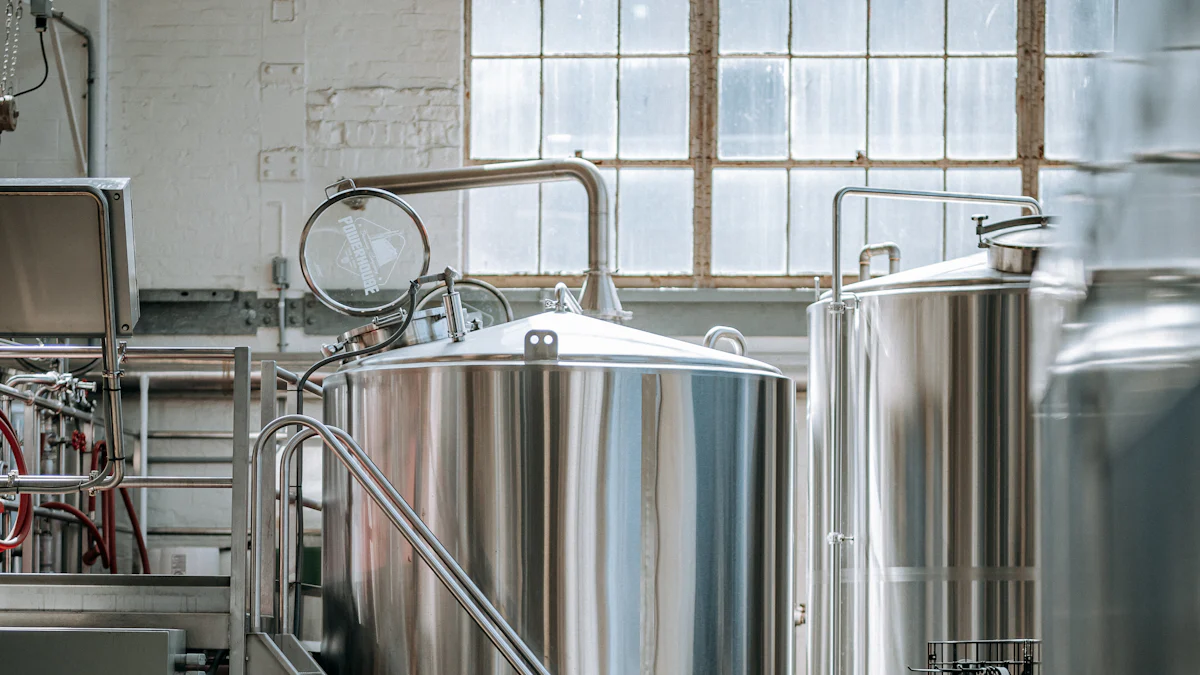
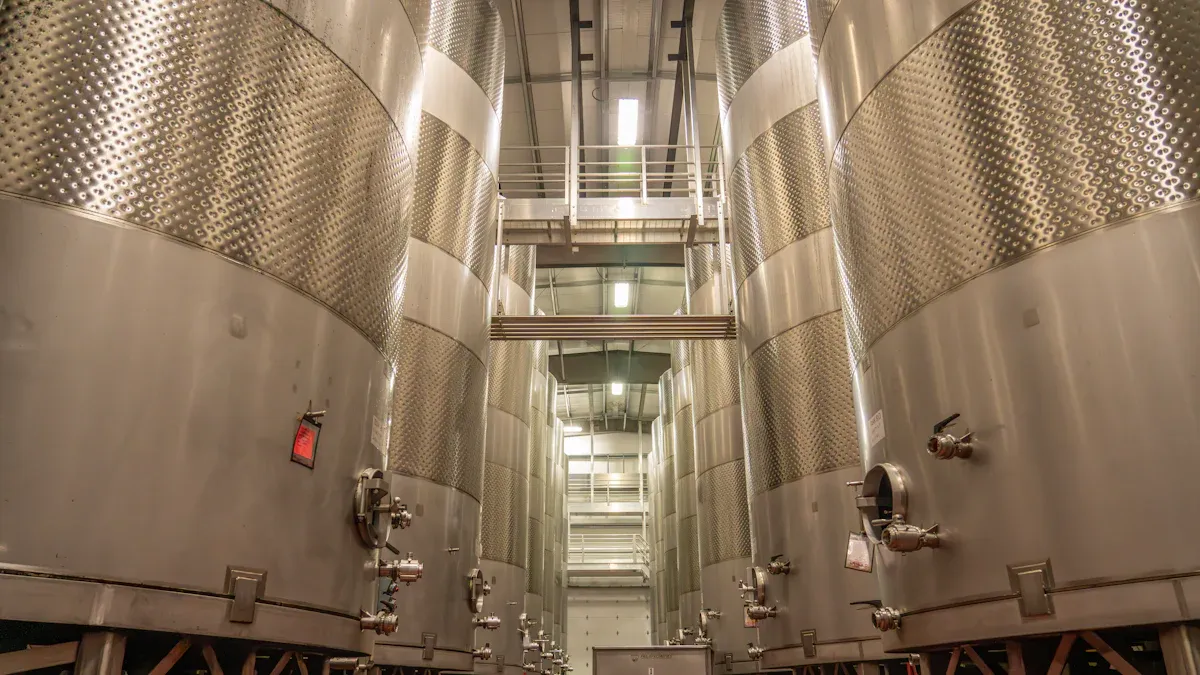
Innovative technology is elevating wine quality through precise control. This innovation allows winemakers to manage fermentation with unprecedented accuracy, directly impacting the final product.
Data shows precise temperature control in a fermentation tank for wines directly impacts aroma. Merlot fermented at 15°C, for instance, develops more fresh fruit and banana notes compared to warmer fermentations.
This level of detail is vital for a market projected to hit USD 490.23 billion in 2025. Smart fermentation tanks and new materials boost efficiency, providing crucial data to guide the future of fermentation tanks.
Key Takeaways
- Smart fermentation tanks give winemakers real-time data and remote control. This helps them make better wine.
- New materials like advanced polymers and concrete tanks offer unique benefits. They improve wine quality and are good for the environment.
- Automation helps wineries with tasks like cap management and cleaning. This saves time and makes work easier.
- Investing in new tanks can save money and improve wine quality. This helps wineries make more profit.
- Companies offer complete tank systems and custom designs. Wineries can choose what works best for them.
The Rise of Smart Fermentation Tanks
The digital transformation of the cellar is here, led by smart fermentation tanks. This technology gives winemakers a level of control that was once unimaginable. It turns the art of winemaking into a precise science, driven by information.
Real-Time Data and Remote Control
Modern tanks integrate advanced sensors to provide a constant stream of information. These systems collect essential real-time data on metrics like temperature and pH. Traditionally, winemakers discovered issues like a ‘stuck’ fermentation only after the process had already slowed. This new innovation provides an early detection system, giving winemakers insight into yeast metabolism and the changing chemical environment.
With access to live data, winemakers can make immediate adjustments to the batch, even when they are off-site.
Remote access is a game-changer. Web-based platforms like TankNET® and VinWizard transmit real-time data to the cloud. This allows winemakers to:
- Monitor fermentation from any phone, tablet, or computer.
- Receive alerts about potential problems.
- Adjust settings remotely to maintain optimal conditions.
Predictive Analytics with AI
The next great innovation in winemaking involves artificial intelligence. AI algorithms analyze huge sets of historical and current fermentation data. Machine learning models use this information to identify patterns that are invisible to the human eye. This field of wine data analytics helps predict the final flavor profile of a wine based on early data points.
For example, an AI system can monitor yeast activity and sugar levels. It compares this live data to thousands of past fermentations. If the system detects a deviation that could lead to an undesirable outcome, it alerts the winemaker proactively. This allows for corrections that protect and enhance wine quality, turning raw data into actionable intelligence.
Innovations in Fermentation Tank for Wines Materials
The material of a fermentation tank for wines is just as important as the technology inside it. Winemakers now have more choices than ever. New materials offer unique benefits for wine quality, efficiency, and sustainability.
Advanced Composite Polymers
Stainless steel has long been the industry standard. However, new composite polymers are emerging as a serious alternative. This innovation focuses on creating tanks that are both high-performing and environmentally friendly.
- Advances in material science create sustainable, corrosion-resistant tanks.
- These eco-friendly materials improve tank longevity and help wineries meet environmental goals.
- Hybrid designs combine stainless steel with polymer components. This improves thermal efficiency and reduces the tank’s overall weight.
A material’s ability to conduct heat is crucial for temperature control. Different materials transfer heat at very different rates.
| Material | Thermal Conductivity (W/mK) |
|---|---|
| Copper | 401 |
| Stainless Steel | 14 |
Note: A lower thermal conductivity value means the material is a better insulator, making it easier to maintain a stable temperature inside the tank.
The Evolution of Concrete and Amphorae
Ancient materials are making a modern comeback. Concrete and clay amphorae are gaining popularity for their unique impact on wine. Concrete tanks are naturally porous. This feature allows for controlled micro-oxygenation, which helps soften tannins and creates a smoother wine.
A key innovation is the variety of modern tank shapes. Egg-shaped tanks, for example, promote natural convection currents during fermentation. This movement gently mixes the wine, ensuring even heat and yeast distribution without mechanical stirring. Manufacturers now use advanced concrete formulas free from toxins. They can also embed glycol temperature control systems directly into the tank walls for precise, gentle cooling. Some winemakers line clay amphorae with beeswax to fine-tune oxygen exposure, especially for white wines.
The New Era of Fermentation Automation

Automation is transforming winery operations. It boosts efficiency and addresses labor challenges. This shift allows winemakers to focus more on wine quality and less on repetitive manual tasks. While automation can create a need for new technical skills, it also helps wineries overcome staff shortages for seasonal work.
Automated Cap Management Systems
Managing the cap of grape skins during red wine fermentation is crucial. This process extracts color, flavor, and tannins. Automated systems now handle this demanding job with precision. This frees up valuable time for the winemaking team. Key systems include:
- Pump-Over Tanks: These tanks pump juice from the bottom and spray it over the top of the cap. This method ensures the cap stays wet and extracts key compounds.
- Automated Punch-Down Tanks: A mechanical device pushes the cap down into the fermenting wine. This system mimics the gentle, traditional method without the manual labor.
- Fermenters with Seed Removal: Some advanced punch-down systems can also separate and remove seeds during the process. This gives winemakers greater control over tannin extraction.
Advanced Clean-In-Place (CIP) Tech
Winery hygiene is essential for preventing spoilage and ensuring wine quality. Advanced Clean-In-Place (CIP) technology automates the cleaning of tanks and equipment. This modern innovation uses a network of sensors and controls to deliver a perfect clean every time.
Automated CIP systems use sensors to monitor pressure, temperature, and chemical concentration. Sanitary valves automatically manage the flow of cleaning solutions through different cycles. This process minimizes contamination risks and reduces the need for manual labor.
The efficiency gains are significant. Optimized CIP systems can cut water and chemical consumption by 30%. This not only saves money but also reduces wastewater, supporting the winery’s sustainability goals.
These automated systems ensure that every tank is cleaned to the highest standard, protecting the integrity of each batch of wine.
Calculating the ROI on Advanced Tanks
Investing in new technology requires a clear financial justification. Wineries can calculate the return on investment (ROI) for advanced tanks by analyzing improvements in wine quality, operational efficiency, and resource savings. This calculation helps justify the initial expense.
Quantifying Gains in Quality and Efficiency
Advanced tanks provide winemakers with precise control over the fermentation process. This control leads to higher, more consistent wine quality. Wineries can measure this gain in several ways:
- Higher Bottle Prices: Better quality wine often commands a higher price in the market.
- Reduced Product Loss: Smart tanks help prevent costly mistakes like stuck fermentations. This reduces the amount of wine that is downgraded or discarded.
- Increased Throughput: Automation and efficiency gains allow wineries to process more grapes in less time, increasing overall production capacity.
The rich data from smart sensors allows winemakers to track these improvements. This data provides clear evidence of the tank’s impact on the final product and the bottom line.
Factoring in Labor and Resource Savings
Modern tanks also deliver significant savings on labor and resources. Automated systems for cap management and cleaning reduce the need for manual work. This allows staff to focus on more valuable tasks. The financial benefits are clear.
A winery can analyze time-tracking data to see exactly how many labor hours are saved by automated systems. This data directly translates into lower operational costs.
Resource savings are another major factor. The growing interest in energy-saving tanks highlights the industry’s move towards materials that require minimal power for temperature control. A modern fermentation tank for wines with an advanced insulation system can reduce energy usage by up to 96.5%. This leads to substantial cost savings on utility bills. Collecting data on water, chemical, and energy consumption before and after the upgrade provides a concrete measure of the investment’s return.
Leading Innovators and Models for 2025
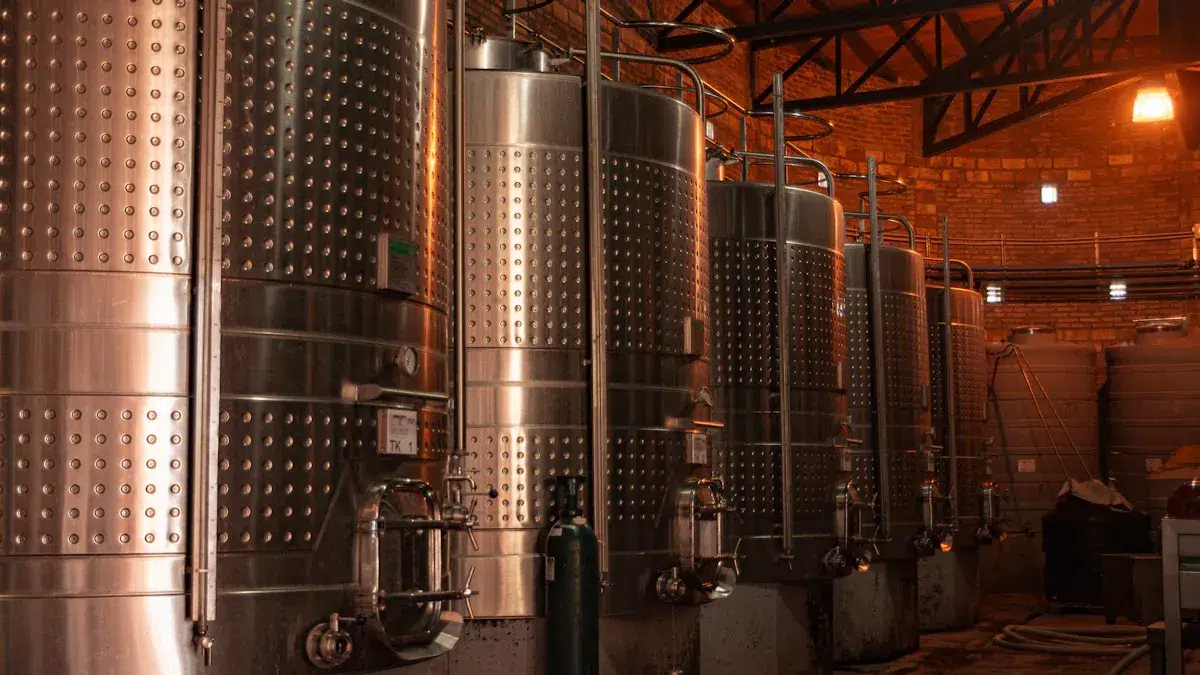
The market for advanced fermentation tanks is vibrant, with companies offering everything from comprehensive systems to specialized custom builds. Wineries can choose solutions that best fit their production scale, winemaking philosophy, and financial goals.
Turnkey Systems and Integrated Solutions
Wineries increasingly seek complete, ready-to-use solutions. These turnkey systems combine tanks, sensors, and software into a single, cohesive package. This innovation allows for seamless data flow and centralized control. For example, IoT solutions can deliver real-time fermentation data—like temperature, pH, and gravity—directly into a winery’s management software.
This integration allows winemakers to track operations and fermentation outcomes from a single dashboard. It reduces the need for manual sampling and improves quality control.
Several companies lead the way in providing these integrated platforms. They offer scalable systems that cater to wineries of all sizes. Key innovators in this space include:
- Krones: Offers fully integrated fermentation systems with advanced automation.
- Vega: Recognized for flexible, scalable units that incorporate smart technology.
- Enoitalia: Provides comprehensive systems with integrated data management tools.
Custom Stainless Steel from SDCHENMA
While integrated systems offer convenience, many wineries require tanks built to their exact specifications. Shandong Chenma Machinery Co., Ltd. (SDCHENMA) specializes in engineering and manufacturing custom stainless steel tanks. This approach provides tailored solutions that address unique production challenges.
SDCHENMA uses high-grade 304 and 316 stainless steel, which offers excellent durability and resistance to corrosion. The smooth surface of a stainless steel fermentation tank for wines prevents bacterial growth and simplifies cleaning, helping wineries meet strict food safety standards like ISO9001 and CE. Their focus on efficient design and predictive maintenance systems can reduce unplanned downtime by up to 50%, ensuring continuous production. By combining custom engineering with high-quality manufacturing, SDCHENMA delivers durable, low-maintenance tanks designed for long-term performance and savings.
Investing in 2025’s technology is an investment in superior wine and operational excellence. This innovation empowers winemakers with unprecedented precision and efficiency. The modern fermentation tank for wines turns rich data into better quality.
The rapid evolution of winemaking equipment signals a future where data-driven decisions and sustainable practices are the standard. This data supports the entire process.
Looking ahead, the evolution of fermentation tanks continues:
- Yeast & Microbe Innovation: Specialized yeasts will enhance aromas and reduce the need for sulfur.
- Carbon Capture: New systems will capture and reuse CO2 from fermentation.
- Advanced Data: Future tanks will integrate more sensors, providing deeper data for wine data analytics.
FAQ
What is the main benefit of a smart fermentation tank?
Smart tanks provide real-time data on temperature and pH. This information allows winemakers to make precise adjustments. It helps prevent fermentation problems and improves the final quality of the wine.
Why would a winery choose a custom stainless steel tank?
Custom tanks meet a winery’s specific production needs and space. Companies like SDCHENMA engineer tanks for unique processes. This ensures the equipment fits perfectly and operates efficiently for the winemaker’s goals.
How does automation improve the fermentation process?
Automation handles tasks like cap management and cleaning. This technology saves labor and reduces the chance of human error. It gives winemakers more time to focus on crafting high-quality wine.
Are concrete tanks a better choice than stainless steel?
The choice depends on the desired wine style. Concrete’s porosity allows for micro-oxygenation, which can soften tannins. Stainless steel provides excellent hygiene and neutral flavor impact, offering precise control over the wine’s development.